How to choose the right flooring
Choosing flooring is easier when you pick the right material for your room, your lifestyle, and your budget—then compare real installation quotes. This guide helps you do that step by step.
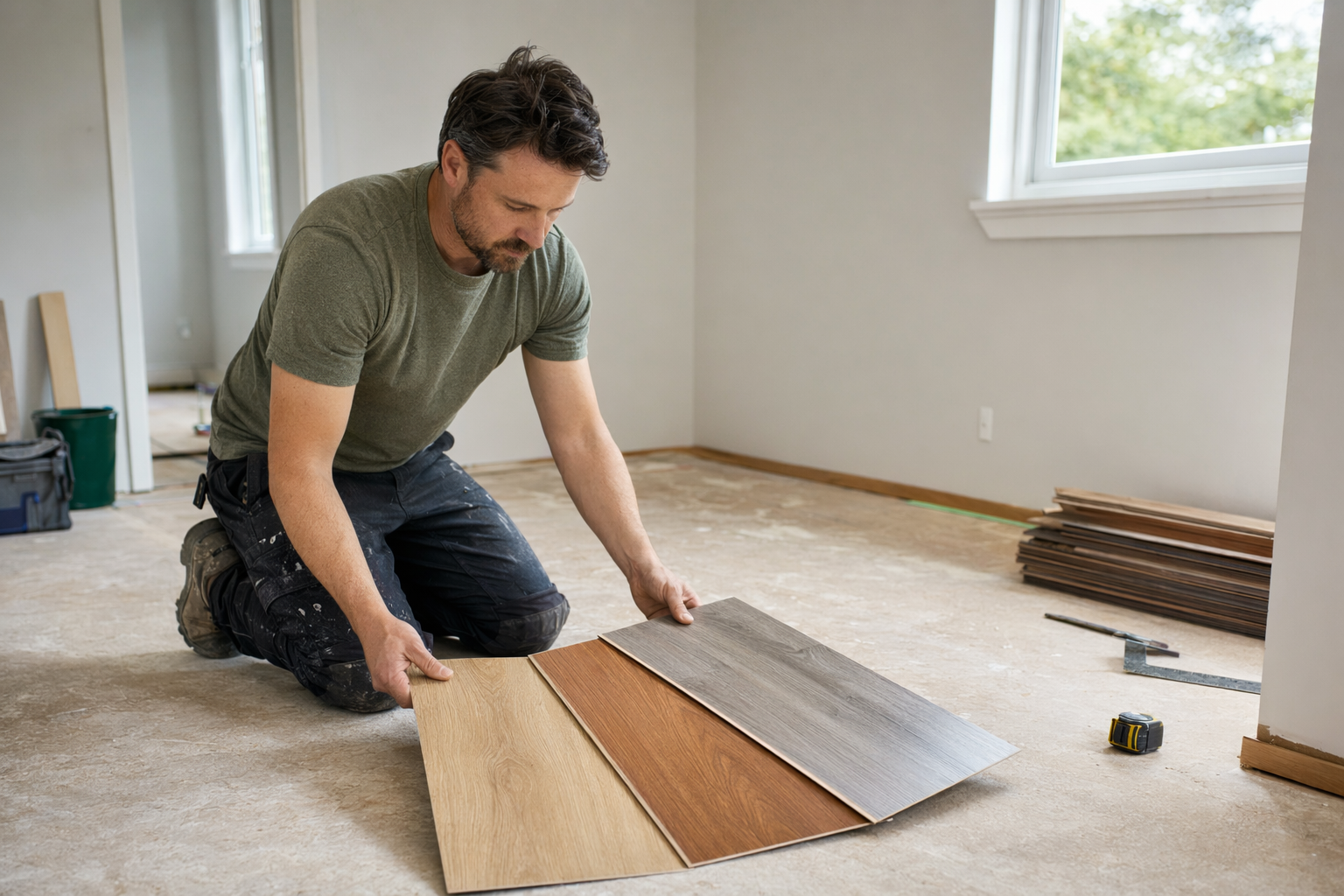
Choose flooring by matching the material to each room’s moisture and wear, then compare written installed-cost quotes from licensed, insured contractors—watch for red flags like vague pricing or large upfront cash deposits.
Start with the right questions (so you don’t buy the wrong floor)
The fastest way to choose the right flooring is to match the material to how the room behaves and how you live. Before you compare prices, think about moisture risk, foot traffic, pets/kids, and how much maintenance you’re willing to do.
A good rule: if you choose based only on looks, you often pay later in scratches, swelling, gaps, squeaks, or replacement sooner than expected. If you choose based on real conditions, the job usually goes smoother.
Here are the questions to answer first:
- What rooms are you flooring (living room, bedrooms, kitchen, basement, bathroom)?
- How wet can that room get (kids, spills, wet shoes, humidity, leaks)?
- How hard is the wear (pets, heels, rolling chairs, heavy furniture)?
- What’s your “real” comfort priority (quiet, warm underfoot, easy cleaning)?
If you’re not sure what matters most for your home, you can get matched for free with licensed, insured flooring contractors near you after you share a few basics.
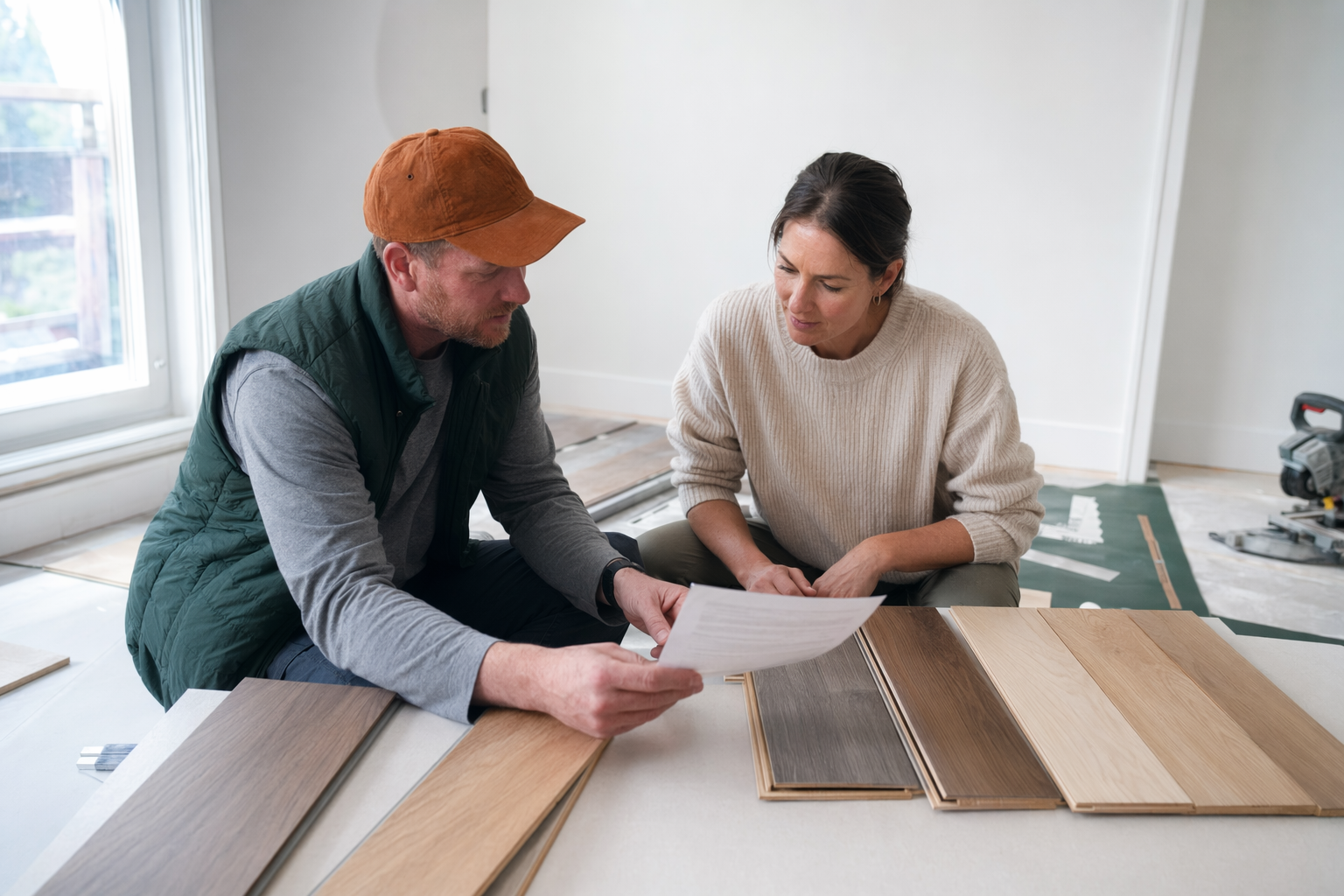
Pick by room: what works best where (and what to avoid)
Different floors behave differently with moisture and daily wear. Use these general “best fit” guidelines as a starting point, not a guarantee—local climate, subfloor condition, and installation details matter.
Living areas & bedrooms: You usually want comfort and durability. Many people choose hardwood or engineered wood for warmth, or luxury vinyl plank/laminate for an easier, more budget-friendly routine.
Kitchens & entryways: Watch for spills and frequent foot traffic. Luxury vinyl plank (LVP) or tile are often chosen because they handle everyday splashes better than solid wood. If you love hardwood, consider engineered wood and make sure the installation plan addresses moisture.
Bathrooms & basements: Moisture is the big issue. Tile can work well for wet areas, and some LVP products are designed for moisture-prone conditions—still, installation and underlayment choices are critical. Ask contractors how they’ll manage moisture and whether the product is rated for your exact use case.
Best practice: tell your contractor the room conditions and confirm the product’s intended use. For more material options, visit materials.
Compare materials like a homeowner, not like a brochure
Every flooring type has trade-offs: feel, sound, lifespan, maintenance, and how it reacts to moisture. Below are the main choices people make—and what it’s really like to live with them.
Hardwood (solid wood): Warm, classic, and easy to refinish in many cases. It can be more sensitive to humidity changes and moisture, and scratches show up. Great for many living spaces, but most people are cautious about bathrooms and very damp basements.
Engineered wood: Similar look to hardwood, often more stable with normal home humidity than solid wood. It can be a good middle ground when you want the wood look but need better everyday stability. Refinishing depends on the product’s wear layer thickness.
Laminate: Durable and often affordable, with a strong “wood-look” design. It’s typically easier to maintain than real wood, but it can feel harder/less warm and can be more prone to damage if water gets into seams.
Luxury vinyl plank (LVP): Comfortable underfoot and usually quieter than hard surfaces. Many options resist moisture better than wood and laminate, which is why LVP is common in kitchens and entryways. Quality varies—thicker wear layers and good installation matter.
Tile: Extremely durable and water-friendly for the right rooms. It’s solid and can be colder underfoot, and grout needs cleaning. Installation is more involved, so labor cost often drives the total.
Carpet: Soft and quiet, often a great choice for bedrooms and family rooms. It needs maintenance and can hold onto stains or odors if spills aren’t cleaned quickly. If you have allergies or pets, plan for realistic upkeep.
For any material, the “best” choice depends on your subfloor, room conditions, and installation quality. If you want to explore options for your specific situation, PlankPath can help you start by getting matched.
Know the real costs: typical installed price ranges (not quotes)
Flooring pricing usually includes material plus installation (and sometimes underlayment, removal, and subfloor prep). There’s no one “correct” number—cost depends on the material, product thickness/quality, your region, room size and shape, and what the subfloor needs.
Common installed price ranges (material + labor) you may see:
- Laminate: about $3–$7 per sq ft
- LVP: about $4–$10 per sq ft
- Carpet (with padding): about $4–$12 per sq ft
- Engineered wood: about $5–$12 per sq ft
- Hardwood (installed): about $8–$18 per sq ft
- Tile: about $8–$20+ per sq ft
These are ranges, not quotes. Costs often move up when there’s lots of cutting, stairs, complex layouts, additional subfloor leveling, adhesive/removal, longer labor time, or premium product choices.
To see more about what affects totals, check costs. When you request estimates, ask each contractor to break out: material price, labor price, underlayment/prep, removal/disposal, and any extra charges—then compare the full scope, not just the bottom line.
Avoid overpaying: how to compare contractors safely
PlankPath is a free matching service—we don’t install floors or sell materials. Our job is to help you connect with licensed, insured flooring contractors so you can compare estimates and choose what fits.
When you get quotes, you want clear scope and written details. Be cautious if pricing is vague or if you feel rushed.
Red flags to watch for:
- No license or no proof of insurance
- Very large upfront cash deposits (ask for their payment schedule and get it in writing)
- Pressure to sign immediately or “pay now” before details are reviewed
- Cash-only arrangements
- Skipping the subfloor assessment/prep without explanation
- A quote that doesn’t list what’s included (removal? leveling? underlayment? transitions?)
What to do instead:
- Get the price, product, and scope in writing
- Ask whether the contractor will include subfloor prep/leveling (if needed) and how they’ll handle moisture concerns
- Compare more than one quote and make sure you’re comparing the same basics (same product category, same thickness/grade, and similar preparation)
- Confirm start date and completion expectations in writing, and pay the final amount only when you’re satisfied with the finished work
If you’d like, you can use PlankPath to get matched and start the quote comparison process with contractors near you.
A simple step-by-step plan for choosing your floor
Use this quick plan to stay organized from “what should I buy?” to “is the job done right?”
- Write down your top 2–3 priorities (water resistance, quiet feel, pets, easy cleaning, classic look).
- Pick the rooms first (because moisture and wear are different).
- Shortlist 2–3 materials that fit those room conditions.
- Set a realistic budget range for installed cost (per sq ft) for your area.
- Measure the space and plan for waste (especially for irregular rooms).
- Request written quotes from licensed, insured contractors.
- Compare the details: included prep, underlayment, transitions, removal/disposal, and warranty info from the product and installer.
- Decide—then confirm the schedule and the scope in writing.
If you want help getting started, PlankPath collects basic contact and project intent and then matches you with nearby contractors at no cost to you: get matched.