Hardwood vs laminate flooring
Choosing between hardwood and laminate is mostly about your lifestyle, moisture risk, and how long you want the floor to last. Here’s a practical side-by-side comparison—plus the real cost ranges homeowners usually see.
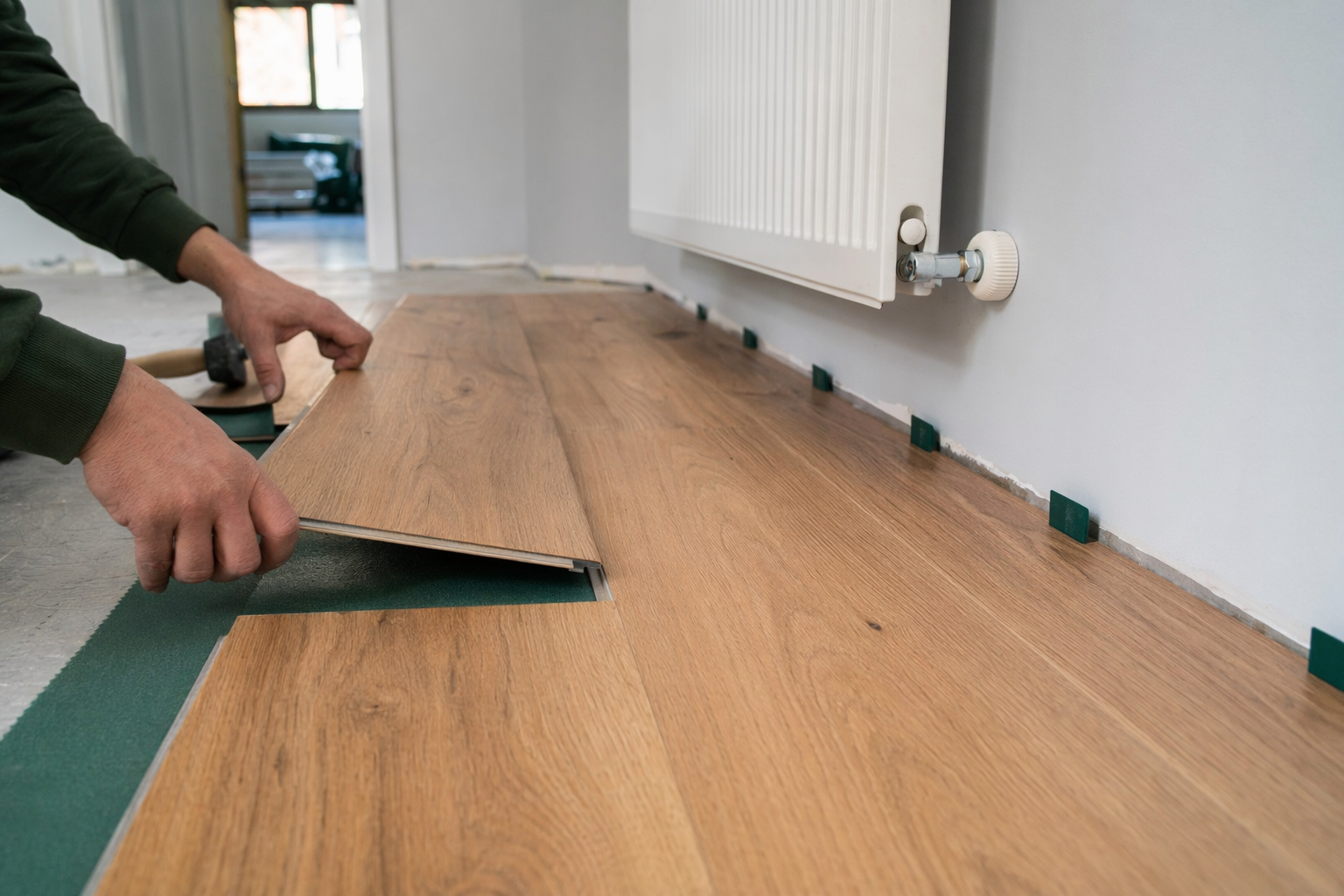
Hardwood is real wood with a natural look and possible refinishing, while laminate gives a wood-like look for less but usually can’t be refinished and can suffer if water gets into seams—your room’s moisture risk and budget decide.
Quick definitions (so you’re comparing the right things)
Hardwood flooring is real wood. It can be solid hardwood, or in some cases engineered hardwood (a wood product with a real-wood top layer).
Laminate flooring is a layered “picture” surface pressed over a core (usually fiberboard). The top layer is not real wood, even though it may look like it.
On many websites, “laminate” is compared to “hardwood” in general. If you’re choosing, try to confirm what you’re actually buying (solid vs engineered wood, and what core the laminate uses). This affects cost, durability, and moisture behavior.
- Tip: Ask for the exact product name and spec sheet before you compare bids.
- Tip: If moisture is a concern, hardwood and laminate perform very differently by room.
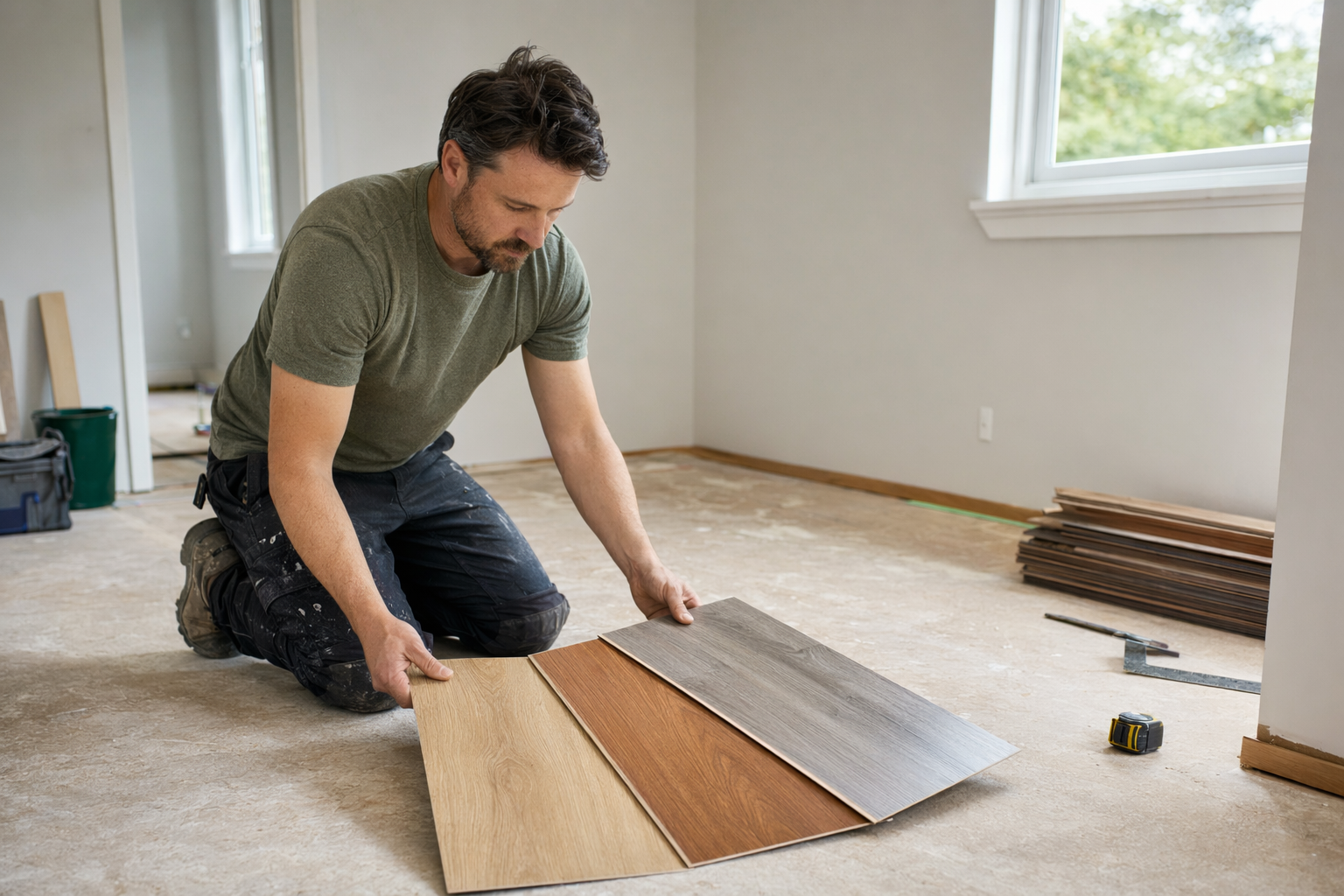
Look and feel: what you’ll notice every day
Hardwood has natural grain, subtle color variation, and a “real wood” texture underfoot. Many people also like how it changes slightly as light hits it over time.
Laminate can look very convincing—especially in styles that mimic wood grain and knots. But it often feels a bit more uniform and “printed” compared with real wood.
If you care a lot about a floor that feels unique and natural, hardwood usually wins. If you want a consistent, wood-like look at a lower cost, laminate can make a lot of sense.
- If you love authenticity, lean hardwood.
- If your goal is a realistic wood look on a tighter budget, laminate is often a practical choice.
Durability and lifespan: wear, dents, and “aging”
Hardwood is durable, but it’s not indestructible. It can dent from heavy furniture, show scratches from pets, and dull over time if it’s not maintained. The big advantage is refinishing: many hardwood floors can be sanded and re-finished one or more times, depending on the product.
Laminate is typically built to resist everyday scuffs and fading better than you might expect. Still, laminate can chip at edges, scratch under grit, and the surface can wear through—especially where there’s heavy foot traffic.
Practical takeaway: hardwood often has a longer “service life” and can be refreshed. Laminate usually lasts for years, but once the surface is badly worn, replacement is more common than refinishing.
- Hardwood can often be refinished; laminate usually can’t.
- Both can be damaged—how they fail is different.
Water and moisture: what happens if spills, humidity, or leaks get involved
Hardwood (especially solid) can be sensitive to moisture. Swelling and cupping can happen if water penetrates and isn’t dried quickly. Even engineered hardwood can be more stable than solid, but it still isn’t “waterproof.”
Laminate’s weak point is the seams and edges. If water sits, it can seep into the core and cause swelling or separation. Many laminate products are marketed with “water-resistant” claims, but performance varies and is not the same as waterproof flooring.
Practical takeaway: both options need good cleaning habits, prompt spill cleanup, and proper installation details. If you’re choosing for kitchens, entryways, basements, or any area with higher moisture risk, talk through moisture limits and product ratings with a licensed flooring contractor. For moisture guidance, see materials.
- Spill cleanup speed matters for both—especially for laminate edges.
- Ask contractors about moisture limits for the exact product you’re considering.
Cost comparison: typical installed price ranges (material + labor)
Prices vary by region, product grade, room size, subfloor condition, and how complicated the installation is (doors, transitions, stair steps, moving appliances). So these are general ranges—not quotes.
In many areas, installed hardwood commonly lands around $8–$15+ per square foot for material plus installation. Refinishing costs come later if you choose to refresh the floor, and not every installation is equally easy to refinish.
Installed laminate commonly lands around $3–$7 per square foot for material plus installation. “Better” laminate (thicker wear layers, stronger cores, better locking systems) can push higher, but it’s often still below hardwood.
If you want to compare options fairly, ask your contractor for a written breakdown that includes: flooring material, underlayment (if needed), removal/disposal, subfloor prep, transitions, and any leveling. For help getting matched, use get matched.
- General ranges: Hardwood often ~$8–$15+ / sq ft installed; Laminate often ~$3–$7 / sq ft installed.
- Ranges aren’t promises—your subfloor and job details can move the price.
Which one makes sense for your room and lifestyle?
Hardwood is a strong match when you want a long-term, natural floor and you’re willing to maintain it (regular cleaning, felt pads, rugs in high-sand areas, and prompt drying after spills). Many homeowners also choose hardwood in living rooms and bedrooms because those spaces tend to be drier and have less direct moisture risk.
Laminate is often a better fit when you want a wood-like look with lower up-front cost, and you’re okay replacing the floor rather than refinishing it later. It can work well in many common rooms—especially if you choose quality laminate and keep it clean and dry.
Room-by-room reality:
1. Living room/bedroom: both can work well; hardwood is best if you want real wood and longer-term refresh.
2. Entryway/near exterior doors: laminate can work, but choose quality and plan for tracked-in grit; hardwood needs careful maintenance.
3. Kitchen/bath-adjacent areas: laminate can be risky if there’s frequent spills; hardwood may also be sensitive—your product ratings and installation matter a lot.
4. Basement or high-humidity areas: moisture management is critical—ask a licensed contractor what’s appropriate for your local conditions.
For more guidance, explore guides and talk with a licensed, insured flooring contractor about your specific room conditions.
- Hardwood: best when you want real wood and possible refinishing later.
- Laminate: best when budget matters and you want a wood look without refinishing.
How to avoid bad bids and flooring scams when comparing options
Whether you choose hardwood or laminate, the way you compare bids matters. Watch out for vague pricing like “installed flooring” without listing what’s included, or big upfront cash deposits.
Be cautious if a contractor pressures you to sign on the spot, won’t provide a written scope, or refuses to confirm the exact product (brand, model, thickness, wear layer/core details). Also be wary of skipping subfloor prep—subfloor problems often show up later as gaps, squeaks, or uneven flooring.
Before you hire, ask for a written proposal that includes:
- Exact flooring product and thickness/type
- Underlayment details (if applicable)
- Removal/disposal (old floor)
- Subfloor prep/leveling notes
- Transitions/trim included or not
- Total price range and payment schedule
PlankPath helps you get matched to licensed, insured contractors near you for free—we don’t install or sell flooring. You stay in control of choosing who to hire and what you pay, and you can compare more than one contractor.
- Get it in writing: product, scope, and price.
- Avoid cash-only, no-license, or “sign now” pressure.