Avoiding flooring scams and overcharging
Most flooring scams are not dramatic — they are vague pricing, big upfront deposits, and pressure to sign before you can compare. The safest move is simple: get the price, material, and scope in writing, then compare more than one quote.

Get every flooring quote in writing, compare at least two or three, and avoid big deposits, cash-only deals, and anyone who pressures you to sign fast.
The biggest red flags to watch for
A fair flooring job should feel clear, not confusing. If a contractor will not give you a written estimate, keeps changing the price, or says the deal is only good today, slow down.
Watch for big cash deposits, cash-only payments, or a request to pay most of the job before work starts. Be careful with anyone who says you do not need a license, insurance, or permits, or who tells you not to check their paperwork.
Another warning sign is a contractor who skips over the subfloor, moisture, transitions, or removal of old flooring. Those details can change the cost a lot, and they matter for how the floor performs later.
What honest pricing usually looks like
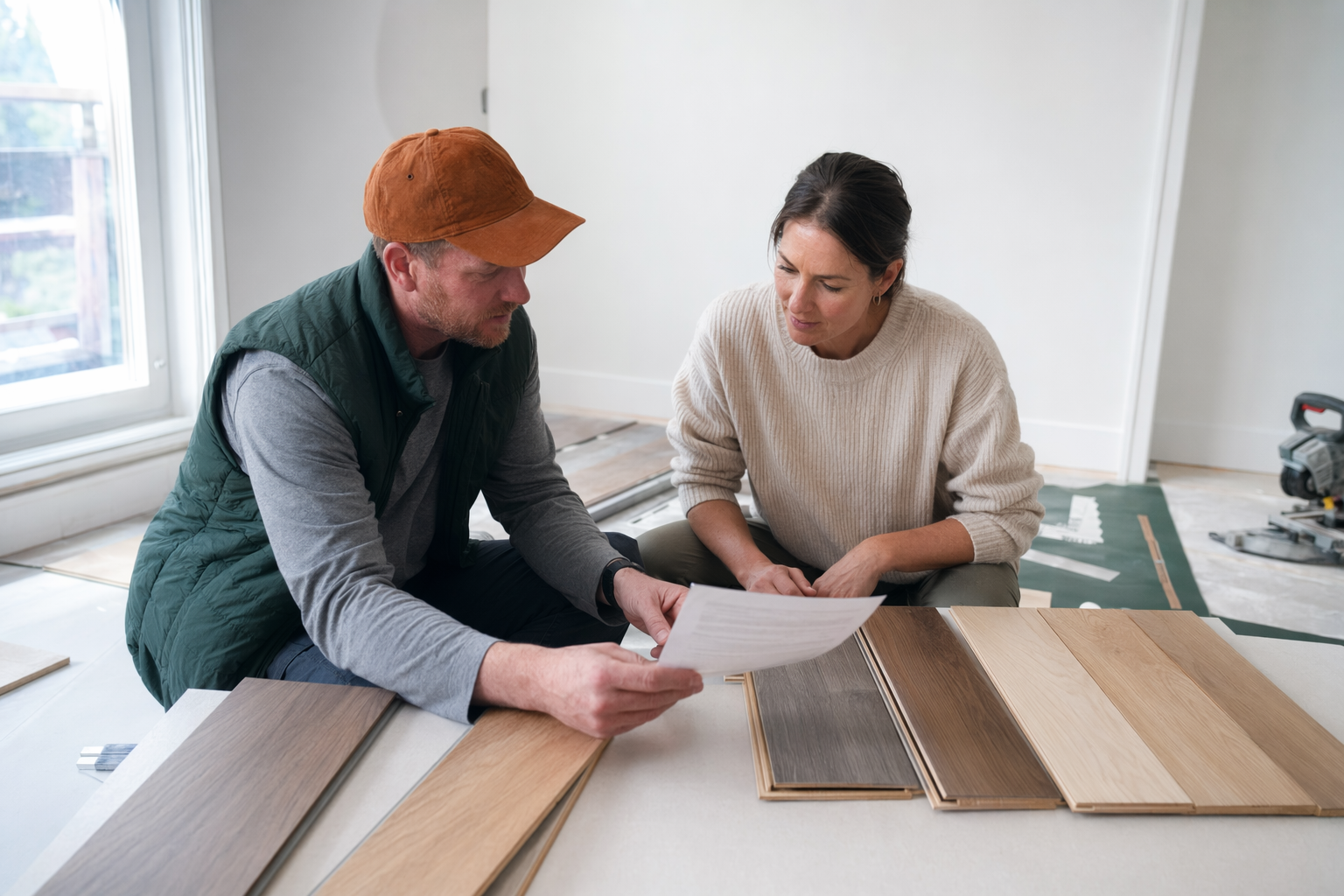
Good estimates are specific. They usually say what material is being used, how many square feet are included, what prep work is included, and what costs extra. That may include removing old floors, moving furniture, underlayment, moisture testing, trim work, stairs, or repairs to the subfloor.
For installed flooring, prices vary a lot by material and region. As a rough guide, many homeowners see laminate around $3–$8 per square foot installed, luxury vinyl plank around $4–$10, carpet around $3–$8, engineered wood around $6–$14, and solid hardwood often around $8–$20 or more. These are not quotes — the real number depends on the room, the subfloor, the job size, and local labor costs.
If one price is much lower than the others, ask what is missing. Sometimes the cheapest bid leaves out prep work or uses lower-grade materials, then adds charges later.
How to protect yourself before you sign
Start with written estimates from more than one contractor. Compare the material name, product grade, thickness, installation method, warranty, and every line item. If two quotes are not written the same way, they are hard to compare fairly.
Before you agree to anything, ask for proof of license and insurance where required, and verify it yourself. Ask who will actually do the work, when they can start, how long the job should take, and what happens if they find damage under the old floor.
Do not sign on the spot just because you were offered a discount. A real contractor should be okay with you taking time to review the proposal, ask questions, and compare options.
How PlankPath fits in
PlankPath is a free matching service, not a flooring contractor or store. We do not do the work or sell materials. We help homeowners share basic project details — like contact info, project type, material interest, ZIP code, approximate square footage, and preferred language — so they can be matched with licensed, insured flooring contractors near them.
That still leaves you in control. You compare quotes in writing, choose who to hire, and confirm the work is done right before paying the final amount. If you want a place to start, see our guides, browse materials, or check costs.
A quick example: one homeowner gets three written quotes for the same room, but only one includes floor removal and subfloor repair. The lowest price looks best at first, but it is not really the same job. That is exactly why written scope matters.
Questions to ask before hiring
Use these questions to keep the conversation clear:
- Is the estimate written and detailed?
- What exactly is included in the price?
- What costs extra?
- Are you licensed and insured?
- Will you need a deposit, and how much?
- What materials will you use?
- Who will do the work?
- What happens if the subfloor is damaged?
- How do you handle moisture issues or hidden problems?
- When is the final payment due?
If the answers are vague, pushy, or hard to put in writing, that is usually a bad sign.