Flooring, moisture and your subfloor
Moisture is one of the biggest reasons floors fail early—before wear ever shows. This guide explains how subfloors and room moisture affect flooring choices and what to ask a licensed, insured contractor to do.
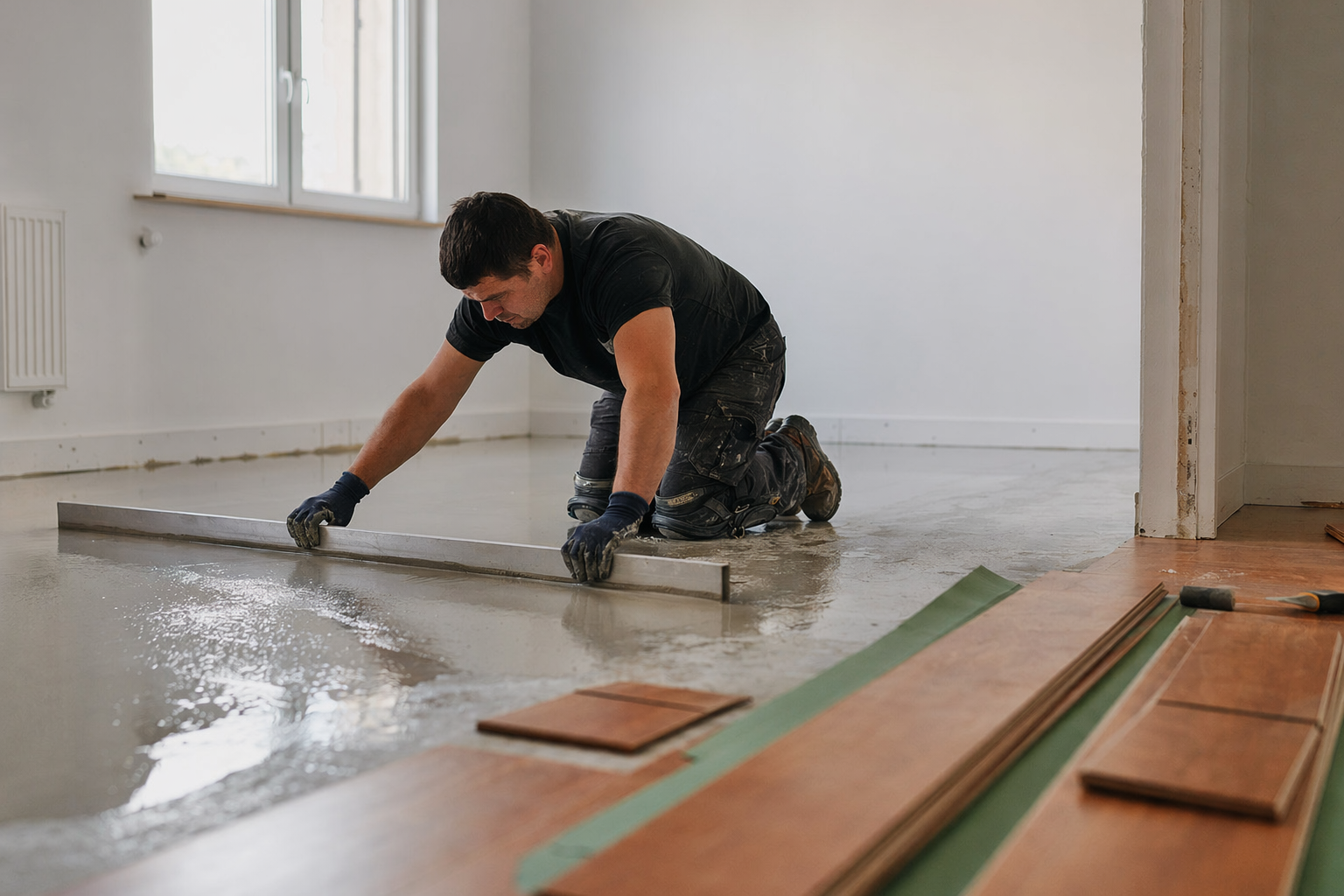
Moisture usually ruins floors from the subfloor up—so test, prepare properly, and compare written quotes that clearly explain what they’ll do for moisture.
Start here: moisture problems usually come from the subfloor (not the top layer)
If your floor buckles, gaps, crowning, cupping, or develops a musty smell, moisture is often the root cause. It can come from spills, humidity, crawlspaces/basements, leaks, or even condensation where warm and cool meet.
Different flooring materials handle moisture differently, but almost every “moisture failure” begins with one of two things: moisture was present in the subfloor, or it was introduced after installation. That’s why preparation and testing matter as much as the product you pick.
The good news: you can make a safer choice by matching the flooring type to the room and making sure the contractor checks moisture and prepares the subfloor properly. You stay in control—use quotes to compare how each contractor will handle moisture.
- Moisture failures often look like buckling, lifting, gaps, or a damp/musty odor
- The subfloor’s moisture level and the room’s humidity drive your best material choice

How to tell if a room is “too damp” for certain floors
Some rooms are naturally harder on floors: bathrooms, laundry rooms, basements, and entryways near wet weather. Even if you don’t see water, humidity can still be high.
There are also “hidden moisture” scenarios: plumbing leaks behind walls, wet crawlspaces, poor ventilation, or sprinklers/roof drainage near exterior foundations. If you notice any ongoing dampness, don’t just cover it—figure out the source with a licensed professional.
General homeowner checks you can do: look for water stains, discoloration, peeling paint, or a musty smell under rugs; ask how they will test the subfloor before installation; and confirm they’ll discuss vapor/moisture mitigation when it’s relevant.
- Bathrooms/laundry/ground-level areas need more moisture awareness than bedrooms
- Musty smell or recurring damp spots are a sign to investigate before installing
Subfloor basics: what moisture does to wood, engineered, and other materials
Subfloors are the “middle layer” that everything sits on. If the subfloor is damp or not flat, moisture can move into the flooring materials and cause problems—even if the surface looks fine at first.
Here’s the general pattern: wood-based products (like solid hardwood and many engineered products) can be more sensitive to excessive moisture, while some resilient products (like certain vinyl planks) are more forgiving. But “more forgiving” doesn’t mean “ignore moisture.” If moisture is trapped under a floor, mold and odor can still become an issue.
The best match depends on several factors: the exact product (each brand has limits), the type of subfloor (plywood, OSB, concrete), and the conditions of your home (humidity and ground/ventilation). A good contractor will explain these limits and how they’ll verify conditions before installing.
- Moisture can cause movement, gaps, and odor issues—often starting from the subfloor
- The exact flooring product matters: always rely on the manufacturer’s moisture limits
What a good contractor should do about moisture (ask these questions)
A careful contractor won’t just “install the floor and hope.” They should talk through moisture testing and preparation steps based on your subfloor and room.
Ask questions like:
1. Will you check subfloor moisture before installation? If yes, what method do you use?
2. Are you installing an appropriate underlayment or moisture barrier for my room and flooring type?
3. How will you confirm the subfloor is flat enough for the chosen product?
4. What climate/humidity conditions do you recommend we maintain before and after install?
5. What’s your plan if you find dampness or an issue during prep?
For more on choosing materials and trade-offs, you can browse materials and costs. If you want help comparing contractors near you, PlankPath can help you get matched to licensed, insured flooring contractors at no cost to you: get matched.
- Use direct questions about moisture testing, barriers/underlayment, and flatness checks
- Plan ahead: ask what happens if they discover dampness during prep
Red flags: common ways moisture prep gets skipped (and how scams overcharge)
Moisture issues are where shortcuts get expensive. If a contractor avoids testing, dismisses concerns, or promises it “won’t matter,” that’s a warning sign.
Scam/overcharging red flags you should watch for:
- Huge upfront cash deposits or pressure to pay immediately before work starts
- Cash-only deals with no clear paper trail
- No license (or unwilling to show proof of licensing) and no insurance
- Vague pricing that doesn’t clearly list materials, labor, and moisture-related preparation
- Pressure to sign on the spot or to start right away without a written scope
- Claims that they’ll skip subfloor prep (for example, flatness leveling or moisture barrier/underlayment) to “save money”
Also be cautious if they refuse to put details in writing. Before you choose anyone, get the price, the exact material/specs, the scope of prep, and any moisture steps in a written proposal—and compare more than one quote.
- Avoid contractors who skip moisture prep or won’t document the scope in writing
- Get the plan and price in writing, then compare multiple quotes
Costs: what moisture prep can add, and typical installed price ranges
Moisture-related work varies a lot. Sometimes it’s just the correct underlayment or moisture barrier. Other times it includes leveling/flattening, additional prep, or more steps to protect the floor in challenging rooms.
As a general planning range (not a quote), installed flooring costs often land around:
- Laminate: about $3–$8 per sq. ft.
- Engineered wood: about $5–$12 per sq. ft.
- Hardwood (solid): about $6–$14 per sq. ft.
- Luxury vinyl plank (LVP): about $3–$10 per sq. ft.
- Tile (ceramic/porcelain): about $8–$20+ per sq. ft.
- Carpet: about $2–$7 per sq. ft.
Moisture prep can push costs up within any material type. The biggest cost drivers are the subfloor condition (flatness and damage), the room and access, underlayment/barrier requirements, and local labor rates. If you want more context on budgeting, visit costs and use those ranges to compare quotes that are broken down by scope.
- Installed cost depends on your room, subfloor condition, and what moisture steps are needed
- Use ranges to compare bids—not as guarantees