What is the best budget flooring?
“Best budget flooring” depends on your room, subfloor, and how the floor will be used. Below are the most cost-friendly options (and the trade-offs), plus how to get matched with a licensed contractor—free—for your project.
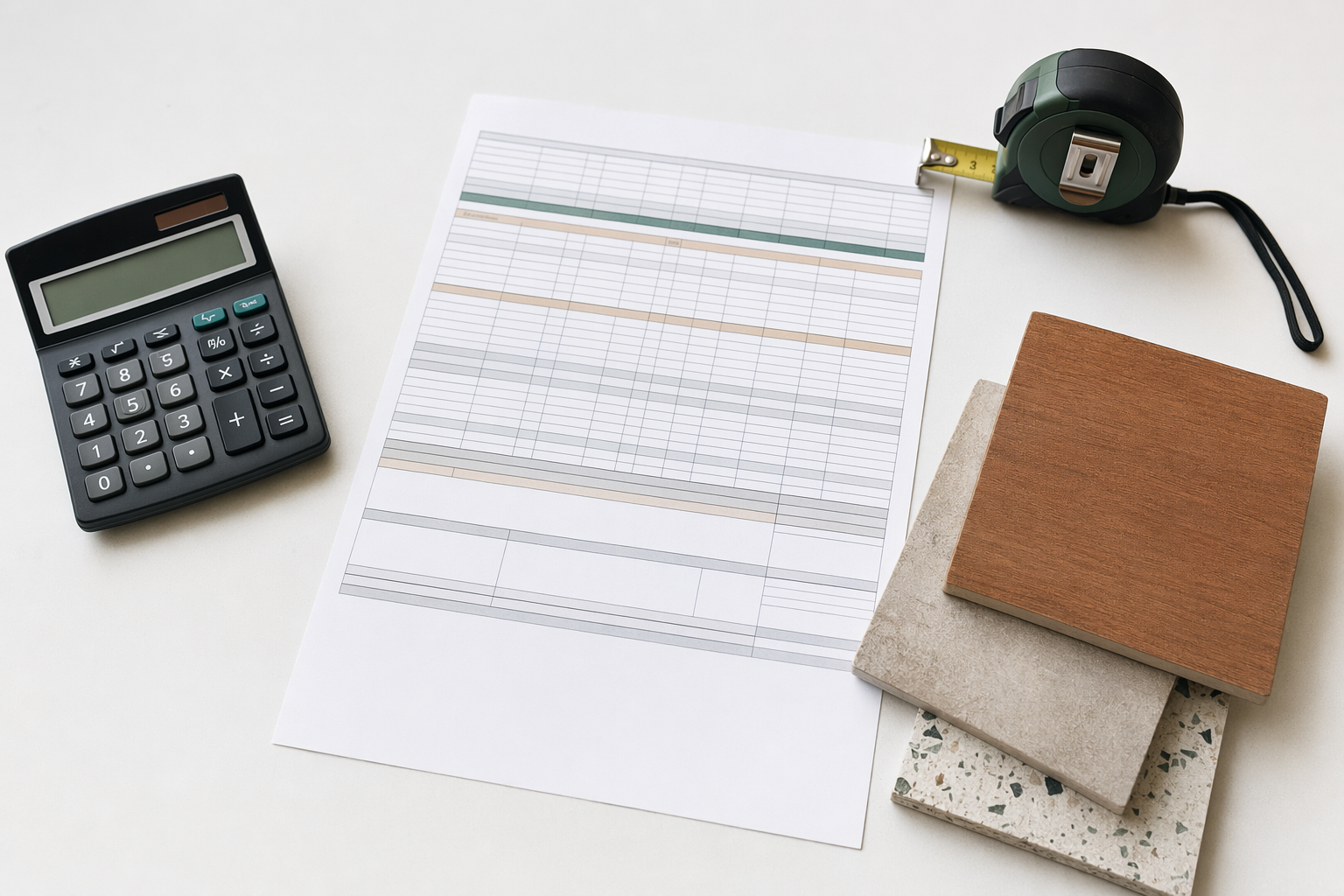
For most homes, the best budget flooring is usually LVP or laminate (carpet for comfort in bedrooms), and the real savings come from choosing the right product for the room and getting comparable written quotes from licensed, insured contractors—matched for free through PlankPath.
Best budget choice (quick answer)
If you want the most budget-friendly flooring that still looks good for everyday life, vinyl plank (LVP) or laminate are usually the best starting points.
For bathrooms, entryways, and other damp areas, look for water-resistant or waterproof LVP (not basic laminate). If you need the softest feel for bedrooms, carpet can be a lower-cost way to improve comfort—but it won’t be the best for spills or pets long-term.
Budget-friendly doesn’t mean “cheap-quality.” The biggest differences come from thickness, wear layer (for LVP/laminate), and how well the installer prepares the surface.
Want a concrete shortlist for your home? Use get matched (free) and tell us your ZIP, room type, and approximate square footage. You’ll be connected with licensed, insured flooring contractors near you.
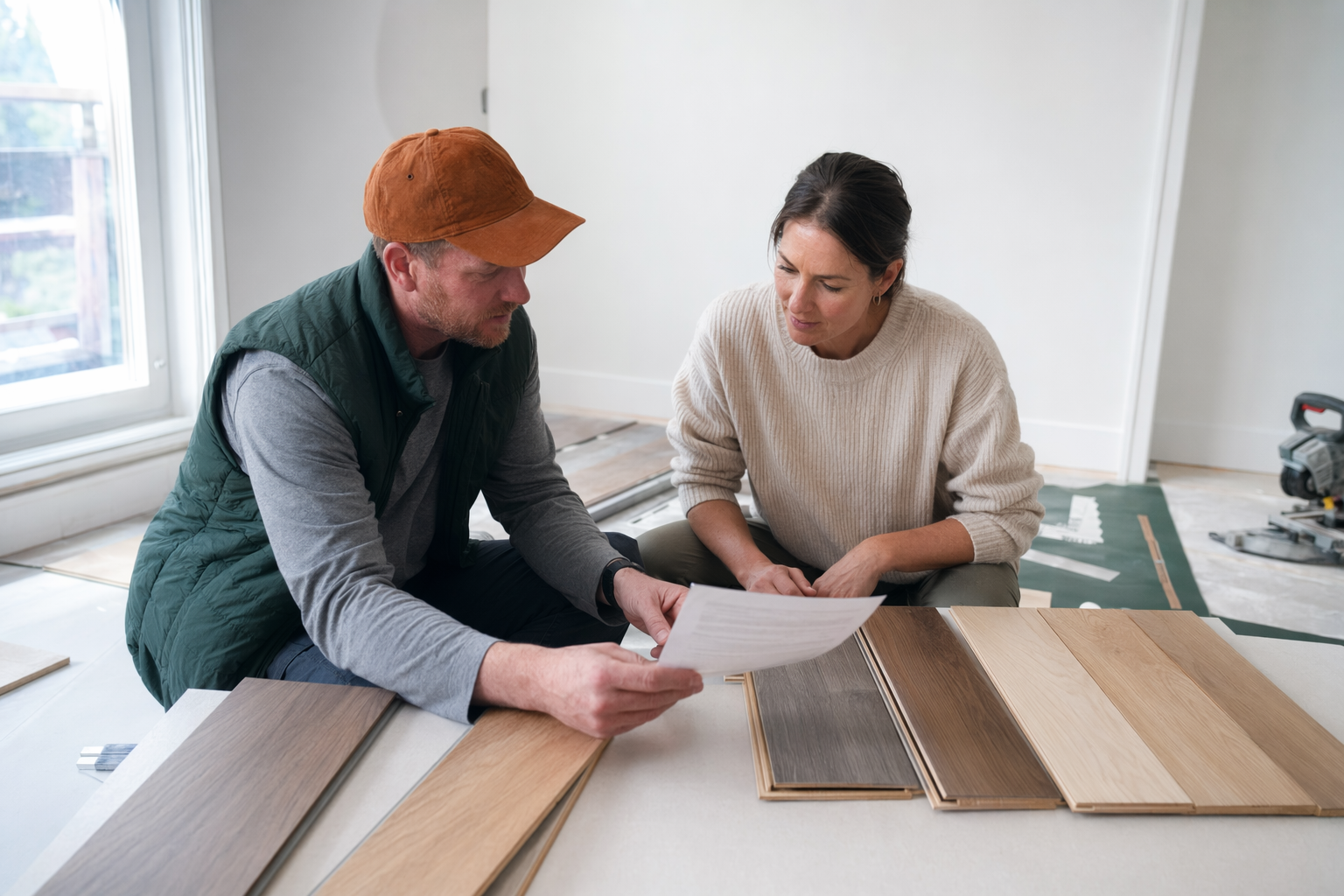
Budget flooring options: what they’re like to live with
Here’s the honest “day to day” view of the common budget materials.
1) Laminate (often the cheapest to buy)
Laminate is a layered floor that looks like wood or tile. It’s usually easy to clean and can handle normal foot traffic well. The downside: it’s not truly moisture-friendly. Water that gets in at seams or edges can cause swelling.
2) Luxury vinyl plank (LVP)
LVP is usually one of the best budget-to-performance options. Many products are water-resistant (and some are waterproof), comfortable underfoot, and quieter than hardwood. The downside: lower-quality floors may show scuffs, and installation matters a lot for a flat, long-lasting result.
3) Carpet (often lowest “feel-good” cost for bedrooms)
Carpet can be a budget way to make a room warmer and quieter. But stains, pet accidents, and heavy spills can become expensive. Also, carpet can trap dust and allergens, so ventilation and cleaning routine matter.
4) Tile (not always “budget,” but sometimes worth it)
Budget tile can be competitive for small areas like entryways. It’s durable and easy to clean, but it’s harder to stand on and it costs more in labor than many people expect.
If you tell a contractor “budget,” ask them which layer/grade they plan to install and what subfloor prep is included—those choices strongly affect how the floor will look and last.
Costs: realistic budget ranges (installed)
Prices vary by region, room shape, subfloor condition, and product thickness/grade. The ranges below are typical planning numbers—not quotes.
- Laminate (installed): about $2.00–$6.00 per sq. ft.
- LVP (installed): about $3.00–$8.00 per sq. ft.
- Carpet (installed): about $2.00–$7.00 per sq. ft.
- Budget ceramic tile (installed): about $6.00–$15.00 per sq. ft.
What usually pushes the price up:
- Higher-quality product (thicker plank, better wear layer, better padding)
- Uneven subfloor (more time to level/prepare)
- Lots of cuts (small rooms, many corners/closets)
- Moving or removing furniture, hauling, or tear-out
- Upgraded underlayment or moisture barriers
What usually lowers the price:
- Large, open rooms with fewer seams
- Floors on a solid, fairly flat subfloor
- Simple layout with minimal transitions
If you want help estimating, read costs for what to ask and how to compare quotes side-by-side. A low price is only “good” if the scope is comparable.
Pick the right material for the room (budget edition)
Match the flooring to how the room behaves. This is where people often overspend or get disappointed.
- Living rooms & bedrooms: Laminate and LVP are common budget winners. Carpet is great for comfort but plan for cleaning and wear.
- Kitchens & dining: LVP is often the safest budget pick because it’s easy to clean and handles everyday splashes better than laminate.
- Bathrooms & laundry: Choose water-resistant or waterproof LVP made for wet areas. Basic laminate usually isn’t the right budget move here.
- Entryways & mudrooms: LVP with a strong wear layer is often a better budget choice than softer options.
- Basements: Many areas need special attention for moisture. If you’re unsure, ask installers what product and underlayment system they recommend for your specific conditions.
If you’re replacing old floors, it’s also worth checking what’s underneath. Old glue, uneven boards, or moisture issues can affect the final cost and the best material choice.
How to avoid overpaying: contractor red flags + what to compare
Even a good product can go wrong with the wrong installer. These are common red flags when you’re chasing the lowest price.
Red flags to watch for:
- No license or no proof of insurance
- Huge cash-only upfront payments
- Pressure to sign immediately
- Vague pricing like “flooring included” without explaining materials, grade, and labor
- Skipping subfloor preparation (or not addressing leveling/flattening)
- No written scope: you want the material type, thickness/grade, underlayment, transitions, and what happens with tear-out
What to request in writing (before any work):
- The exact flooring brand/product line and key specs (thickness, wear layer, waterproof rating if relevant)
- The scope of work (removal/haul-away, leveling/underlayment, transitions)
- The total price for the full job (material + installation)
- A payment schedule tied to milestones (not just big deposits)
- An estimated timeline and start/end dates
Also, get more than one quote. The cheapest quote can be cheap for a reason—like thinner material, less prep, or missing transitions. If two quotes cover the same scope, you can trust the comparison more.
PlankPath is a free matching service, not an installer. If you want to find licensed, insured contractors near you, start with get matched.
A simple decision plan for “budget” that actually works
Use this quick plan to stay in budget without ending up with a floor you don’t like.
- Pick the room’s “must-haves” (water resistance? quiet? soft underfoot?)
- Choose 2 material options (for example: LVP + laminate for most living areas)
- Set a target budget range per square foot (use the ranges above as planning, not quotes)
- Ask contractors the same questions so quotes are comparable
- Confirm everything in writing: product specs, prep work, transitions, and payment milestones
If you’d like guidance on choosing based on your home, you can skim guides for material-by-material comparisons and then use help if you’re not sure what questions to ask.