What is the best flooring for dogs and pets?
For most homes with dogs, the best flooring is usually luxury vinyl plank, tile, or a good laminate made for scratch and moisture resistance. The right choice depends on your dog's nails, accidents, your subfloor, and how much noise and hardness you can live with.
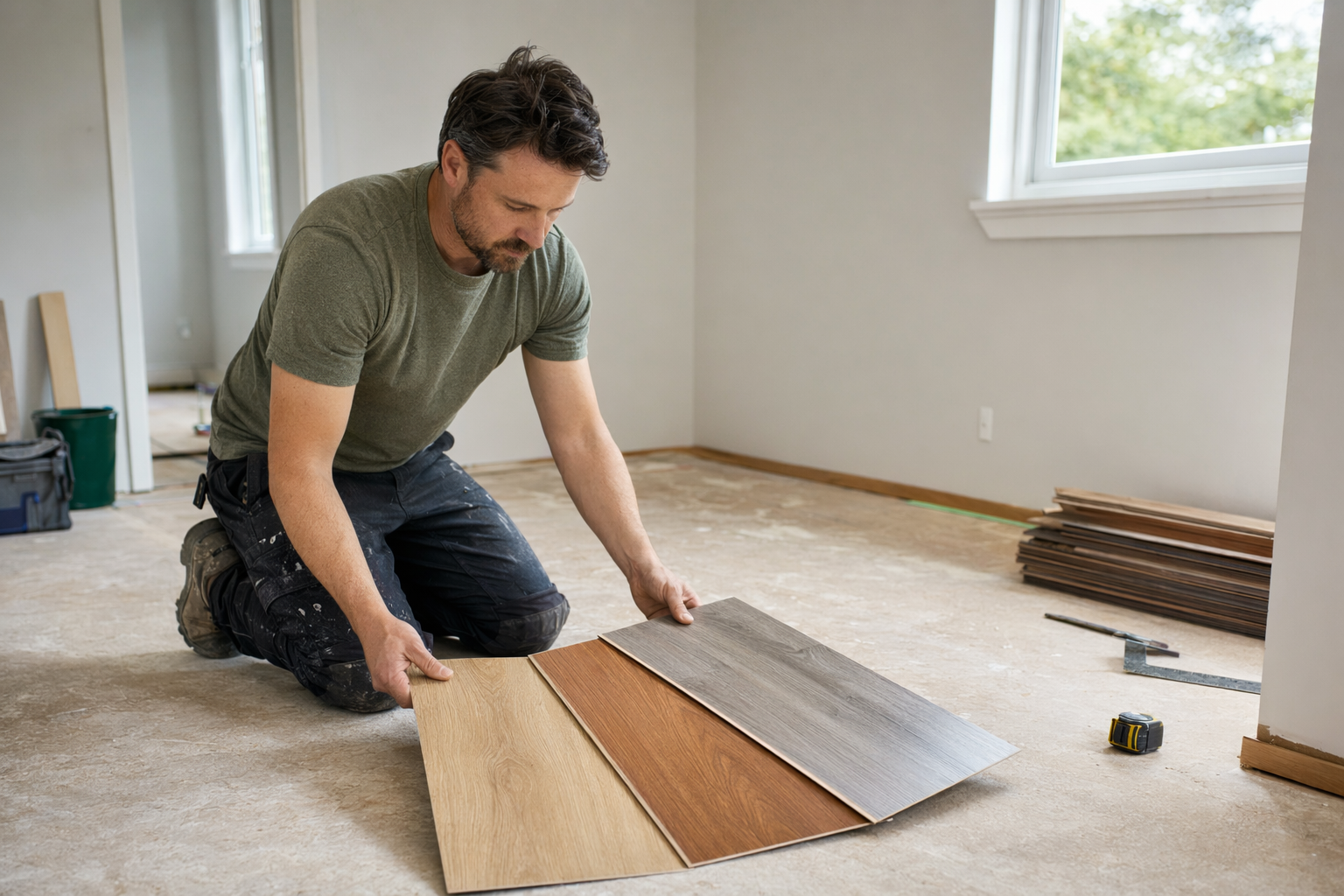
For most dog owners, luxury vinyl plank, tile, or a good laminate is the most practical choice, and you should compare written quotes from licensed, insured contractors before you hire anyone.
Short answer: pick scratch resistance, water resistance, and easy cleaning
If you want the simplest answer, luxury vinyl plank (LVP) is often the safest all-around choice for homes with dogs and other pets. It handles muddy paws, water bowls, and the occasional accident better than most wood floors, and it is usually easier on the budget than tile or new hardwood.
Tile is one of the toughest options for pets, especially for scratches and moisture, but it is hard, cold, and louder under paws. Laminate can also work well if you choose a product with good wear protection and careful seam installation, but some laminate floors do not like standing water.
Solid hardwood is beautiful, but it is easier to scratch and stain than many people expect, especially with large dogs or frequent nail clicks across the floor. Carpet is soft and quiet, but pet hair, smells, and accidents can make it the hardest to keep clean over time.
There is no single best floor for every pet household. A small older dog that rarely has accidents creates a different kind of wear than two big active dogs running in from a wet yard every day.
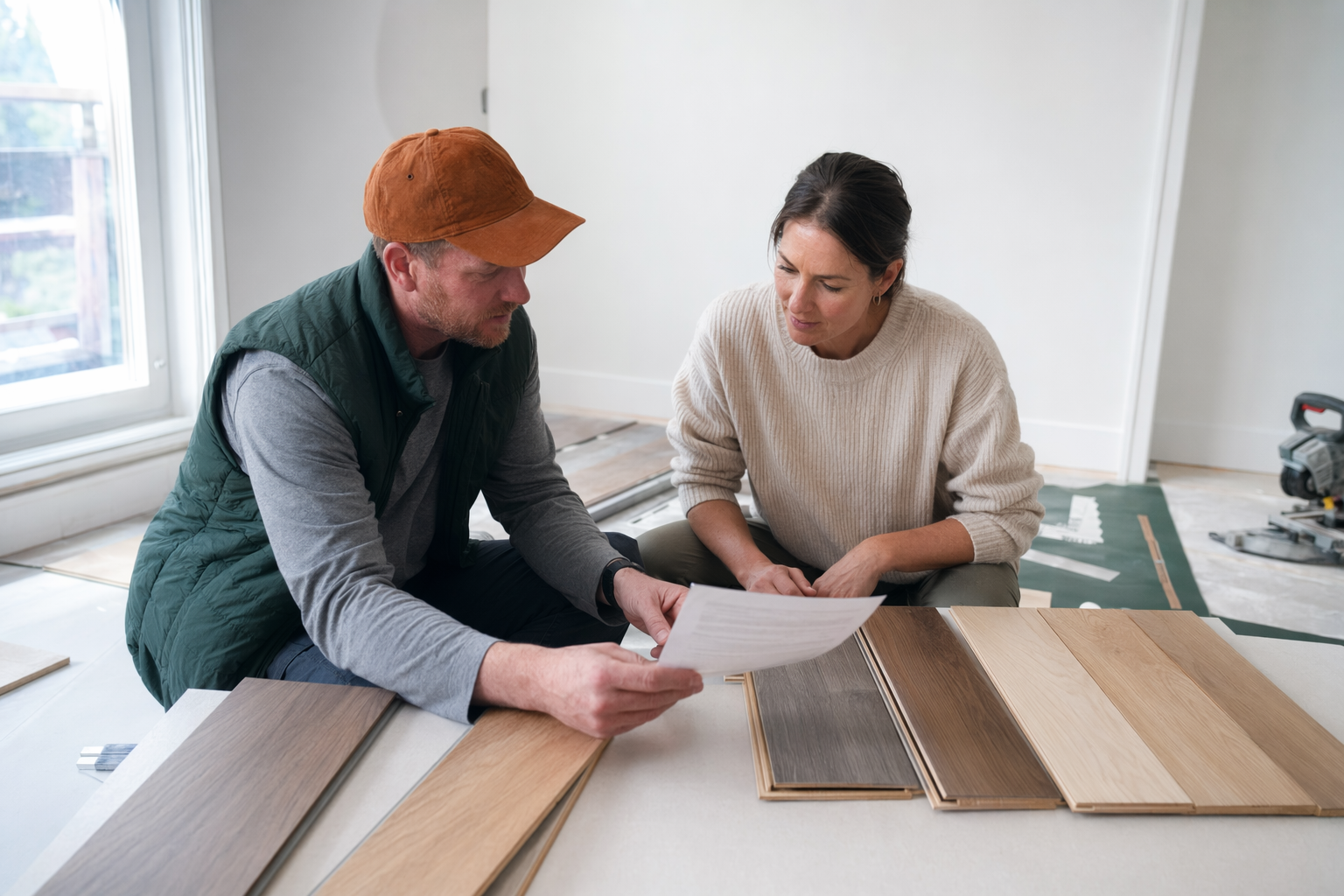
Best flooring types for dogs: the real trade-offs
Luxury vinyl plank is popular for a reason. It is usually water-resistant or waterproof, softer underfoot than tile, easier to clean than carpet, and available in many wood-look styles. A typical installed cost is about $4 to $10+ per square foot, but that is not a quote. The real number depends on the product quality, the subfloor condition, your region, and the size of the job.
Porcelain or ceramic tile is one of the most durable choices for pets. Dog nails usually do not bother it much, and accidents are easier to clean if the grout and tile are maintained well. Installed cost often runs about $8 to $20+ per square foot. The downside is comfort: tile can feel hard, slippery, and cold, and some pets may need rugs or runners for traction.
Laminate is often a good middle-ground option if you want a wood look without paying for hardwood. Better laminate products can resist scratches well, but moisture protection depends on the product and the installation. Installed cost is often around $4 to $9+ per square foot. If water gets into seams or edges, damage can still happen.
Engineered wood and solid hardwood are usually not the first choice for heavy pet traffic, but some homeowners still choose them for the look and the ability to refinish certain products. Installed engineered wood often falls around $6 to $14+ per square foot, while solid hardwood is often about $8 to $18+ per square foot or more. Both can scratch, dent, and react to moisture, so pet households should go in with realistic expectations.
Carpet can make sense in bedrooms or low-traffic spaces if comfort matters most, but for dogs it is usually the least forgiving option. Installed cost often starts around $3 to $8+ per square foot, depending on the carpet and pad. It shows wear faster, traps hair and odor, and can be difficult after repeated accidents.
What matters most in real life with pets
Scratch resistance matters, but it is not the whole story. Many people focus only on dog nails, then regret choosing a floor that handles scratches but is slippery, loud, or hard to clean. Look at the whole daily picture: nails, water bowls, muddy paws, drool, pet beds, toys, accidents, and how often your pets race through the room.
Water and stain behavior are especially important. Even well-trained dogs can have accidents when they are young, old, sick, or stressed. A floor that can handle quick cleanup without swelling or staining is often worth more than a floor that looks perfect in a showroom.
Traction is another big one. Very slick floors can be hard on older dogs and some breeds with joint issues. Slight texture can help, though too much texture can hold dirt. Noise also matters: some floating floors can sound clicky or hollow with pet nails if the underlayment and subfloor are not right.
This is also where the subfloor matters. A good product installed over a bad or uneven subfloor can still feel cheap, noisy, or fail early. That is why a licensed flooring contractor should look at the room, the existing floor, and the subfloor before giving a real recommendation.
Best and worst rooms for pet-friendly flooring
For entryways, kitchens, mudrooms, and living areas where dogs spend a lot of time, LVP and tile are often the safest bets. These rooms usually see the most moisture, dirt, and traffic, so easy cleanup matters. Laminate can also work in some of these spaces if the product is rated for moisture resistance and spills are cleaned promptly.
Bedrooms are more flexible. If your dog is calm and accidents are rare, laminate, engineered wood, or even carpet may still be fine depending on what feel you want. For older pets or puppies, many homeowners still prefer easier-clean surfaces and then add washable rugs where softness is needed.
Bathrooms and laundry rooms usually call for strong moisture resistance, so tile and many vinyl products are usually better choices than standard laminate, hardwood, or carpet. Basements depend a lot on moisture conditions, slab condition, and your local climate. General information can help, but a local licensed contractor should check the actual space.
If you love real wood, consider using it in lower-risk rooms and using a more durable product in high-traffic pet zones. Mixing materials by room is often more practical than forcing one floor type through the entire house.
How to choose without overpaying
When you get estimates, ask each contractor to write down the exact flooring product, thickness or wear layer if relevant, underlayment, transition pieces, trim work, subfloor prep, furniture moving, old floor removal, and cleanup. This is how you compare apples to apples. A low number can look great until you realize it leaves out prep work or uses a cheaper product.
Watch for red flags: vague pricing, pressure to sign the same day, very large upfront cash deposits, cash-only deals, no license, no proof of insurance, or anyone who wants to skip looking at the subfloor. Another common problem is promising an unrealistically fast install without discussing leveling, moisture issues, or door clearances.
Get more than one quote in writing and compare the scope, not just the total. Ask who handles problems with squeaks, broken planks, or uneven spots after installation. The homeowner stays in control: you choose who to hire, and you should confirm the work is done right before paying the final amount.
If you want a starting point before talking to installers, our cost guides and flooring guides can help you understand the usual ranges and trade-offs. These ranges are general information only, not quotes.
How PlankPath can help
PlankPath is a free matching service, not a flooring contractor, installer, or flooring store. We do not perform flooring work or sell materials. We help homeowners and renters get connected with licensed, insured flooring contractors near them so they can compare written quotes.
The service is free for the homeowner. To help with matching, we collect basic contact and project details only: name, phone, optional email, project type, material interest, ZIP code, approximate square footage, and preferred language. We do not need financial account numbers, Social Security numbers, or income information.
If you are deciding between vinyl, laminate, tile, or wood for a dog-friendly home, you can get matched and compare options from local contractors. If you are not ready yet, you can also start in our help center for plain-language answers.