Can you install new flooring over the existing floor?
Sometimes yes, sometimes no. New flooring can often go over an existing floor, but only if the old floor is flat, solid, dry, and the added height will not cause problems.
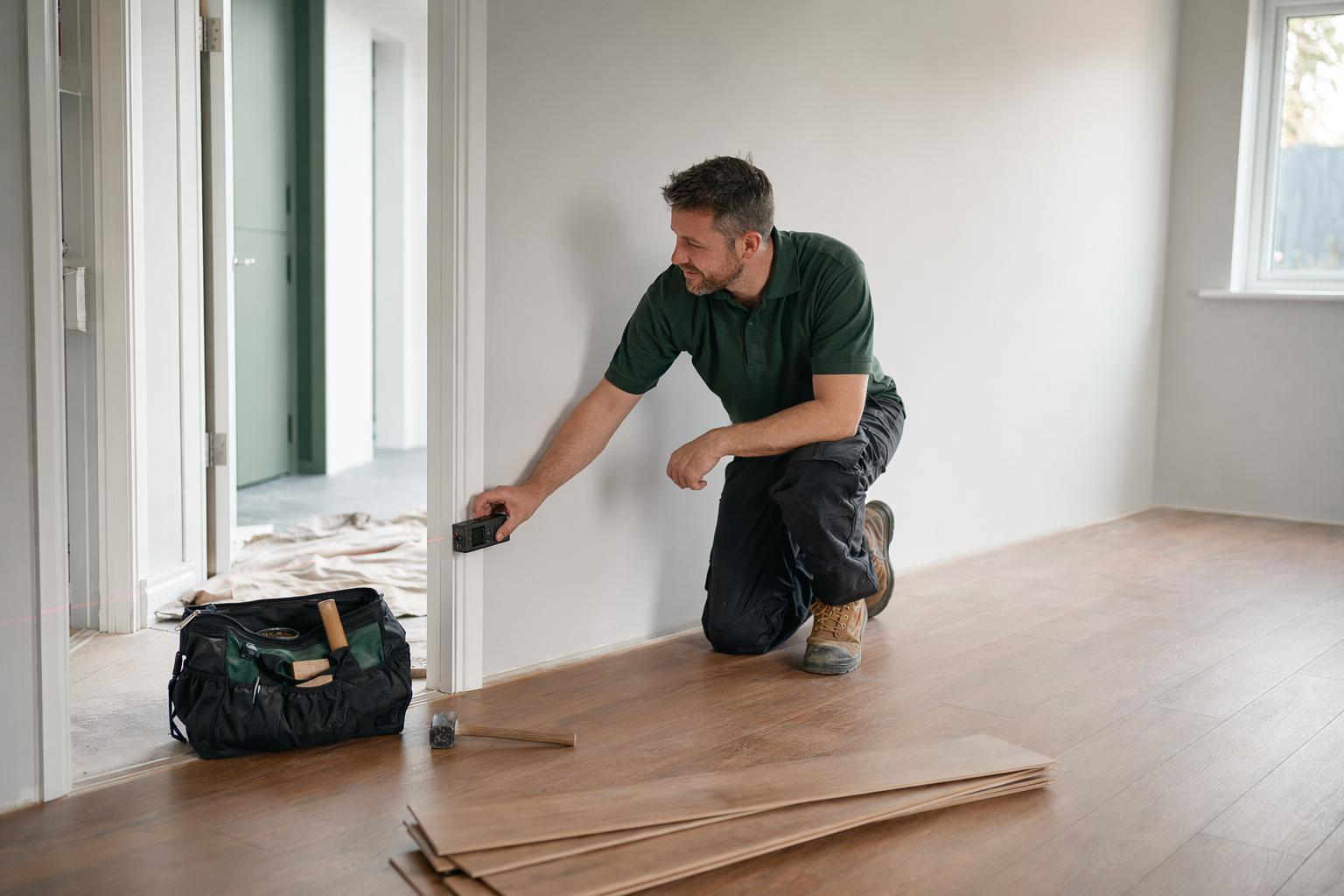
You can sometimes install new flooring over the old floor, but only if the existing surface is flat, solid, dry, and will not create height or moisture problems.
Short answer: yes, but only in the right conditions
Installing new flooring over an existing floor is common, especially with luxury vinyl plank, laminate, some engineered wood, carpet, and in some cases tile. It can save time on demolition and disposal, and it may lower labor costs. But it is not always the better choice.
The old floor has to be in good enough shape first. If it is loose, soft, swollen, badly cracked, moldy, uneven, or hiding moisture problems, covering it usually makes the problem worse, not better. A new floor is only as good as what is under it.
The other big issue is height. A second layer of flooring can affect doors, appliances, baseboards, toilets, transitions to other rooms, stairs, and trip hazards. That is why a licensed flooring contractor should look at the whole room, not just the surface.
PlankPath is a free matching service, not a flooring contractor or flooring store. We give general information and can help you get matched with licensed, insured flooring contractors near you so you can compare written quotes.

When going over the old floor can work
It is more likely to work when the existing floor is flat, firmly attached, clean, and dry. Many floating floors are designed to go over certain old surfaces with proper prep. This is often the case with luxury vinyl plank and laminate over old vinyl, tile, or hardwood that is still stable.
Engineered wood may also be installed over an existing floor in some situations, depending on the product, the condition below, and the installation method. Carpet can sometimes go over certain surfaces too, but the padding and door clearance still matter.
In general, contractors look for a surface that does not move, does not have major low spots or humps, and does not trap moisture. They also check the manufacturer's instructions. If the product says it should not go over a certain surface, that matters. Ignoring that can lead to failures and warranty problems.
If you are early in your project, guides and costs can help you compare materials before you talk to installers.
When the old floor should usually come out
Removal is often the smarter choice if the existing floor is damaged, soft underfoot, coming loose, heavily uneven, or showing signs of water trouble. The same goes for old carpet, padded flooring, peeling sheet vinyl, and floors with strong odors, stains, or possible mold issues. Covering those surfaces can lock in problems.
Tile is a good example. Sometimes a new floor can go over old tile, but wide grout lines, cracked tiles, or hollow spots can telegraph through or create movement later. Hardwood is another example: if it is cupped, buckled, or badly worn, it may need repair, refinishing, or removal instead of covering.
Wet areas need extra caution. Bathrooms, basements, laundry rooms, and entries often have moisture or height issues that make overlay installations trickier. What works in a dry bedroom may not work in a basement.
This is general information only, not construction advice. A licensed flooring contractor should check the subfloor, moisture conditions, and local code requirements before recommending whether to go over the old floor or remove it.
Costs: overlay can save money, but not always
If a new floor can go over the old one, you may save on demolition, haul-away, and some labor. As a very general installed range, many laminate and luxury vinyl plank jobs fall around $4 to $12 per square foot, engineered wood often runs about $7 to $16 per square foot, carpet is often around $3 to $10 per square foot, and tile commonly lands around $10 to $25+ per square foot. These are broad US ranges for material plus installation, not quotes.
Removal of the old floor may add roughly $1 to $5+ per square foot depending on what is there, how many layers exist, whether there is adhesive, and how hard disposal is in your area. Subfloor repair, leveling, moisture treatment, trim work, toilet reset, appliance moving, and door trimming can also add cost.
Sometimes overlay looks cheaper at first but ends up costing more because extra prep is needed to flatten the surface or fix height transitions. Other times, removing the old floor creates a cleaner, longer-lasting result and avoids future problems. The real price depends on the material, the subfloor, the room, your region, and the size of the job.
A written estimate should clearly separate material, labor, removal, prep, trim, and any extra charges. If you want help finding local pros to compare, you can get matched for free.
Practical things to check before you say yes
Before agreeing to install over an existing floor, ask the contractor to explain what is under the new floor and why it is acceptable. You do not need a sales pitch. You need a clear reason.
- Ask whether the existing floor is flat, dry, and firmly attached.
- Ask whether the added height will affect doors, stairs, transitions, cabinets, toilets, or appliances.
- Ask whether the product manufacturer allows installation over that exact surface.
- Ask what prep work is included: cleaning, leveling, underlayment, moisture testing, trim, and transition pieces.
- Ask what problems could appear later if the old floor stays.
- Ask for the full scope and price in writing before you sign.
If one contractor says 'no problem' and another says the old floor needs to come out, do not assume the cheaper one is right. Compare the written scope, not just the total number.
How to avoid a bad flooring deal
The biggest red flags are the same whether the old floor stays or goes: vague pricing, huge upfront cash deposits, cash-only demands, no license, no insurance, pressure to sign today, and skipping subfloor inspection. If someone wants to cover a damaged floor without explaining the risk, be careful.
Get more than one quote in writing. The estimate should list the material, product thickness or grade if relevant, underlayment, prep work, removal if needed, transitions, trim, timeline, and payment schedule. Verify that the contractor is licensed and insured where required in your area.
You stay in control. Compare quotes, ask questions in plain language, and do not pay the final amount until the work is finished as agreed. If you want help starting that process, visit help or use PlankPath to get matched with licensed, insured flooring contractors near you. The service is free for homeowners, and we only collect contact and project details such as your name, phone, optional email, ZIP code, project type, approximate square footage, material interest, and preferred language.