Can you put hardwood in a basement?
Yes—sometimes—but basement hardwood needs the right moisture setup, the right product, and careful installation. Learn when hardwood is a bad idea, what to consider first, and how to get matched with a licensed contractor for free.
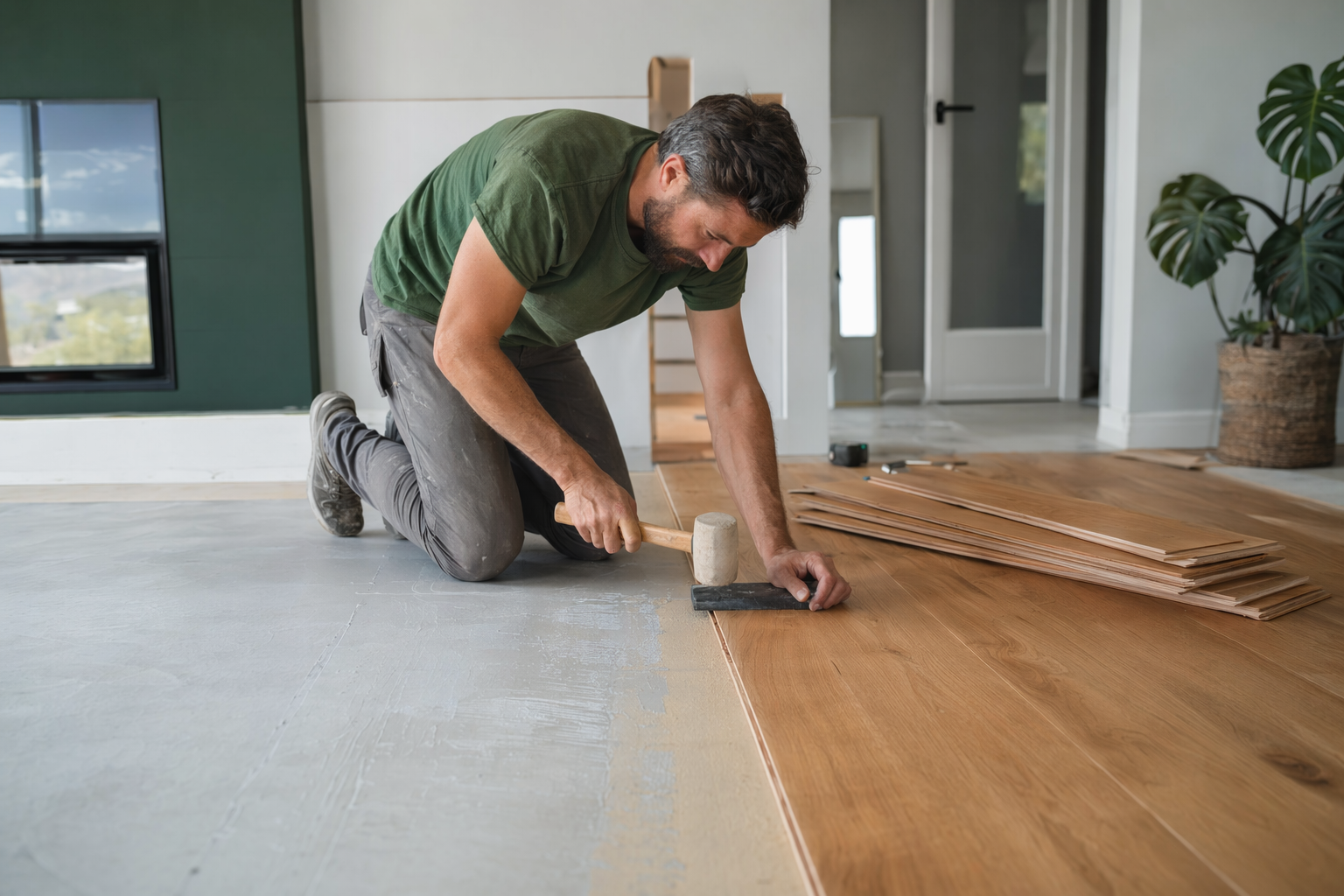
Hardwood can work in some basements, but moisture control is the deciding factor—engineered wood is often the safer “wood” choice, and a licensed contractor should explain the moisture-aware plan before you buy.
Quick answer: when hardwood can work in a basement
Hardwood in a basement can work in some homes, but basements are usually a moisture problem, not a “wood” problem. If moisture levels are high or unpredictable, solid hardwood can warp, cup, or separate—sometimes within a year.
In many basements, people have better results with engineered wood (and sometimes luxury vinyl plank or tile). Engineered wood is more stable than solid hardwood, but it still needs a properly prepared subfloor and a moisture-aware installation.
If you’re unsure, your best first step is to ask a licensed, insured flooring contractor what they recommend for *your* basement conditions, including how they plan to control moisture and what product they’ll use.
- Hardwood is not automatically “no”—but moisture rules everything in basements.
- Engineered wood often makes more sense than solid hardwood for many basements.
What makes basements different (moisture, humidity, and temperature swings)
Basements can feel dry in winter and damp in summer. That humidity change can cause wood floors to expand and contract, and it can lead to mold risk if moisture is trapped.
Moisture can come from several places—ground moisture through concrete, humidity in the air, water leaks, or condensation. Even if you don’t see standing water, moisture can still exist under the surface.
Because we’re giving general guidance, not construction or legal advice, you should rely on a licensed flooring contractor to assess your situation. They’ll tell you what moisture testing, underlayment choices, and installation methods they recommend for your basement and local climate.
- If the basement has ever had water issues, assume moisture will be part of the plan.
- Humidity swings can stress wood flooring even when the floor looks “fine.”
Solid hardwood vs engineered wood: the real trade-off
Solid hardwood is a one-piece wood board. In basements, it’s more likely to move or fail if moisture and humidity are not tightly controlled.
Engineered wood is made in layers, usually with a stable core and a hardwood top layer. That layered build generally handles movement better in environments with changes in humidity.
You may also hear about glue-down vs floating installations. Your contractor should explain the method that fits your basement—especially whether moisture control products are part of the system. (Different manufacturers also require specific installation details.)
- Solid hardwood: higher risk in many basements unless conditions are very stable.
- Engineered wood: often the better “wood” option for basements, but still needs moisture-aware installation.
Best and worst basement situations for hardwood
Hardwood tends to be more realistic in basements that are consistently dry, well-ventilated, and temperature-stable. If the basement is finished and you can maintain steady indoor conditions year-round, it’s more likely to perform well.
Hardwood is usually a bad fit when the basement is prone to dampness, has a history of leaks, or has visible moisture issues (like recurring musty smells, condensation, or efflorescence on concrete). In those cases, contractors often steer homeowners toward flooring types that tolerate moisture better, such as luxury vinyl plank or tile.
If you’re planning a basement remodel, ask your contractor how they’ll protect your floor from moisture and what steps they’ll take before installation. A reputable contractor will want to understand your basement, not rush to “sell the wood.”
- More promising: dry, stable humidity, no recurring water issues.
- Risky: past flooding/leaks, frequent dampness, or signs of ongoing moisture.
What hardwood installation in basements should include (questions to ask)
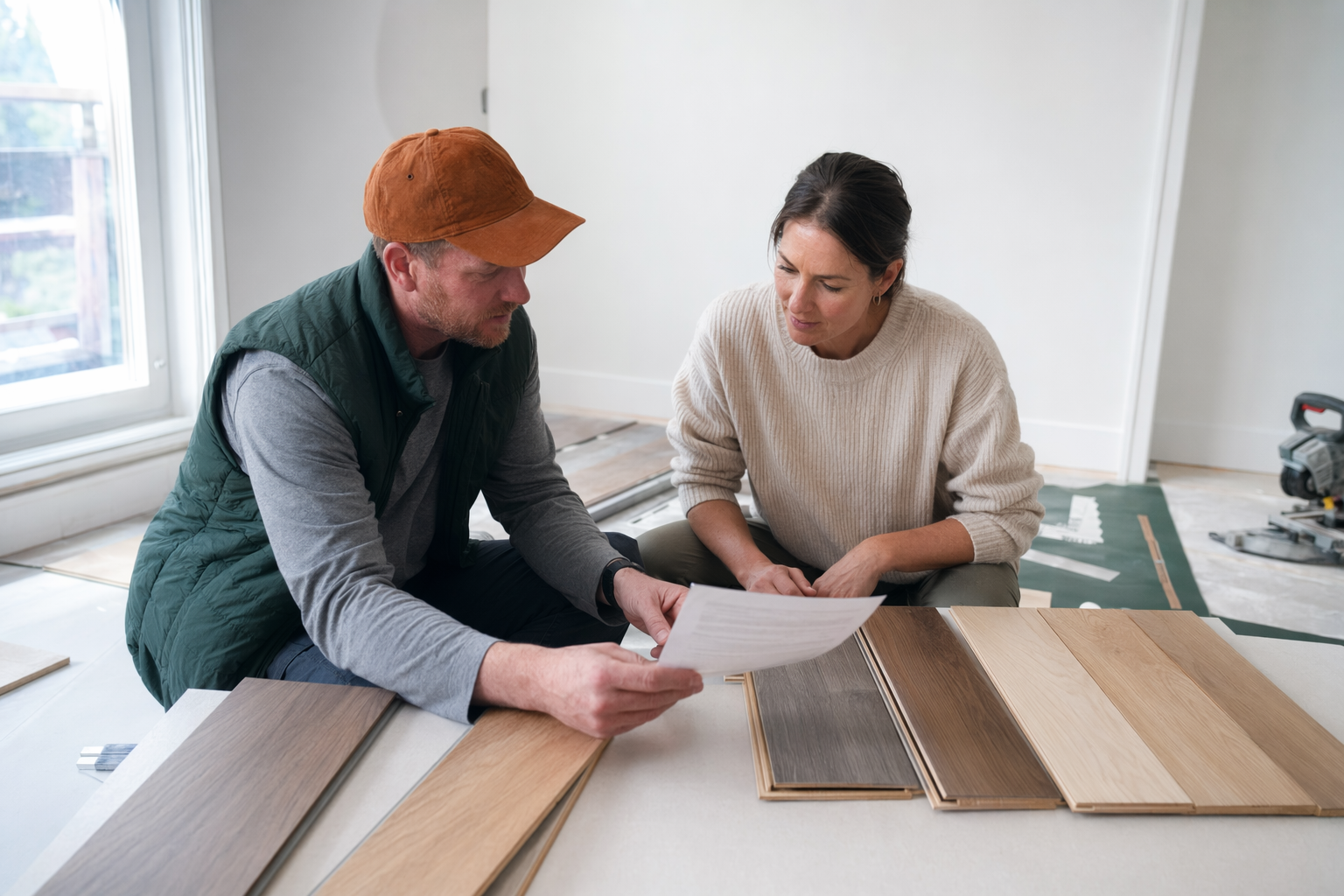
Before you commit, ask your contractor how they’ll handle moisture, what product they’ll install, and how they’ll protect your investment. You’re looking for a clear plan tied to your basement conditions.
Here are practical questions you can bring to your estimates:
1. What flooring type do you recommend (solid vs engineered), and why for *my* basement?
2. Will you use a specific moisture barrier or underlayment system? Which one and what does the manufacturer require?
3. How will you prepare the subfloor (surface flatness, cleaning, and any leveling needs)?
4. What acclimation steps will you use before installation?
5. What does “finished” include—trim, transitions, removal/disposal, and haul-away?
6. Do you provide a written scope and warranty terms for labor and materials?
A good contractor will answer directly. If you hear vague explanations, they may be guessing—or relying on hope rather than a moisture plan.
- Get clarity on the moisture system and the manufacturer’s required installation steps.
- Ask for written scope: what’s included, what’s excluded, and how moisture will be addressed.
Red flags: how basement flooring jobs go wrong (and how to avoid overpaying)
Be cautious with any contractor who pressures you to decide quickly or won’t explain the plan for moisture. Basements are high-stakes for flooring because moisture damage can be slow and expensive to fix.
Watch for these red flags:
- No clear written estimate/scope (you’re paying without knowing what you’re getting)
- Huge upfront cash deposits or refusing to discuss payment schedules
- Cash-only arrangements
- No license or no proof of insurance
- Pricing that only lists “labor” without describing the product, underlayment/moisture components, and installation method
- Skipping subfloor prep or talking like flatness/conditions don’t matter
Compare more than one quote and confirm the work is done right before paying the final amount. If anything is unclear, ask for specifics in writing—especially the flooring type, underlayment/moisture details, and total installed price range.
- Get it in writing: product, moisture/underlayment, prep work, and total scope.
- Compare quotes from more than one licensed, insured contractor.
How much does it cost? (Basement hardwood cost ranges you can plan around)
Costs vary a lot based on basement size, how level the concrete is, moisture-related components (like barriers), and the exact product quality. For most homeowners, the practical budgeting number is the *installed* cost per square foot—material plus installation.
General planning ranges (not quotes):
- Engineered wood installed: about $6 to $14+ per sq. ft.
- Solid hardwood installed (less common for basements): about $7 to $16+ per sq. ft.
What can push the price up: extra subfloor leveling/flatness work, moisture-control requirements, higher-end products, complex transitions/trim, and larger jobs. What can lower cost: a straightforward room with a stable, flat surface and a mid-range product.
If you want a starting point, explore flooring costs and then use get matched to talk to licensed, insured contractors in your area—at no cost to you.