Can you put hardwood in a bathroom?
Yes, you can sometimes put hardwood in a bathroom—but only in limited situations and with the right product and installation. Bathroom moisture is the main risk, so you’ll want the right wood choice, moisture-safe plan, and a licensed contractor.
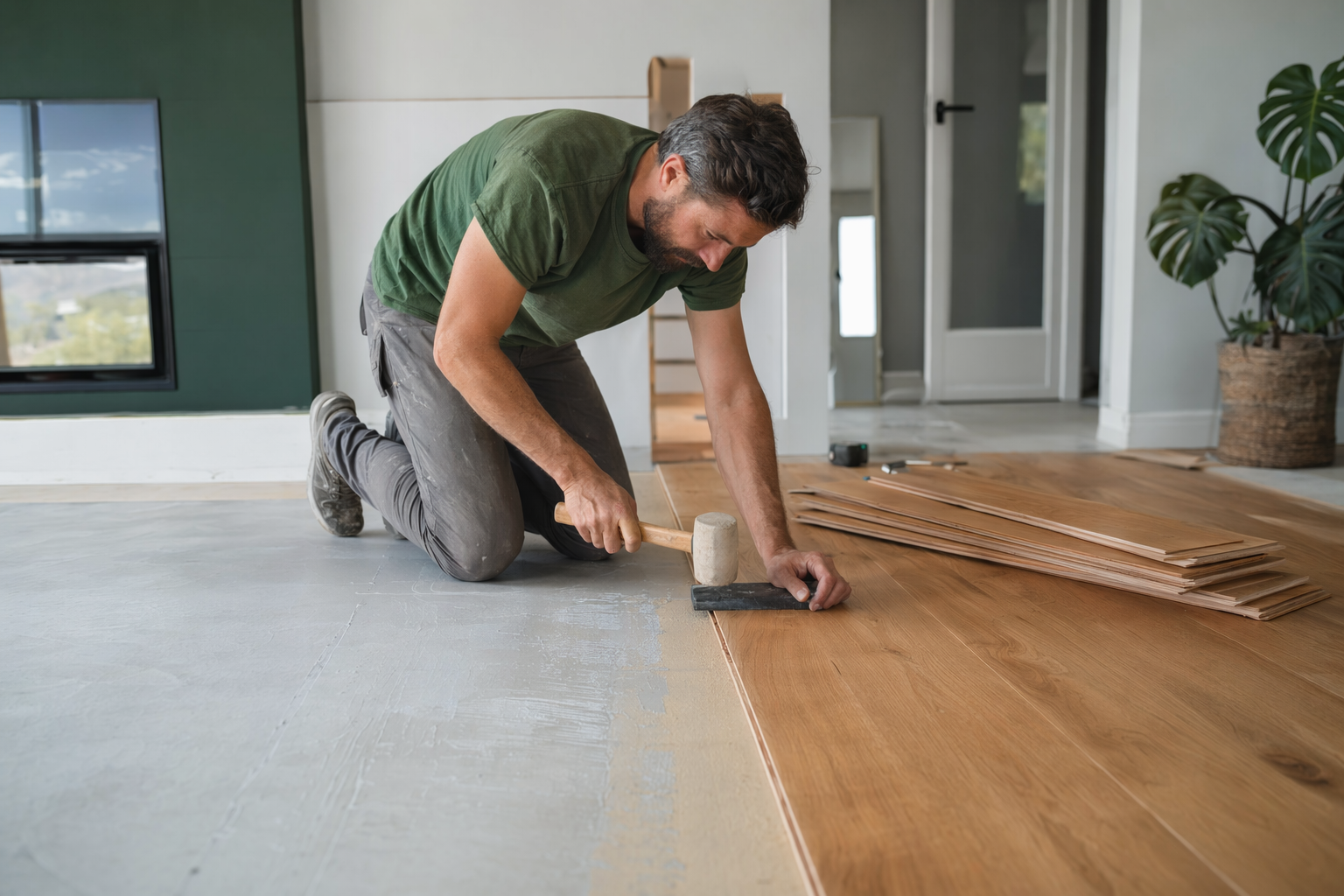
Hardwood can work in some bathrooms, but moisture makes it tricky—choose the right wood product (often engineered), get strong subfloor prep, hire a licensed contractor, and get everything in writing before you pay.
Short answer: hardwood in a bathroom is possible, but it’s risky
Hardwood (solid hardwood) and even some “water-resistant” options don’t like repeated wetting. Bathrooms have more humidity, splashes, and occasional spills than most rooms—especially near showers, tubs, and sinks.
If your bathroom gets a lot of steam or there’s a history of moisture issues (foggy windows for long periods, damp subfloor, musty smells), most flooring pros will recommend alternatives like tile, luxury vinyl plank (LVP), or engineered wood made for higher moisture conditions.
If you still want the warmth and look of wood, the safest path is to talk to a licensed, insured flooring contractor about your specific bathroom setup and to use the right product and installation details. PlankPath can help you get matched with contractors near you at no cost: get matched.
- Most bathrooms are “moisture challenge” environments—especially around the wet area
- Product choice + installation details matter as much as the wood itself
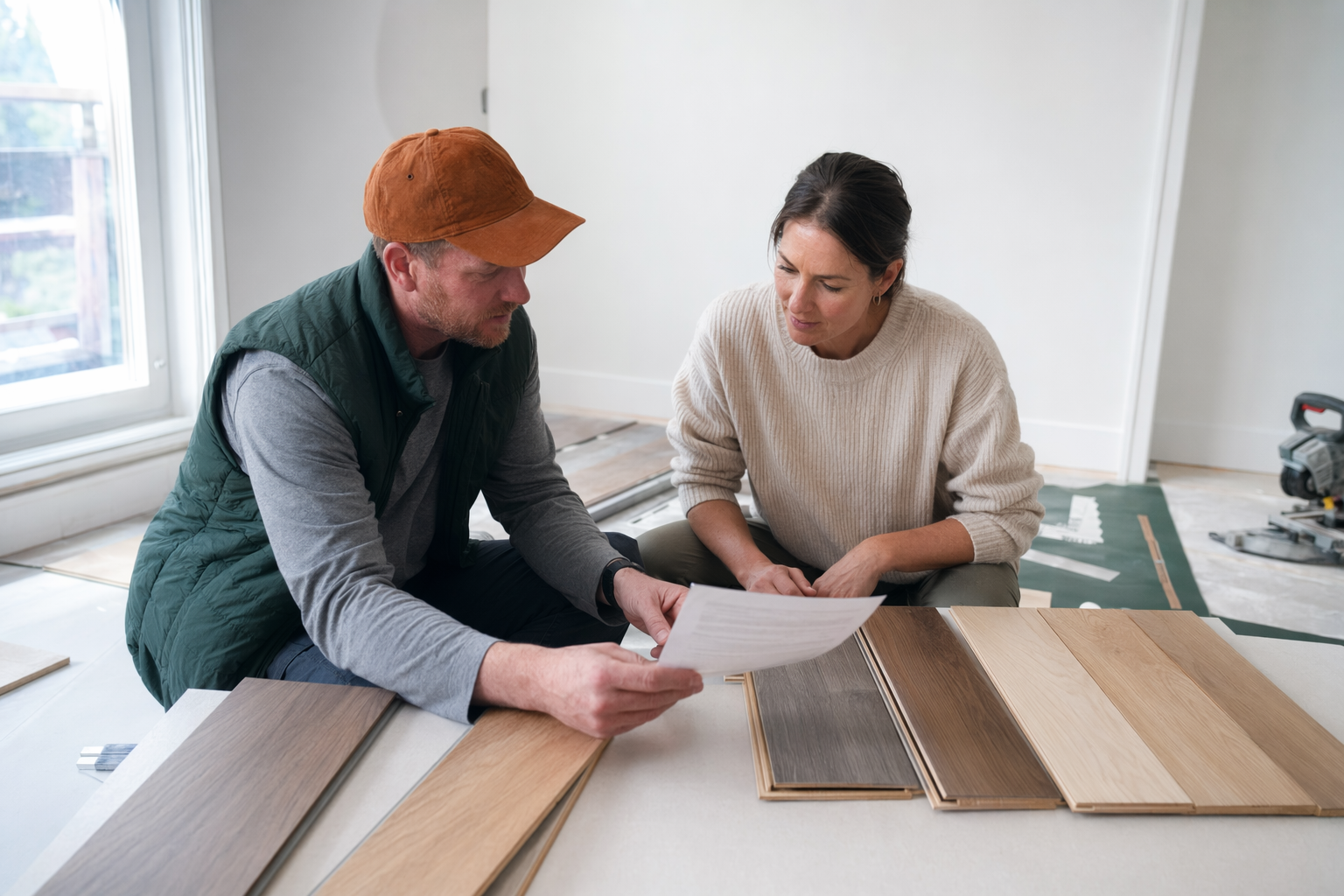
Solid hardwood vs engineered wood vs “bathroom-safe” options
If someone says “hardwood is fine in any bathroom,” be careful. Traditional solid hardwood typically expands and contracts with moisture changes, and the seams can be more vulnerable if the subfloor stays damp.
Engineered wood is often more stable than solid wood because it uses layered construction. Still, “engineered” isn’t automatically “bathroom-proof.” The product should be rated for moisture exposure, and you need a well-prepared subfloor and proper installation method.
If you’re trying to reduce risk, options like tile or LVP (with a good underlayment plan) tend to handle bathroom moisture better. Tile is the classic choice for wet areas; LVP can be easier to install and maintain, but quality and installation still matter.
- Don’t assume “engineered” means “can handle standing water”
- Ask what the manufacturer allows for bathrooms and moisture levels
Where it matters most: showers, tubs, and how the bathroom actually behaves
The wettest parts of a bathroom are the biggest deciding factor. If you’re asking about wood flooring throughout the whole bathroom, consider whether the wood will be close to a shower with frequent splashing, a tub surround, or a bathroom door area where water drips in.
Also think about ventilation and habits. A bathroom with strong exhaust ventilation and shorter steam cycles usually performs better than one that stays humid for hours.
A good contractor will talk about your layout and moisture exposure—then recommend what product type and installation method make sense for that exact scenario. Avoid anyone who skips these questions and just focuses on price.
- Wet-area proximity is a top risk driver
- Ventilation and real-life moisture patterns matter
What could go wrong (and what to ask before you decide)
Hardwood in a bathroom can fail in a few common ways: swelling/warping from moisture, gaps between boards as wood dries, and cupping (edges lifting) if moisture enters unevenly. Even if the floor “looks fine” at first, repeated humidity cycles can shorten its lifespan.
Before you commit, ask these practical questions. A licensed contractor should be comfortable answering them clearly:
- What exact product are you recommending (solid vs engineered, brand/model), and does its warranty cover bathroom use?
- What moisture test/prep steps will you do on the subfloor?
- What installation method will you use (for example, floating vs glue-down), and why?
- How will you handle transitions at doorways and wet edges?
If you can’t get straight answers, that’s a sign to slow down and get another quote.
- A warranty that doesn’t cover bathroom moisture is a big red flag
- Moisture testing/prep should not be “optional”
Bathroom flooring cost: realistic ranges and what changes the price
Costs vary widely by region, room size, and the condition of your subfloor. Below are common “installed” ranges you may see for bathroom-appropriate flooring, but they are not quotes.
- Tile: often about $10–$25+ per sq. ft. installed (labor, tile type, and layout complexity can raise the total)
- Luxury vinyl plank (LVP): often about $3–$8 per sq. ft. installed (higher-end products and better underlayment can push the range up)
- Engineered wood (if the product is approved for higher moisture environments): often about $6–$14 per sq. ft. installed
- Solid hardwood: often about $7–$15+ per sq. ft. installed, though bathroom suitability may limit your choice
These ranges can change based on the subfloor condition, room prep, removal of old flooring, filler/patching needs, trim/transition pieces, and the complexity of cuts around vanity legs, corners, and door jambs.
- Old flooring removal and subfloor prep can be a major part of the final cost
- Harder layouts and more transitions usually cost more
Avoid overpaying: red flags with contractors + how to hire safely
A good bathroom flooring job depends on licensing, insurance, and clear scope. Don’t rely on verbal promises. Get the price, the exact materials, and the installation scope in writing.
Red flags to watch for:
- No license or no proof of insurance
- Huge upfront cash deposits or refusing a standard payment schedule tied to milestones
- Cash-only payments
- Vague pricing like “about a little under $X” with no material/specs or line items
- Pressure to sign on the spot
- Skipping subfloor evaluation/prep or dismissing moisture concerns
When you’re comparing contractors, ask for at least two written quotes and compare the “apples to apples” details: product type/model, underlayment approach (if applicable), subfloor prep, transitions, and removal haul-away. PlankPath is a free way to help you find licensed, insured flooring contractors near you—get matched.
- Get it in writing, compare more than one quote, and confirm final payment only after the work is complete