Do I need to remove old flooring before installing new?
Often you don’t have to remove every old floor, but in many cases you do—especially if the surface is uneven, damaged, or not meant to be covered. The right answer depends on the flooring type and your subfloor.
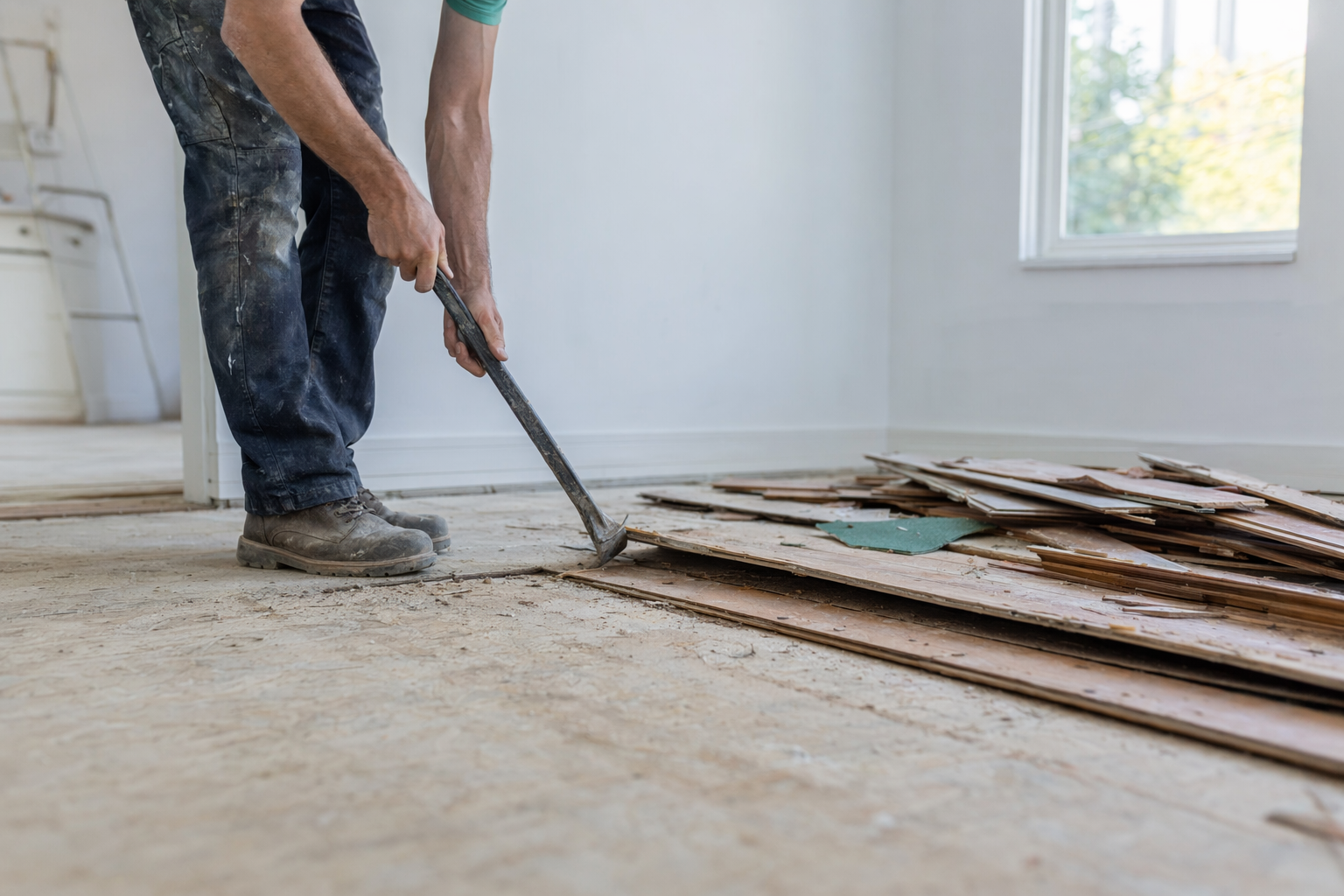
You might be able to cover old flooring, but if it’s uneven, loose, damaged, or incompatible, removal is usually the safer, more reliable choice—ask for a written scope from a licensed contractor.
Short answer: “Sometimes, yes.” Here’s how contractors decide
In many flooring projects, old flooring can sometimes be left in place *if* it’s in good shape and the new material is designed to be installed over it.
But installers usually need a flat, stable surface. If the old floor is loose, badly worn, uneven, or the wrong type for “over it,” they may need to remove it before installing new flooring.
The best move is to ask a licensed, insured flooring contractor to inspect your existing floor and explain—plainly—what they plan to do and why. If anyone is vague, that’s a red flag.
- Good condition + correct pairing = sometimes you can keep it
- Uneven, damaged, or incompatible flooring = removal is more likely

Common situations where removing old flooring is more likely
Removal is often recommended when the old floor (or its underlayer) won’t give the new floor a solid base. That can lead to bumps, gaps, squeaks, or premature wear.
You’re more likely to need removal if the old flooring is:
- Loose or separating (tiles lifting, planks moving, adhesive failing)
- Very uneven or “humpy” (even small bumps can telegraph through)
- Water-damaged, warped, or moldy
- Carpet or padding with thick residues that won’t flatten out
- Multiple layers already stacked up (height issues and weak support)
Also, some new flooring types require specific underlayment or subfloor conditions. If the existing layer blocks what the new system needs, removal becomes the practical choice.
- If the floor is already failing, covering it usually delays the problem—not prevents it
- Too many layers can cause doors to stick and floors to feel “soft”
When you might be able to install over existing flooring
Sometimes you can install new floors over old ones, but it depends on what’s there and what you’re installing. For example, some laminate and luxury vinyl plank systems can work over certain existing floors *when conditions are right*.
Even when covering is allowed, the contractor still has to check:
- Is the surface flat (not just “looks okay”)?
- Is it firmly attached and not bouncing?
- Is the material compatible with the new flooring’s installation instructions?
- Is moisture a concern in your room or subfloor?
Moisture matters a lot in basements and bathrooms, and it matters even more if the older floor showed signs of past water issues. In these situations, “install over it” may be risky unless the plan explicitly addresses moisture barriers and conditions.
- Compatibility is about the installation system, not vibes—verify the allowed bases
- Moisture problems are a common reason “no removal” plans go wrong
Room-by-room: what changes the answer most
Your room can change the decision because subfloors and moisture exposure vary. For example, a living room on a dry slab may be very different from a basement or laundry area.
In general:
- Living areas and bedrooms: removal is often based on how flat and stable the existing surface is
- Kitchens: older tile or subfloor issues can show up due to plumbing leaks and spills over time
- Bathrooms/laundry: moisture risk is higher, so contractors are more cautious about what gets covered
- Basements: dampness and humidity can affect installation choices and whether layers can stay
If your home is in a region with wide seasonal humidity swings, ask how the contractor plans to handle expansion gaps and moisture—so your new floor doesn’t buckle or separate.
- Moisture risk increases the chance you’ll need removal or additional steps
- Floor height/thresholds matter more in rooms connected to hallways and doors
How to get a straight answer (and avoid overcharging)
When you talk to a contractor, ask specific questions so you can compare bids. A clear answer usually includes what they will remove (if anything), what they will prep, and why.
Use these questions:
- What is currently on the floor (carpet, tile, laminate, hardwood, etc.) and what’s under it?
- Will you remove it all, remove part, or leave it in place? What conditions make you change the plan?
- How will you make sure the surface is flat enough for the new flooring system?
- What prep steps are included in your price?
- Does the price include haul-away/disposal of removed material?
Red flags to watch for:
- Big upfront cash deposits or “pay now, ask later” pressure
- Cash-only deals or contractors who won’t provide a written contract
- No visible license/insurance (or they refuse to share it)
- Vague quotes like “we’ll figure it out later”
- Pressure to sign on the spot
- Skipping key prep steps, like ignoring an uneven surface
Get the work scope in writing first, then compare more than one quote. Also confirm what happens if conditions change during prep—so you’re not surprised by add-on charges.
- A good quote shows the floor type, prep steps, and what’s included—not just a total number
- Ranges are normal; single “perfect” prices are not
What it costs (and why removal affects your total)
Costs vary a lot by region, job size, and how hard removal/prep is. In many projects, the biggest price drivers are the amount of old material to remove, the condition of the subfloor, and how much leveling or surface prep is needed.
A useful way to budget is to think in terms of overall installed cost per square foot (material + labor), not just the flooring product. Typical ranges for installed flooring often fall roughly in this ballpark:
- Laminate: about $4–$8 per sq. ft. installed
- Luxury vinyl plank (LVP): about $5–$10 per sq. ft. installed
- Engineered hardwood: about $6–$14 per sq. ft. installed
- Hardwood (new or refinishing): can vary widely depending on the exact work
- Tile: about $8–$20+ per sq. ft. installed (often higher when prep is heavy)
Removal and prep can push costs up, but they can also prevent callbacks and problems later. If someone quotes a low number and says they “won’t need much prep,” ask what they’re assuming about your existing flooring and whether it’s realistic.
For more on budgeting, see flooring cost basics.
- Removal is usually paid as part of labor/prep (often with haul-away included or not—ask)
- Your existing floor condition can be the difference between a smooth install and a more expensive one