How much does it cost to refinish hardwood floors?
Refinishing hardwood can be a “refresh” that’s cheaper than replacing floors, but the real cost depends on your wood condition, room size, and what finish you choose. Here’s the honest range and what to ask for before you hire anyone.
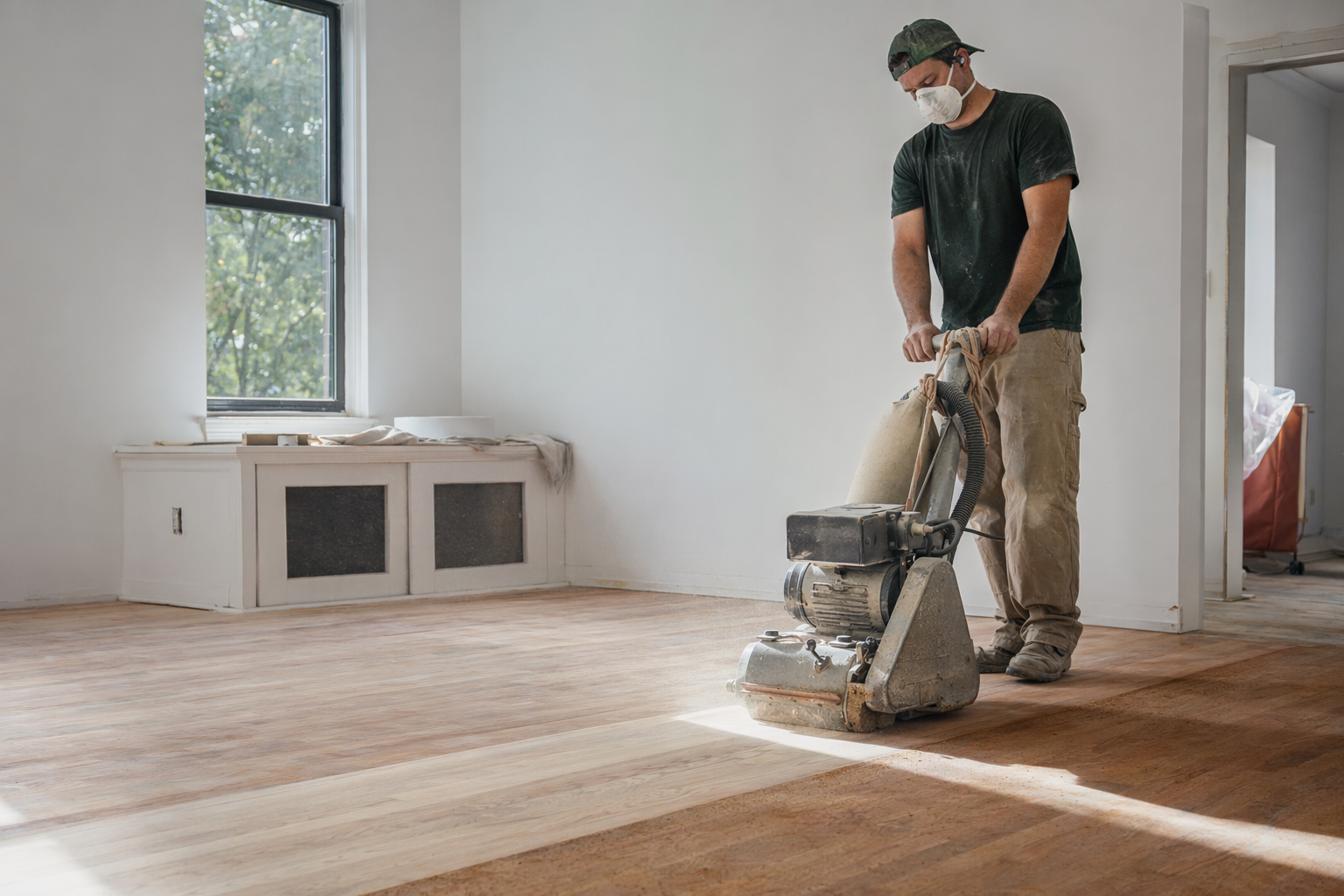
Refinishing hardwood floors commonly costs about $3–$8 per square foot (and more for heavy wear or repairs), and the safest way to price it is to compare multiple written bids from licensed, insured contractors.
Quick answer: typical hardwood refinishing cost (installed)
In many parts of the US, refinishing hardwood floors usually runs about $3–$8 per square foot for basic sanding and a new finish.
If your floors need extra work—like deeper sanding for heavy wear, more boards repaired, or additional coats—costs can land around $8–$14+ per square foot.
These are ranges, not quotes. Your final price depends on the condition of the existing wood, the total square footage, how many rooms are involved, and your local market.
If you want a free match with licensed, insured flooring contractors near you, use get matched.
What refinishing usually includes (and what can raise the price)
A typical refinishing job includes sanding the surface, removing old finish, then applying a new finish (often polyurethane). Some contractors also screen (light sanding) instead of full sanding when the wear is minor.
Prices go up when the subfloor/boards and surface aren’t “ready to refinish.” For example, if there are deep scratches, uneven areas, gaps, or areas where old finish is still hard to remove, sanding time increases.
Other cost drivers:
- Repairs (filling gaps, patching damaged boards, replacing severely damaged planks)
- How many coats of finish you want (and the type of finish)
- Edge work around walls, stairs, and tight spaces
- Dust control and cleanup practices
- Specialty needs (certain finishes, sheen levels, or high-traffic durability requirements)
Room-by-room expectations: where costs often vary
Refinishing cost usually isn’t just “one room.” Contractors price based on total square footage and how accessible the area is. Hallways, corners, and stairs take more time.
Common scenarios:
- Small rooms (bedrooms, offices): You may pay more per square foot because setup and edge work take similar time.
- Open-plan spaces: Often better value per square foot because sanding and finishing covers a larger continuous area.
- Stairs: Stairs can add cost because every tread/riser gets extra sanding and finishing.
Also, very old floors (or floors with unclear history) can behave unpredictably during sanding. That doesn’t automatically mean “no,” but it does mean you should expect careful inspection and a clear written scope.
Hardwood refinishing vs. replacement: when refinishing may not be the best move
Refinishing works best when the hardwood is still thick enough and the surface issues are mainly finish wear or surface scratches. If the floor has widespread cupping, severe damage, or structural issues, refinishing might not solve the root problem.
Sometimes the contractor will recommend partial repairs first, or switching strategy (like replacing sections, using a different approach, or considering a different flooring material). Even if you ultimately refinished, repairs can affect timing and cost.
Ask the contractor to explain—plainly—what they see and why refinishing makes sense for your specific floor condition. If they can’t describe it clearly, that’s a red flag.
How to avoid overpaying: what to ask for and how to compare bids
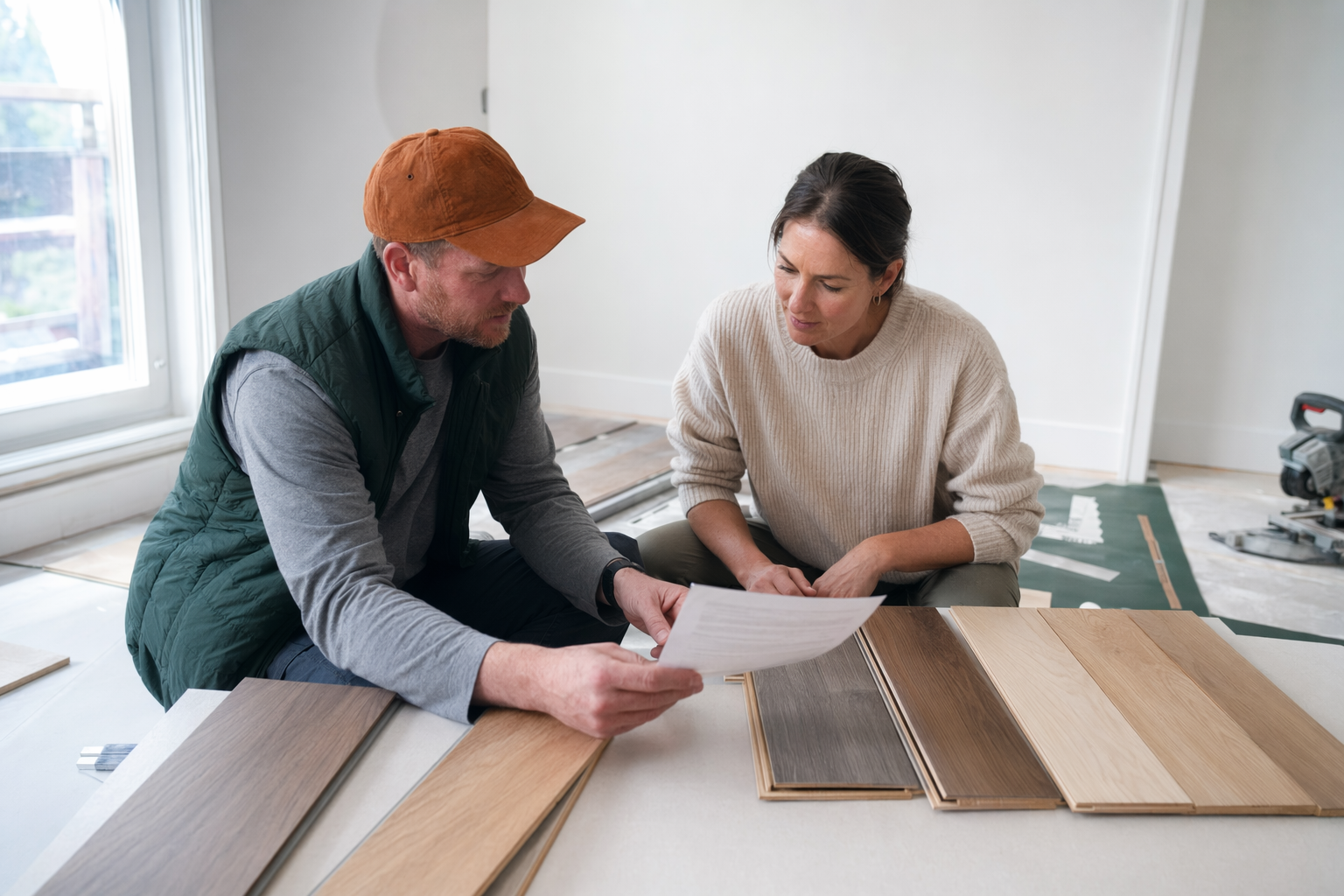
Before you pick a contractor, request a written estimate that clearly states the scope. Compare at least two or three bids so you can tell what’s included.
What to ask for (and expect in writing):
- The square footage they’re pricing
- Whether it’s screening vs. full sanding
- What finish is being used (brand/type if available) and how many coats
- What repairs are included (and what is extra)
- Dust control/cleanup approach (and what rooms will be protected)
- Start and completion timeframe range (not a promise)
- Payment schedule (see red flags below)
For a helpful guide on choosing contractors and materials, see guides and costs.
Red flags to watch for (deposits, licensing, pressure, and skipping steps)
Some flooring scams or “too-good-to-be-true” offers are easy to spot. Avoid anyone who won’t put details in writing or who tries to pressure you into paying immediately.
Red flags:
- Huge upfront cash deposits or demanding full payment before work starts
- No license (or refusing to show proof of licensing when required in your area)
- Cash-only arrangements that avoid paperwork
- Pressure to sign on the spot or “only today” pricing
- Vague pricing like “we’ll do the job” without specifying sanding level, finish type, repairs, or the square footage
- Getting started without a clear plan for prep and finish work
A safer approach: confirm they’re licensed and insured, get the scope and price in writing, and remember the homeowner stays in control—you compare quotes, choose the contractor, and confirm the work is done right before final payment.
Get matched for free: licensed, insured contractors near you
PlankPath is a free matching service—we don’t install floors or sell materials. We help you connect with licensed, insured flooring contractors near you so you can request bids for your refinishing project.
To get good matches, share what you can about your project intent:
- Your ZIP code
- About how many square feet you want to refinish
- Which rooms (and if stairs are involved)
- Your preferred language
Then compare written quotes and choose who you feel most confident in. If you’d like to start, use get matched. If you want a general overview of estimating and pricing, see costs.