Is luxury vinyl plank really waterproof?
Usually yes for the plank itself, but not always for the whole floor system. Luxury vinyl plank can handle spills well, but water can still get through seams, edges, or the subfloor and cause problems.
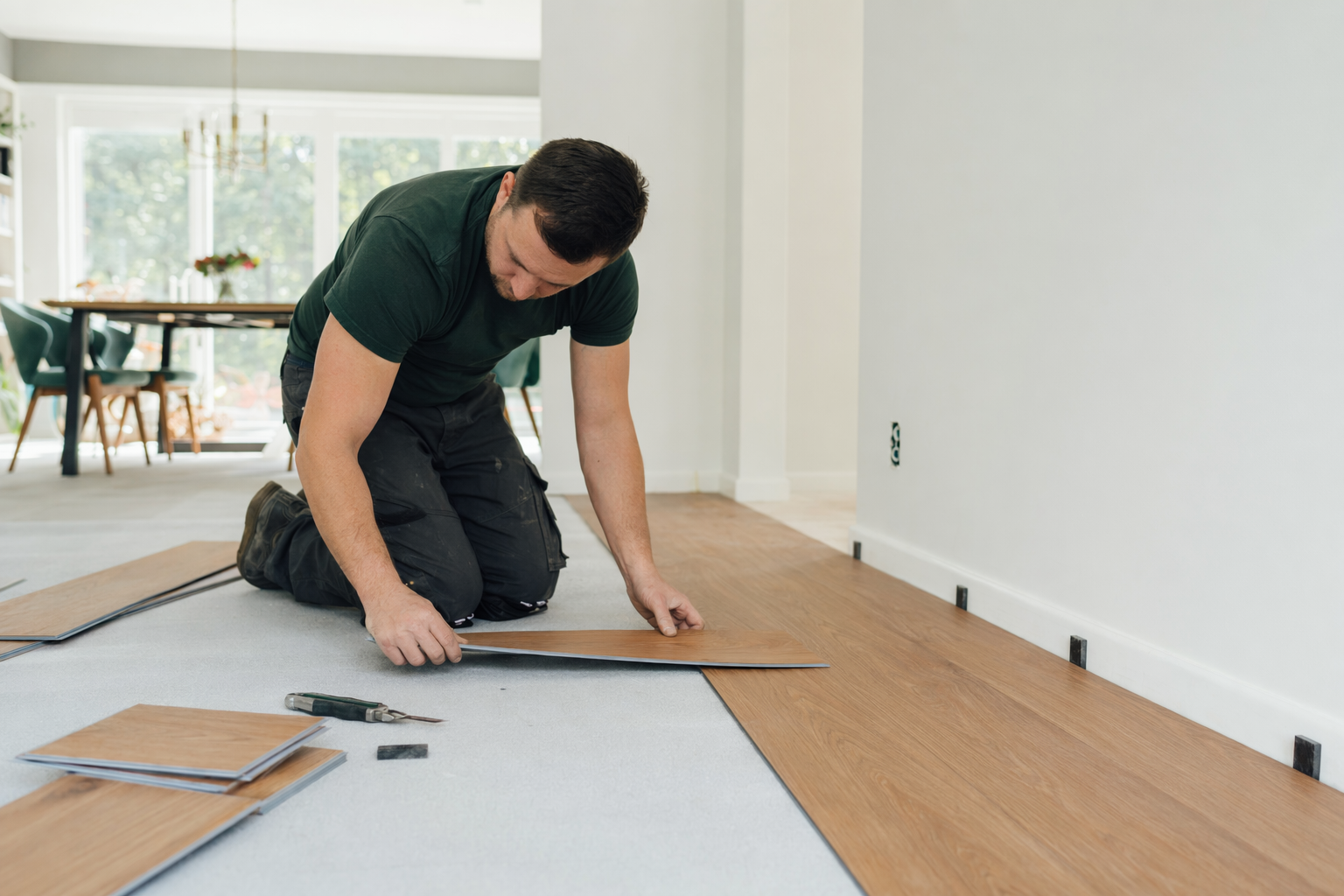
Luxury vinyl plank usually handles spills well, but "waterproof" does not mean water cannot get underneath and cause trouble, so good prep and a careful installer still matter.
Short answer: waterproof plank is not the same as a waterproof room
Many luxury vinyl plank, often called LVP, is sold as waterproof because the vinyl plank itself does not swell like wood when it gets wet. That is a real advantage in busy homes, kitchens, and many basements.
But "waterproof" does not mean every part of the floor is safe from water damage. Water can still slip through edges, around toilets, tubs, floor vents, walls, transitions, or damaged seams. If water gets underneath, the planks may survive while the subfloor, trim, or trapped moisture underneath does not.
So the honest answer is: the product may be waterproof, but the full installation is only as water-resistant as the seams, perimeter details, subfloor condition, and the way spills or leaks are handled.
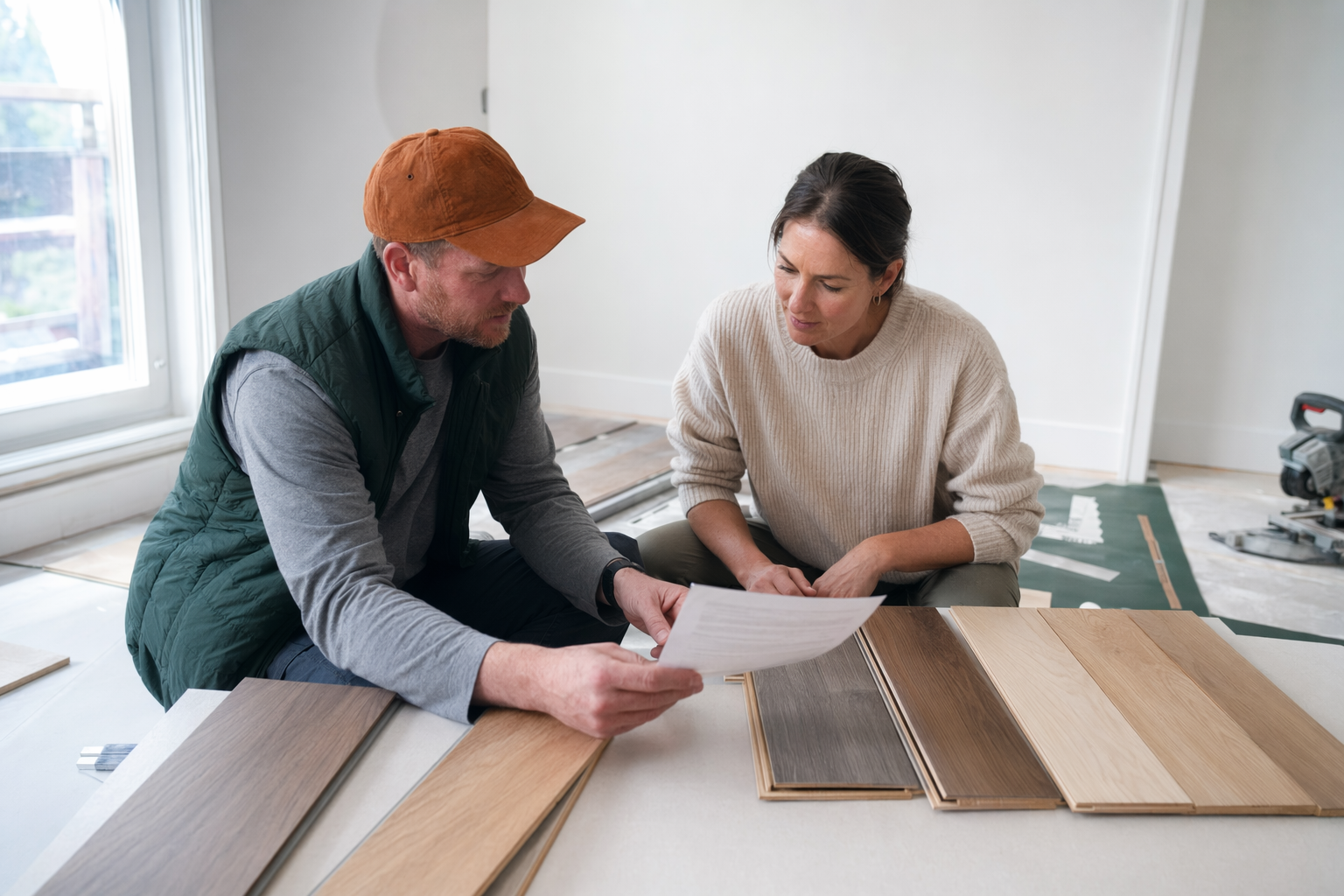
What LVP does well around water
LVP is popular because it is easier to live with than many other floors when kids, pets, wet shoes, or kitchen spills are part of daily life. It usually does not stain easily, it is softer and quieter than tile, and it does not need refinishing like hardwood.
For normal household moisture, it performs well. A spilled drink, dog bowl splash, tracked-in rain, or a damp mop is usually not a big deal if you clean it up in a reasonable time. In that sense, LVP is far more forgiving than solid hardwood and many laminates.
That is why many homeowners use it in kitchens, laundry rooms, entryways, and lower-level spaces. If you want the wood-look style without the stress of every splash, LVP is often a practical middle ground.
What waterproof claims do not protect you from
A waterproof label does not stop damage from a leaking toilet, dishwasher line, ice maker line, tub overflow, washing machine failure, or repeated moisture coming up from below. If water sits under the floor, you can still end up with odor, mold concerns, loose planks, trim damage, or subfloor issues.
Bathrooms are a good example. LVP can work there, but a bathroom has more than surface spills. There are toilet seals, tubs, showers, and lots of water near walls and edges. A licensed, insured flooring contractor can explain how they handle seam placement, transitions, underlayment, moisture checks, and the perimeter so you understand the limits before you buy.
This is also why installation matters so much. A great product installed carelessly can still fail. General information only here, not construction advice, but moisture conditions and local codes vary by home, climate, and room.
Best rooms, riskier rooms, and when to think twice
Best fits for LVP are usually living rooms, bedrooms, hallways, kitchens, entry areas, and many finished basements when the moisture conditions are suitable. It is also a common choice for rentals because it can handle daily wear better than some softer flooring.
Riskier rooms are full bathrooms, mudrooms with frequent standing water, homes with ongoing slab moisture issues, and any space with known leaks or an uneven or damaged subfloor. In those cases, the floor choice is only part of the decision. The bigger question may be whether the room is dry enough and prepared well enough for the flooring you want.
If you already know there is active moisture, a leak, or soft spots under the old floor, do not let anyone gloss over that. Skipping the subfloor or moisture prep is one of the clearest red flags in flooring work.
What LVP usually costs installed
A common installed price range for luxury vinyl plank is about $4 to $11 per square foot for material plus installation. Better-looking, thicker, or more durable products can run higher, and simple jobs in easy rooms can land lower. These are general ranges, not quotes.
What moves the price up or down: plank quality, wear layer, click-lock versus glue-down product, subfloor repair, moisture prep, furniture moving, trim work, stairs, room layout, regional labor costs, and total job size. A small bathroom often costs more per square foot than a simple open living room because detail work takes time.
If one bid is much lower than the others, ask what is missing. Sometimes the low number leaves out tear-out, disposal, leveling, moisture testing, transitions, trim reset, or moving appliances. Learn more about flooring costs if you want a broader price picture.
How to shop carefully and avoid a bad install
If you are considering LVP, focus on the full system, not just the word waterproof on the box. Ask what product they recommend for your room, how they check the subfloor, whether moisture is a concern, and what is included in writing.
Red flags to watch for:
- vague pricing with no clear material or scope
- huge upfront cash deposits
- cash-only payment requests
- no license or no proof of insurance
- pressure to sign on the spot
- promises that subfloor prep is unnecessary without even checking
Use a simple process:
1. Get at least two written quotes.
2. Make sure the quote lists the product, thickness or wear layer if relevant, prep work, transitions, trim, tear-out, and disposal.
3. Verify the contractor is licensed and insured if your state or local area requires it.
4. Ask who handles moisture or subfloor issues if they are found.
5. Do not pay the final amount until you have checked the work carefully.
PlankPath is a free matching service, not a flooring contractor, installer, or store. We can help you get connected with licensed, insured flooring contractors near you so you can compare quotes in writing and choose who to hire. You can get matched, browse more flooring guides, or visit our help page for common questions.