Laminate vs vinyl — which is better?
Short answer: vinyl is usually better for wet rooms and low-maintenance living, while laminate can look and feel a bit closer to real wood for dry rooms. The right choice depends on your room, moisture, budget, and how you live.
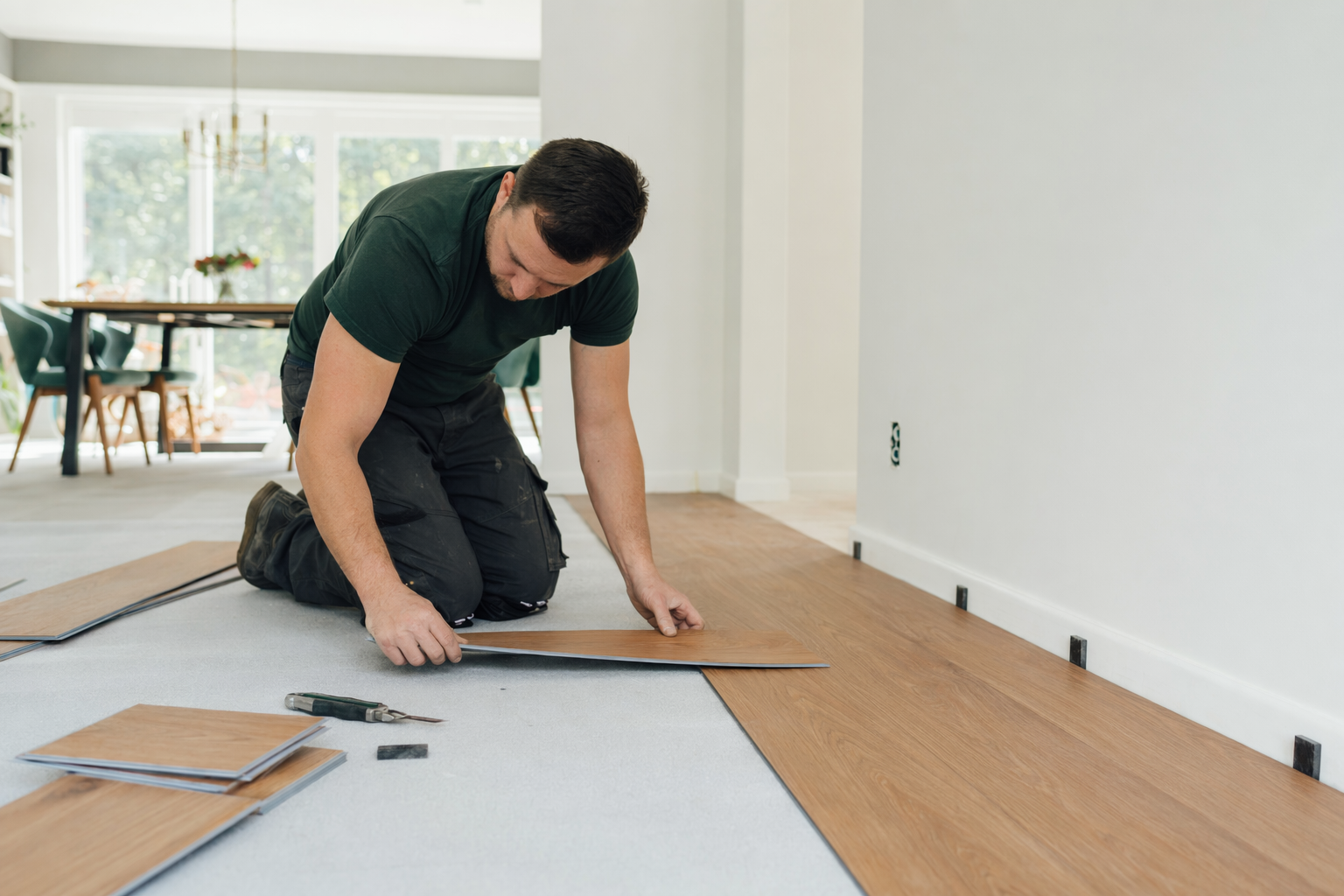
Vinyl is usually better for wet, busy rooms, while laminate can be a good cheaper choice for drier rooms that need a wood look.
The simple difference
Laminate and vinyl can both look like wood, but they behave differently. Laminate has a hard photographed top layer over a wood-based core, while vinyl is a plastic-based floor that can be made as planks or tiles.
If you want a floor for a bathroom, laundry room, basement, or an entry that gets wet shoes, vinyl usually makes more sense. If you want a budget-friendly floor for bedrooms, living rooms, or upstairs spaces and you keep moisture under control, laminate can be a good option.
Neither one is “best” in every home. The better choice is the one that fits your room, your budget, and how much wear and water the floor will see.

How they feel in real life
Laminate often feels a little firmer and more like real wood underfoot. Many people like the clearer wood-look patterns and the more rigid feel. It can be a good choice if you care about the look of wood but want to spend less than hardwood.
Vinyl usually feels quieter, softer, and more forgiving. It is often more comfortable for kitchens, play areas, and homes where you want less noise and a floor that stands up to spills.
If you have kids, pets, or a busy household, think about scratches, cleaning, and moisture. Vinyl is usually easier to live with when life gets messy. Laminate can still work well, but you need to be more careful with standing water and heavy damp mopping.
Water, durability, and the rooms that fit best
Water is the biggest difference. Many vinyl floors handle spills and moisture better than laminate, and some are made specifically for wet areas. Laminate has improved a lot, but it is still usually the riskier choice in places that get wet often.
Best rooms for vinyl: bathrooms, kitchens, basements, laundry rooms, mudrooms, and rentals where easy cleanup matters. Best rooms for laminate: bedrooms, hallways, dining rooms, and living rooms where you want a wood look and the space stays relatively dry.
If a room has a known leak, soft subfloor spots, or past water damage, do not assume any floor is safe just because it is “water-resistant.” Ask a licensed flooring contractor to inspect the space first and explain what the floor can and cannot handle.
Cost: what homeowners usually see
Installed prices vary a lot by brand, thickness, underlayment, subfloor prep, and your region, but these are honest general ranges:
Laminate: often about $3 to $8 per square foot installed.
Vinyl plank: often about $3 to $10 per square foot installed.
Higher-end products, tricky layouts, stairs, old floor removal, or subfloor repair can push either one higher. A small job can also cost more per square foot than a bigger one.
These are ranges, not quotes. The real number depends on the room, the condition of the subfloor, the material you choose, and local labor costs. Get the price, material, and scope in writing before you agree to anything.
How to avoid a bad contractor
A good flooring quote should clearly say what material is being installed, how much labor is included, whether removal of old flooring is included, and whether subfloor prep is part of the job. If a contractor is vague about those basics, that is a red flag.
Watch out for pressure to sign on the spot, big cash-only deposits, no license or insurance, or anyone who wants to skip checking the subfloor. Those shortcuts can lead to noisy floors, gaps, buckling, or moisture problems later.
Compare more than one written quote, and do not pay the final amount until the work is finished and you have checked it carefully. If you want help finding licensed, insured flooring contractors near you, get matched. PlankPath is a free matching service, not a flooring contractor or store.
A simple way to decide
Choose vinyl if your main concerns are moisture, easy cleanup, pets, kids, or a room that gets a lot of daily mess. Choose laminate if you want a wood-like look for a drier room and you care more about that wood feel than maximum water resistance.
If you are still unsure, bring photos of the room, the approximate square footage, and your ZIP code when you talk to contractors. That helps you get more accurate quotes and better material suggestions.
You can also read more plain-language flooring help in our help center, browse guides, or compare other flooring cost ranges on the costs page.