What is engineered wood flooring?
Engineered wood flooring is real wood on top, with layered backing underneath for stability. It gives you a wood look with better moisture resistance than solid hardwood in many homes, but it is not waterproof.
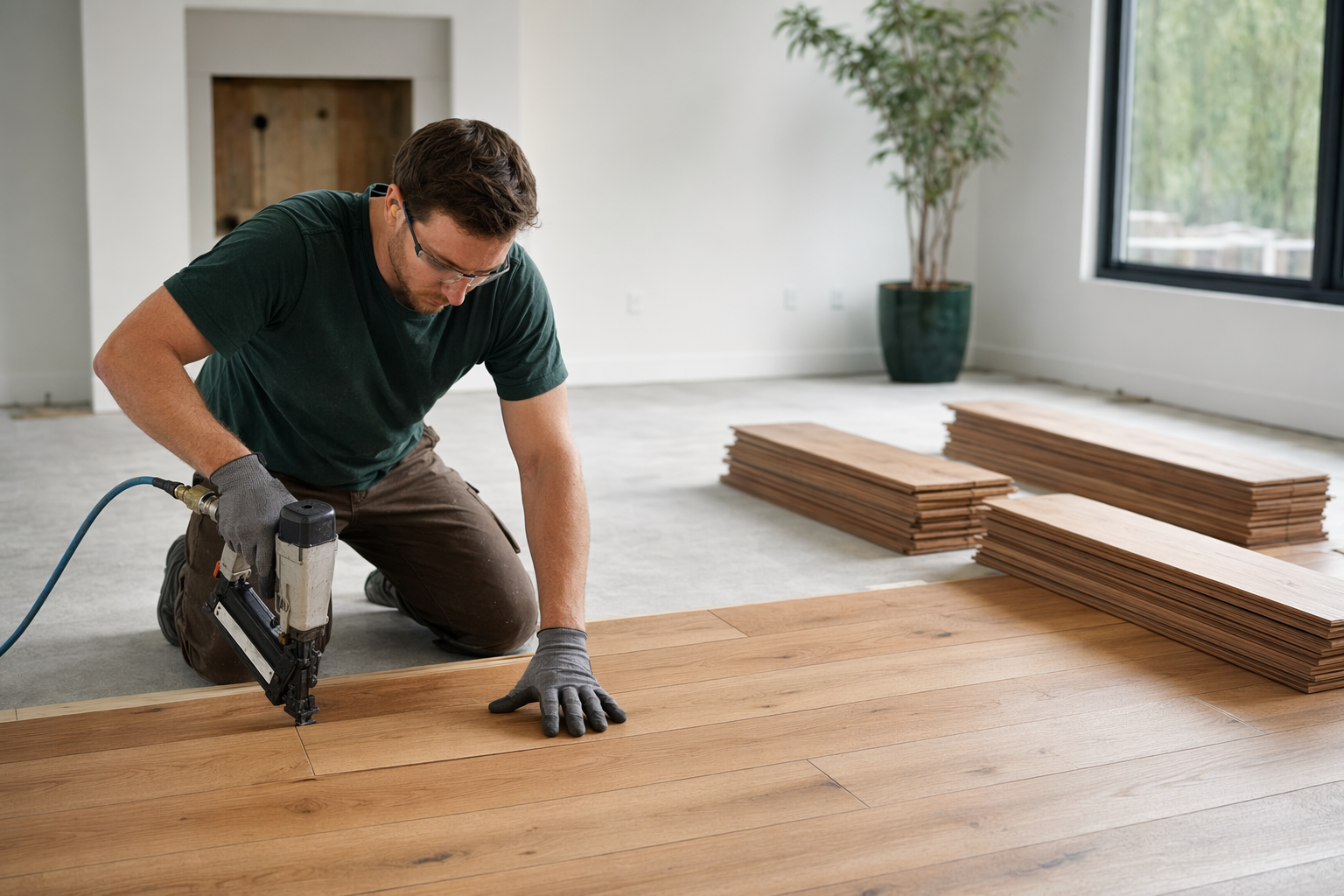
Engineered wood is real wood flooring built for better stability than solid hardwood, but it is not waterproof and should be priced, quoted, and installed carefully.
What engineered wood flooring is
Engineered wood flooring is made from a top layer of real hardwood bonded to several layers of plywood or similar core material. The top layer is what you see and walk on, so it still looks and feels like wood.
People choose it because it is often more stable than solid hardwood in rooms where humidity changes. That can make it a practical choice for many homes across the U.S., especially in places with hot summers, dry winters, or mixed climates.
It is important to know the trade-off: engineered wood is not the same as waterproof flooring. It can handle more moisture than some wood floors, but standing water, leaks, or very damp conditions can still cause damage.
How it looks and feels
Most homeowners like engineered wood because it gives the warm, natural look of real wood. The top layer is actual wood, so you get real grain patterns, color variation, and a more authentic look than wood-look laminate or vinyl.
Under your feet, the feel depends on the thickness of the product, the quality of the backing, and how it is installed. A good install matters a lot. If the floor is not flat enough or the underlayment is wrong, you may hear creaks or feel movement.
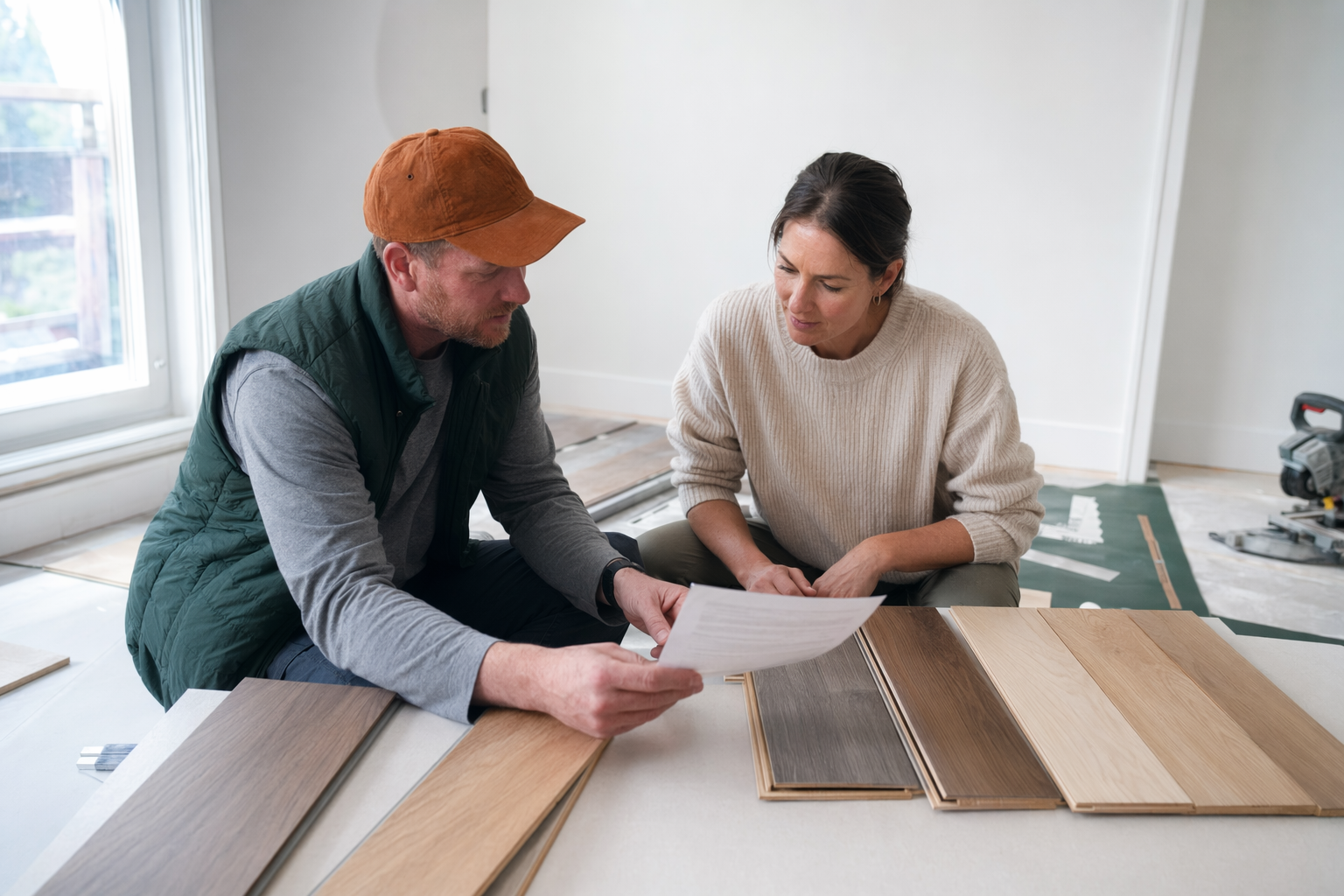
If you want the closest look to solid hardwood, ask to see samples in person. Photos can hide color shifts, sheen, and texture. If you are comparing options, see flooring guides to understand how engineered wood stacks up against laminate, LVP, and hardwood.
Durability, moisture, and where it works best
Engineered wood handles everyday living well, but the wear layer is limited. That means the thicker the top wood layer, the better the floor may hold up over time and the more chance it may have for future refinishing. Thin wear layers may not be a good fit if you want a floor that can be sanded many times.
It usually works well in living rooms, bedrooms, dining rooms, and many hallways. It can also be a good option in basements or homes with more humidity, but only if the product and installation method are right for that space.
The worst places are usually bathrooms, laundry rooms, or any area with a real risk of standing water. Kitchens can work in some homes, but spills need to be cleaned up quickly. A licensed flooring contractor can help you match the product to the room and local conditions.
What it costs
A common installed price range for engineered wood flooring is about $6 to $14 per square foot, and premium jobs can go higher. That range includes material and installation, but it is not a quote.
The real price depends on the species of wood, the thickness of the wear layer, plank width, finish, subfloor condition, removal of old flooring, stairs, trim, and your region. Small jobs often cost more per square foot than larger ones.
If you want a more detailed breakdown, check flooring costs. Always get the price, product name, scope of work, and any prep work in writing before you agree to anything.
How to avoid a bad contractor and get matched
A good contractor should explain the product, inspect the space, and give you a written estimate that clearly says what is included. Be careful with red flags like vague pricing, pressure to sign on the spot, large upfront cash deposits, cash-only demands, or anyone who says subfloor problems can be ignored.
Also be careful with no license, no insurance, or no clear business information. In many places, you should verify that the contractor is licensed and insured before work starts. Local rules vary, so ask your contractor what applies in your area.
PlankPath is a free matching service, not a flooring contractor or store. We collect only contact details and project intent, then match you with licensed, insured flooring contractors near you. You stay in control: compare quotes in writing, choose who to hire, and make the final payment only after the work is done right.