Carpet, in plain words
Carpet is one of the softest, warmest flooring choices, and many people still like it most in bedrooms, stairs, and family spaces. The right carpet can feel comfortable for years, but the wrong one can mat down, stain, or hold odors fast.
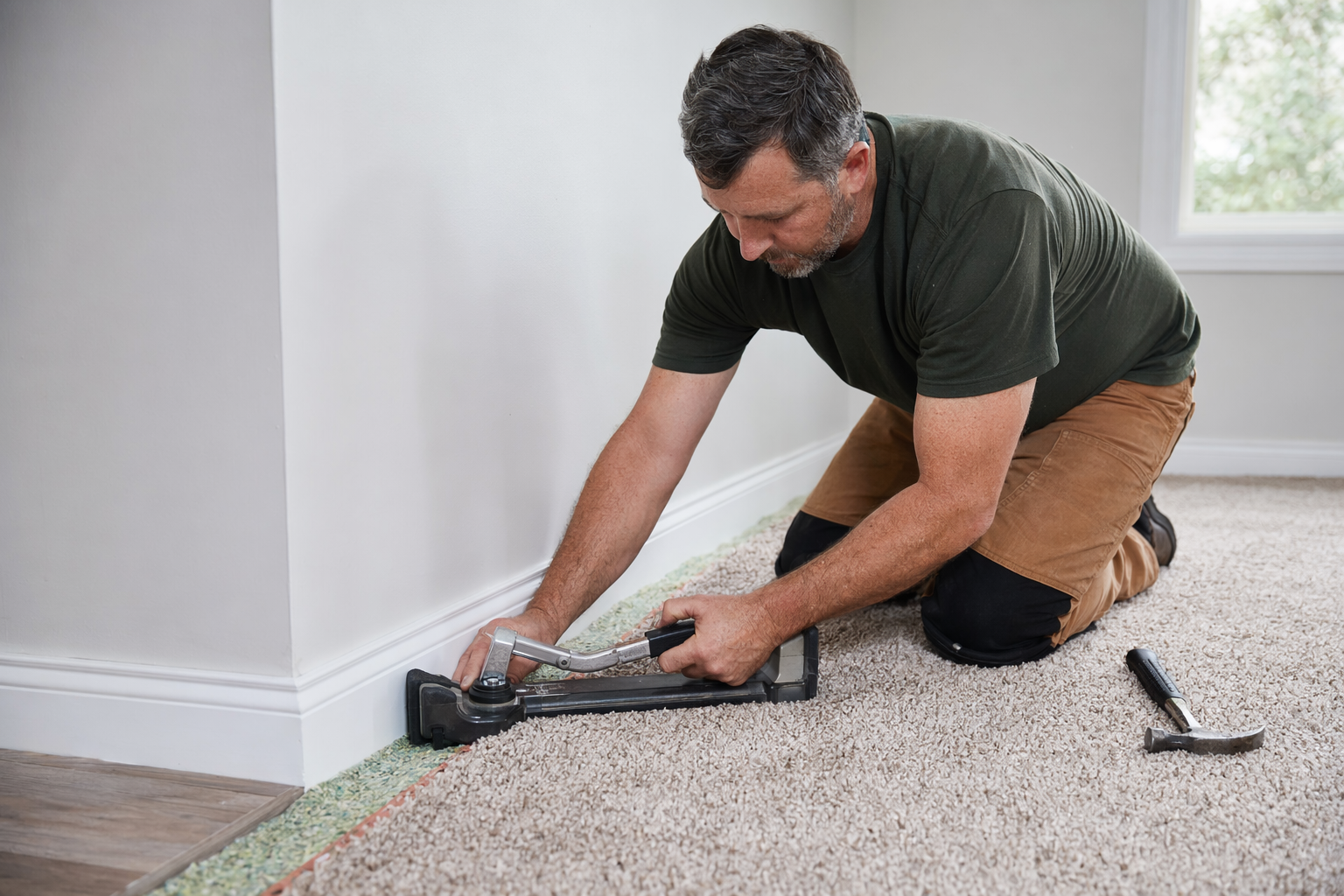
Carpet is comfortable and affordable for many bedrooms and stairs, but it wears faster and handles moisture worse than most hard floors, so the room really matters.
What carpet is, in real life
Carpet is a soft floor covering made from fibers attached to a backing, usually installed wall-to-wall over a pad. When people say “carpet,” they may mean different things: plush carpet, textured carpet, loop carpet, low-pile carpet, or patterned carpet. The pad underneath matters too, because it changes how soft, springy, and quiet the floor feels.
In daily life, carpet feels warmer and quieter than most hard-surface floors. It softens footsteps, helps reduce echo, and can be more comfortable for sitting, kneeling, or getting out of bed in the morning. That is a big reason many homeowners still choose it even when hardwood, laminate, and luxury vinyl get more attention.
The trade-off is simple: carpet is comfortable, but it usually shows wear, stains, and dirt sooner than tile, vinyl, or wood-look floors. It can also trap dust, pet hair, and smells if it is not cleaned regularly.

How carpet looks and what the different types feel like
Not all carpet feels the same underfoot. Plush and saxony carpets look smooth and soft, but they can show footprints and vacuum lines easily. Textured carpet hides traffic better and is common in busy homes. Frieze carpet has twisted fibers and can hide wear well, though the look is more casual. Berber and other loop carpets are lower and firmer, often durable, but some loops can snag with pet claws.
Fiber type matters just as much as style. Nylon is a common choice because it is durable and tends to bounce back better in high-traffic rooms. Polyester can feel very soft and often comes in strong colors, but cheaper versions may crush faster. Triexta is known for softness and stain resistance. Olefin is often used in some loop carpets and certain lower-cost products, but it may not hold up as well in heavy traffic.
When you shop, try to look past the showroom sample and think about real use. A very soft, thick carpet may feel great on your hand but still flatten faster in a hallway than a denser product with a lower pile. The best carpet for your home is not always the softest one in the store.
Durability, stains, pets, and moisture
Carpet durability depends on fiber, pile style, density, pad quality, and how much traffic the room gets. In a low-traffic bedroom, many carpets can last a long time and still look good. In a busy hallway, playroom, or stairs, wear shows much faster. Stairs are especially hard on carpet because the same small areas get stepped on over and over.
Stain resistance varies. Some carpets are treated to resist spills better, and some fibers naturally handle stains better than others. That said, “stain resistant” does not mean “stain proof.” Pet accidents, grease, tracked-in dirt, and old spills can still leave marks or odors if not cleaned quickly.
Carpet is not the best choice where moisture is common. It can hold water, trap odors, and create problems if there is repeated dampness, flooding, or frequent spills. That is why carpet is usually a weak fit for full bathrooms, laundry rooms, and many basements, especially in humid or below-grade spaces. What works well can also vary by region and climate.
If someone in the home has allergies, pets, or frequent spills, ask honest questions before choosing carpet. It may still be the right choice in some rooms, but it usually needs more regular vacuuming and prompt spot cleaning than hard-surface flooring.
Best rooms and rooms where carpet is usually a poor fit
Carpet is often a strong choice for bedrooms, upstairs hallways, family rooms, and stairs. It is also popular in nurseries and media rooms because it feels warm, lowers noise, and gives the room a softer look. In a colder climate, many people like carpet upstairs for comfort in the morning.
It is usually less ideal in kitchens, entryways, dining rooms, full bathrooms, and laundry rooms. These rooms tend to have more water, food spills, tracked-in dirt, or heavy wear. Many homeowners also avoid carpet in basements unless the space stays consistently dry and a local flooring contractor confirms the subfloor and moisture conditions are suitable.
If you are torn between carpet and a hard floor, it helps to think room by room. A common approach is carpet in bedrooms and on stairs, with tile, vinyl, laminate, or wood-look flooring in wetter or messier spaces. If you are still comparing options, browse flooring materials or read how to choose flooring.
Honest carpet cost per square foot installed
For many homes, carpet is one of the more affordable flooring options, but the total price can still vary a lot. A broad general range for carpet with installation is about $4 to $12 per square foot, with some budget products lower and some premium carpets, pads, patterns, stair work, or furniture moving pushing the price higher. These are general ranges, not quotes.
What moves the number up or down? The biggest factors are carpet fiber and quality, pad quality, room shape, stairs, tear-out and disposal of old flooring, furniture moving, subfloor condition, and local labor rates. A simple bedroom with straight edges usually costs less per square foot than stairs, landings, or rooms with lots of cuts.
Subfloor prep matters more than many people expect. If the floor underneath is uneven, damaged, damp, or not ready for new carpet, the final cost can rise. Region matters too. Prices in one part of the United States may be very different from prices in another.
The safest way to budget is to get more than one written quote and compare the same scope: carpet type, pad, removal, prep, installation areas, stairs, and cleanup. You can also see general flooring cost guides, but your real number depends on the material, the room, the subfloor, the region, and the size of the job.
Care, replacement, and how to find the right installer
Carpet usually looks better longer when you vacuum regularly, clean spills quickly, and use mats at entrances. Rearranging furniture once in a while can help reduce deep wear patterns. Many homeowners also schedule periodic professional cleaning, especially with pets, kids, or allergies.
If your current carpet has matting, ripples, pet odor, stains that keep returning, or visible wear paths, replacement may make more sense than repeated cleaning. In some cases, the issue is not just the carpet but also the pad underneath.
When hiring, ask for a written quote that clearly lists the carpet, pad, square footage, stair charges if any, removal of old flooring, prep work, and cleanup. Be careful with vague pricing, huge upfront cash deposits, cash-only deals, pressure to sign immediately, no license, or installers who want to skip checking the subfloor. Comparing more than one quote can help you spot overcharging.
PlankPath is a free matching service, not a flooring contractor, installer, or store. We can help you get matched with licensed, insured flooring contractors near you so you can compare options in writing and choose who to hire. To get started, you share basic contact and project details only — name, phone, optional email, project type, material interest, ZIP code, approximate square footage, and preferred language — at get matched.