Cork flooring, in plain words
Cork flooring feels softer and warmer underfoot than many hard floors, and it can help quiet a room. It also has limits: it can dent, fade, and react badly to too much moisture if you pick the wrong product or use it in the wrong place.
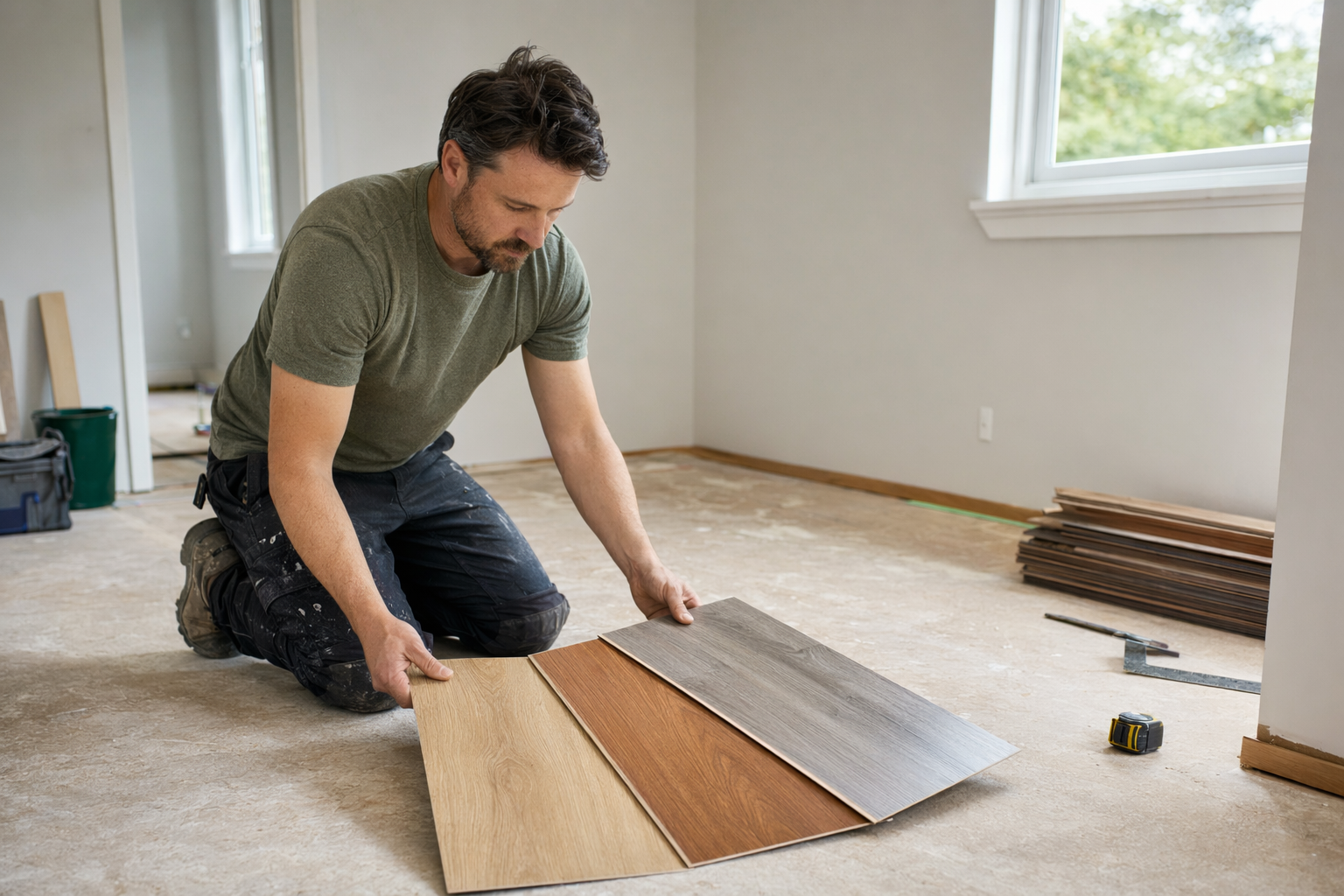
Cork flooring is warm, soft, and quiet, but it dents more easily and is usually a better choice for dry rooms than wet ones.
What cork flooring is
Cork flooring is made from the bark of the cork oak tree. The bark is harvested without cutting down the tree, which is why many people look at cork as a more renewable flooring option than some other materials. In homes, cork usually comes as tiles or planks, either glue-down or click-lock floating boards.
The surface can look natural and speckled, or it can be stained or printed to look more uniform. Some cork floors have a clear factory finish on top. Others need sealing after installation. The exact product matters a lot, because one cork floor can behave very differently from another.

How it looks and feels in real life
The main reason people choose cork is comfort. It has a little give when you walk on it, so it feels softer than tile, hardwood, or laminate. It is also warmer than many hard surfaces and can reduce some footstep noise, which makes it appealing in bedrooms, offices, playrooms, and apartments where sound matters.
The look is not for everyone. Natural cork has a distinct grain and pattern that some people love and others find busy. It usually feels more casual than hardwood and less crisp than tile. If you want a floor that feels quiet, warm, and easy on your legs, cork is worth a look. If you want a sharp, high-end wood look or a very sleek modern finish, you may prefer to compare it with other materials.
Durability, dents, scratches, and sun
Cork is comfortable partly because it is softer. That softness is a trade-off. Heavy furniture can leave dents, pet nails can scratch the finish, and sharp objects can gouge it. Some cork floors bounce back from small pressure marks better than others, but you should still expect wear over time, especially in busy households.
Sunlight is another issue. Cork can fade or change color with strong direct sun. Entry areas and main pathways may also show wear faster than lower-traffic rooms. A quality finish helps, and area rugs, felt pads, and regular maintenance help too, but cork is usually not the best pick if you want a floor that shrugs off abuse with very little visible wear.
Water and moisture: where cork works and where it doesn't
Cork handles small spills better than many people expect, especially if the product has a good factory finish and the seams are protected. But it is not a carefree waterproof floor in the way some luxury vinyl products are marketed. Standing water, frequent wet mopping, high humidity, and moisture coming up from below can all cause trouble.
That means cork is often a better fit for dry to moderately used rooms than for spaces that stay wet. It can work in living rooms, bedrooms, home offices, and some kitchens if spills are cleaned up quickly. It is usually a riskier choice for full bathrooms, laundry rooms, mudrooms, and below-grade basements with any history of dampness. Local climate, the subfloor, and the exact product matter, so this is a good place to ask a licensed flooring contractor what makes sense in your home.
Best rooms, worst rooms, and what cork usually costs
Best fits for cork are bedrooms, offices, living rooms, and other spaces where comfort and sound reduction matter more than maximum dent resistance. It can also be appealing in a condo or upstairs room because it is quieter underfoot than many hard floors. Kitchens can go either way: some homeowners love the comfort for standing, while others regret the dents and water worries.
Worst fits are usually wet rooms, very busy entry zones, homes with frequent tracked-in grit, and rooms with heavy rolling loads or furniture that will stay in one spot for years. If you have large dogs, lots of direct sun, or a household that is hard on floors, be honest with yourself before choosing cork.
A common installed price range for cork flooring is about $5 to $12 per square foot for material plus installation, with some projects running higher for premium products, specialty patterns, extra prep, or difficult layouts. Glue-down cork, floating cork planks, trim work, old floor removal, moisture mitigation, and subfloor leveling can all change the number. These are general ranges, not quotes. Real pricing depends on the product, the room, the subfloor, your region, and the size of the job. You can compare broader costs before you start getting bids.
Care, installation, and how to find the right installer
Cork does best with simple, consistent care. Sweep or vacuum with a hard-floor setting so grit does not grind into the finish. Wipe spills quickly. Use felt pads under furniture, avoid soaking the floor, and follow the maker's cleaning instructions for the specific product you buy. Some cork floors may need resealing or refinishing sooner than homeowners expect, so ask about long-term maintenance before you decide.
Installation matters more than many people think. The subfloor needs to be reasonably flat, clean, and dry. Moisture problems underneath should not be ignored or covered up. A bad install can lead to seam issues, movement, gaps, or early wear. General information online can help you compare options, but it is not a substitute for a site visit or local code requirements.
PlankPath is a free matching service, not a flooring contractor, installer, or store. We help homeowners get connected with licensed, insured flooring contractors near them for projects like cork installation or replacing damaged floors. You stay in control: compare more than one quote in writing, make sure the material and scope are clearly listed, verify license and insurance, and do not agree to vague pricing, cash-only deals, or huge upfront cash deposits.
If you want help getting started, use Get matched and share basic project details only: your name, phone, optional email, project type, material interest, ZIP code, approximate square footage, and preferred language. You can also read how to choose flooring if you are still deciding whether cork is really the right fit.