Engineered wood flooring explained
Engineered wood gives you a real wood surface with a more stable core, so it can work in more places than solid hardwood. It looks high-end, but the right choice depends on moisture, wear, and the quality of the product and installation.
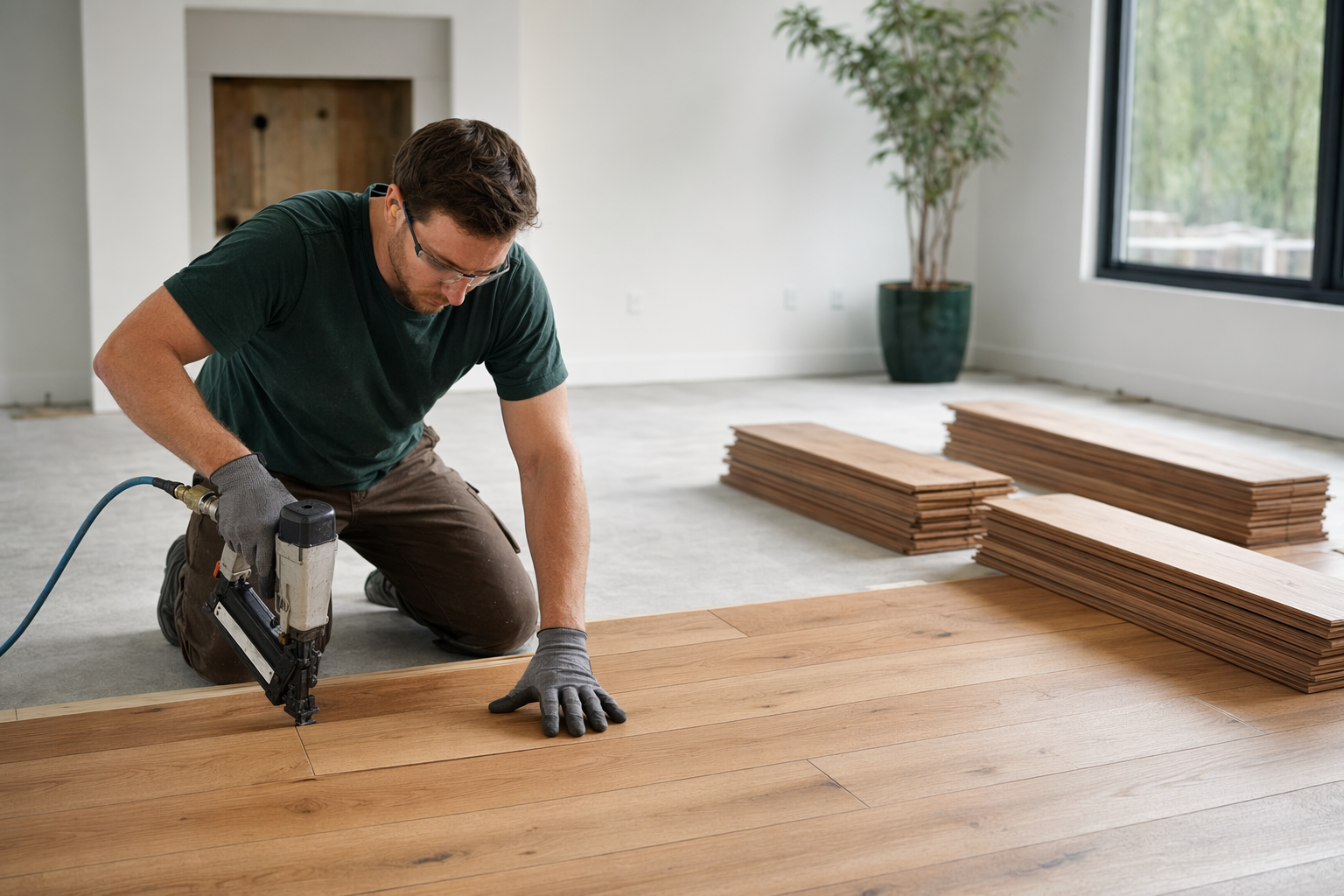
Engineered wood gives you the look of real wood with better stability than solid hardwood, but it still needs a dry room, a good subfloor, and a careful installer.
What engineered wood flooring is
Engineered wood is real wood on top, attached to a layered core underneath. The top layer is called the wear layer or veneer, and it can be oak, maple, hickory, walnut, or another real wood species. Because the surface is real wood, it looks and feels much closer to hardwood than laminate or luxury vinyl plank.
The core is usually made from plywood or high-density fiberboard layers pressed in different directions for stability. That layered build helps engineered wood handle normal indoor humidity changes better than solid hardwood. It is still wood, though, so it is not waterproof and it should not be treated like a bathroom tile floor.
If you like the natural grain, warmth, and quieter feel of wood underfoot, engineered wood is often the middle ground between solid hardwood and lower-cost wood-look floors. You can browse other options on our materials hub if you are still comparing.
How it looks and feels in daily life
A good engineered wood floor can look very close to solid hardwood because the top is real wood, not a printed image. You will see natural variation in grain, knots, color, and board character. Some homeowners love that lived-in, natural look. Others want a cleaner, more even style and should look for lower-variation products.
Underfoot, engineered wood usually feels warmer and softer than tile. It does not have the exact same bounce or sound as carpet, but it often feels more comfortable and less hollow than some floating laminate or vinyl floors. The finish matters too: matte hides dust and small scratches better, while glossy finishes show more reflection and more everyday marks.
Plank width, board length, texture, and color all change the final look. Wide planks can make a room feel larger, but they may cost more. Wire-brushed or hand-scraped textures can help hide minor wear in busy homes with kids or pets.
Durability, scratches, and refinishing
Engineered wood can be very durable, but not all products are equal. The biggest quality difference is often the thickness of the top wood layer. A thicker wear layer usually means a longer life and, in some cases, the ability to refinish the floor once or more. A very thin top layer may look great at first but give you fewer options later.
In normal family use, engineered wood handles everyday foot traffic well. But like any real wood floor, it can scratch from pet nails, grit, moving furniture, and dropped objects. Harder species and tougher factory finishes help, but no wood floor is scratch-proof.
If refinishing matters to you, ask directly before buying. Some engineered wood floors can be lightly sanded and refinished, while others cannot. Get that detail in writing from the contractor or seller so you know what you are paying for.
Water, moisture, and where it works best
Engineered wood handles humidity swings better than solid hardwood, but it is still not a waterproof floor. Spills should be wiped up quickly. Standing water, frequent wet mopping, plumbing leaks, or moisture coming up from the subfloor can damage it.
Best rooms are usually living rooms, bedrooms, dining rooms, hallways, and many finished basements if the product and subfloor conditions are appropriate. In some homes, it can also work in kitchens when spills are cleaned up fast and the installation is done well. Worst rooms are usually full bathrooms, laundry rooms with leak risk, mudrooms that stay wet, and any area with ongoing moisture problems.
Climate matters too. Homes in very humid, very dry, or coastal areas may need extra attention to acclimation, subfloor moisture, and the installation method. That is one reason installed cost and performance can vary so much by region.
This is general information only. A licensed flooring contractor should evaluate the room, the subfloor, and local conditions before you decide.
Honest installed cost range
A common installed price range for engineered wood is about $7 to $16 per square foot for material plus installation. Mid-range projects often fall around $8 to $12 per square foot, while premium wood species, thicker wear layers, difficult layouts, stairs, subfloor repairs, or higher-cost regions can push the price above that.
Those numbers are not quotes. The real price depends on the product quality, plank size, finish, installation method, room shape, job size, subfloor condition, trim work, furniture moving, old-floor removal, and where you live. If you want a broader sense of pricing, our cost guides can help you compare ranges.
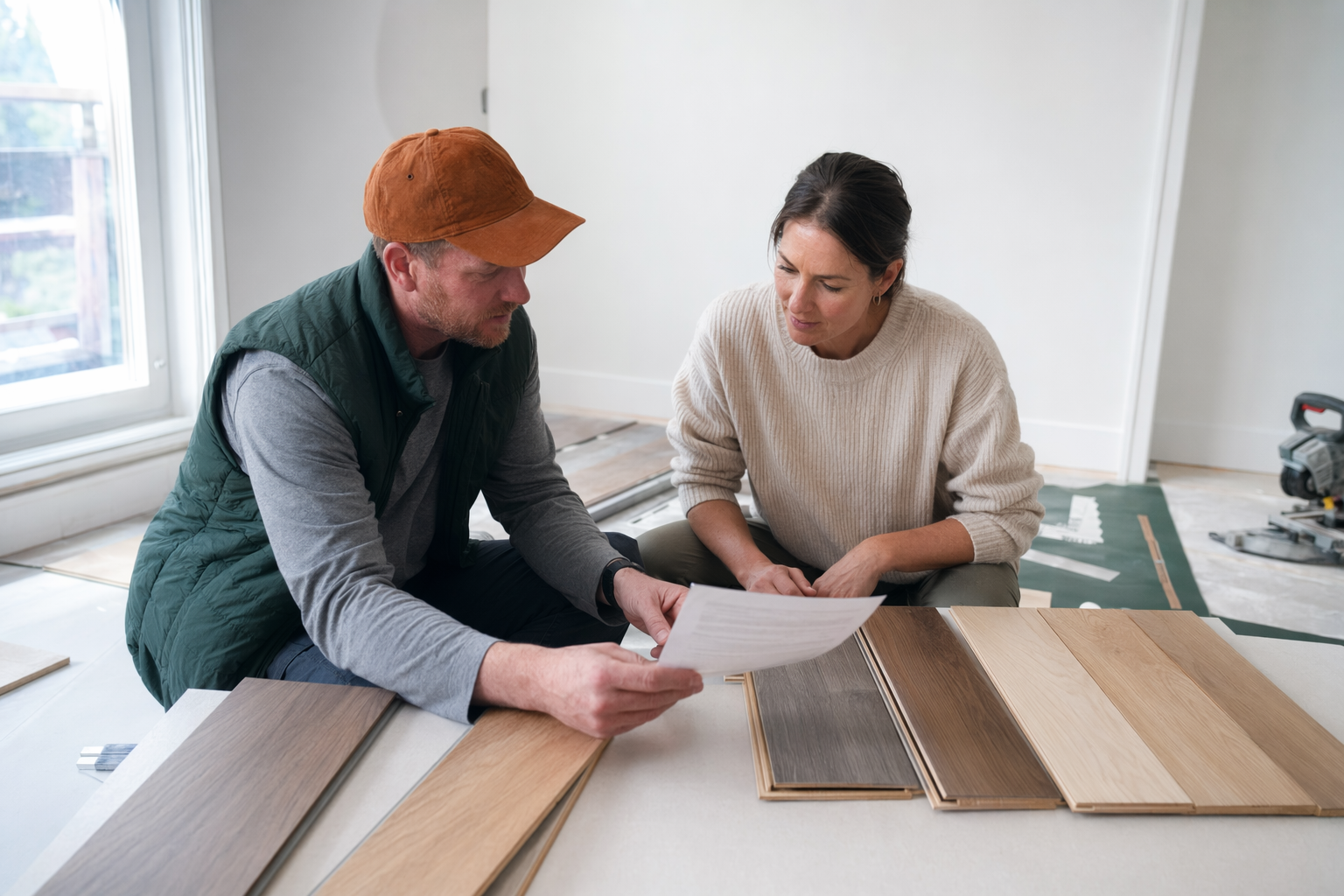
When you get estimates, ask what is included. A low number may leave out underlayment, moisture testing, transitions, baseboard work, floor prep, or haul-away. Get the material, scope, and labor details in writing so you can compare more than one quote fairly.
Care, installation, and how to find the right contractor
Day-to-day care is simple: sweep or vacuum with a hard-floor setting, clean with products approved for wood floors, and wipe spills quickly. Use felt pads under furniture, trim pet nails, and place mats at entries to reduce grit. Avoid soaking the floor or using steam unless the manufacturer clearly allows it.
Installation matters as much as the product. Engineered wood may be floated, glued down, stapled, or nailed depending on the floor, the subfloor, and the room. A licensed, insured flooring contractor should check subfloor flatness, moisture conditions, transitions, and expansion gaps. Skipping floor prep is one of the most common ways a project goes wrong.
Watch for red flags: vague pricing, cash-only deals, huge upfront cash deposits, pressure to sign right away, no proof of license or insurance, or anyone who wants to install over a bad subfloor without discussing it. Compare more than one written quote and verify the contractor is licensed and insured before hiring.
PlankPath is a free matching service, not a flooring contractor, installer, or store. We can help you get connected with licensed, insured flooring contractors near you for an engineered wood project. To get matched, share basic contact and project details only, such as your name, phone, optional email, ZIP code, approximate square footage, material interest, project type, and preferred language through get matched. If you are still deciding, our how to choose flooring guide may help.