Hardwood flooring, in plain words
Hardwood flooring is the classic real-wood floor: warm, solid underfoot, and often able to be refinished instead of replaced. It can last a very long time, but it is not the right fit for every room or budget.
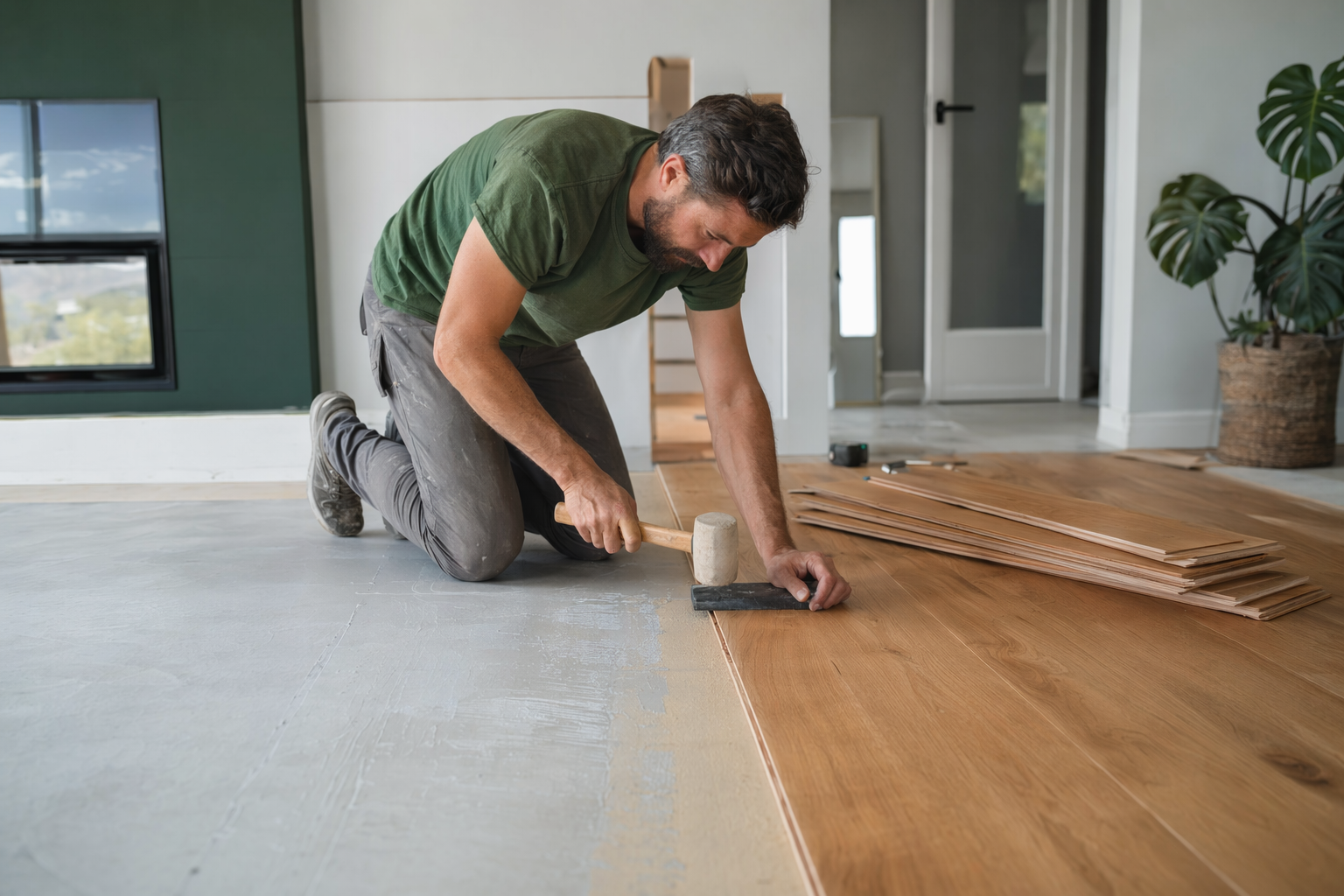
Hardwood is beautiful and long-lasting, but it costs more than many other floors and does not like moisture, so the right room and the right installer matter.
What hardwood flooring is
Hardwood flooring is made from solid pieces of wood, usually cut into planks or strips. Common species include oak, maple, hickory, and walnut. Because it is real wood all the way through, a hardwood floor can often be sanded and refinished more than once over its life, depending on the thickness and condition of the boards.
The main reason people choose hardwood is simple: it looks natural and it ages in a way many people like. Grain, color variation, small dents, and wear marks can become part of the floor's character. It is a very different product from laminate, luxury vinyl plank, or engineered wood, even when those materials are designed to look similar.
Underfoot, hardwood usually feels firm and solid. It can make a home feel warmer and more finished than some budget flooring options, though area rugs are still common for comfort and sound control.
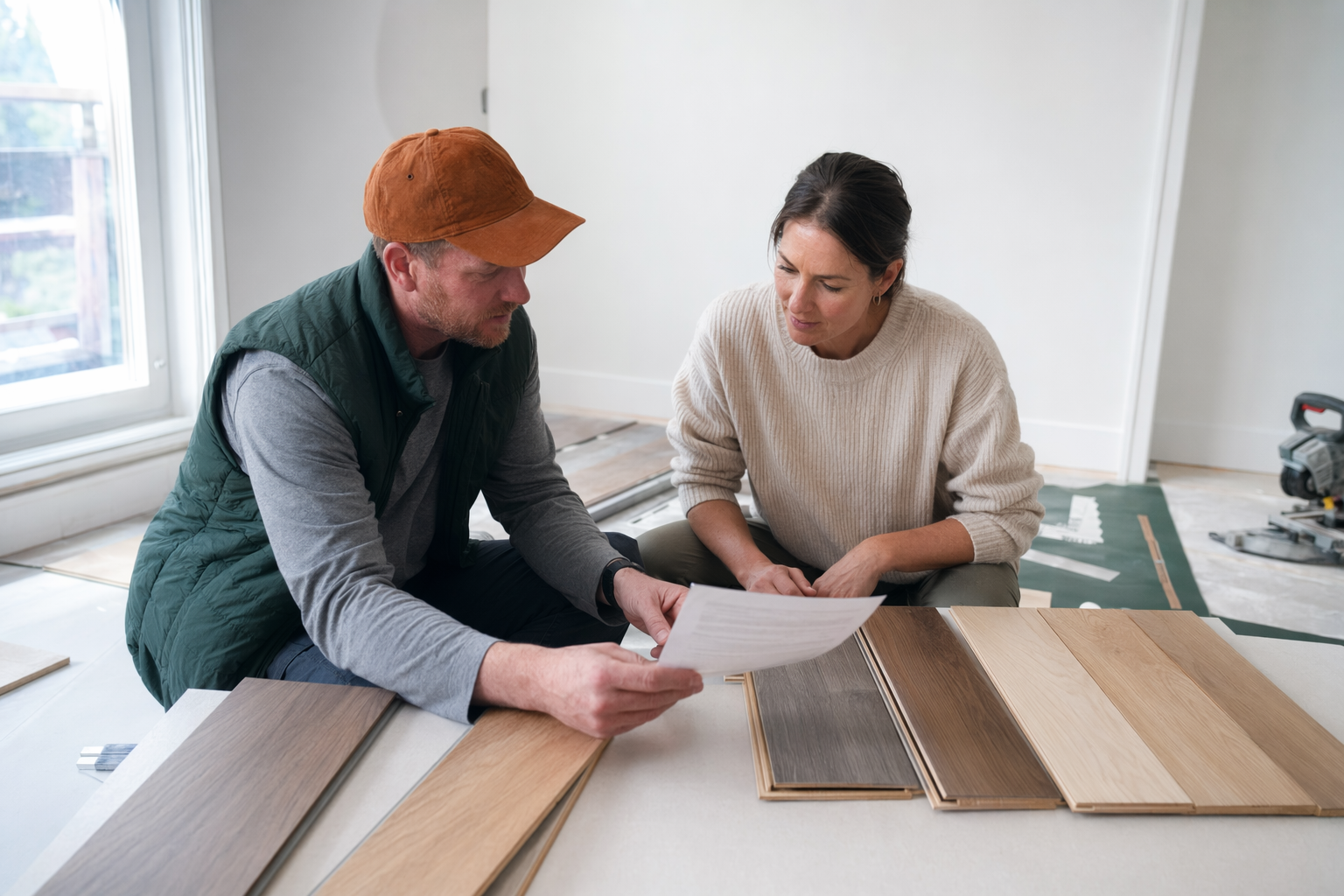
How it looks, feels, and wears over time
Hardwood has a look that is hard to fake completely. Real boards have natural grain patterns, knots, color shifts, and texture that vary from plank to plank. Some homeowners want a smooth, formal look. Others prefer hand-scraped, wire-brushed, matte, or rustic finishes that hide everyday wear a little better.
In daily life, hardwood is durable, but not indestructible. Chairs can scratch it. Pet nails can leave marks, especially on softer wood species. Heavy furniture can dent it. Sunlight can also change the color over time. The good news is that many worn hardwood floors can be screened, recoated, or fully refinished instead of torn out.
Harder species usually resist dents better than softer ones, but finish quality matters too. A busy home with kids, pets, and lots of traffic may do better with a lower-gloss finish and a species known for better hardness. If you are comparing materials, it helps to look at the bigger picture, not just the showroom sample. Our flooring guides can help you sort through those trade-offs.
Water, moisture, and the rooms where hardwood makes sense
Hardwood and moisture do not mix well. Real wood expands and contracts with changes in humidity, and standing water can stain, warp, cup, or swell the boards. Small spills that are wiped up quickly are usually manageable. Repeated wetness or leaks are a different story.
Because of that, hardwood is usually a strong choice for living rooms, dining rooms, bedrooms, hallways, and many home offices. It can also work in some kitchens if you understand the upkeep and clean spills fast. It is usually a poor choice for full bathrooms, laundry rooms, below-grade basements, and other spaces with frequent moisture or damp conditions.
Climate matters too. In very humid regions, very dry regions, or homes without steady indoor climate control, wood movement can be more noticeable. A licensed flooring contractor can tell you what is common in your area, what moisture testing may be needed, and whether hardwood is a good fit for your subfloor and room conditions. That kind of room-by-room judgment matters more than a simple yes-or-no rule.
What hardwood flooring usually costs
For many homeowners, installed hardwood flooring often falls around $8 to $18+ per square foot for material and installation. Mid-range projects commonly land somewhere around $10 to $15 per square foot, but luxury species, wider planks, custom stains, pattern layouts, floor prep, trim work, and difficult tear-out can push the total higher. These are general ranges, not quotes.
The real number depends on the wood species, board width and thickness, finish type, the subfloor condition, the room layout, your region, and the size of the job. Stairs, furniture moving, old floor removal, repairs, and moisture mitigation can also add cost. Refinishing existing hardwood is a separate project with its own pricing, often lower than full replacement when the floor is still a good candidate.
If you want a broader pricing picture, see our flooring cost guides. The smartest way to avoid overpaying is to compare more than one written quote and make sure each quote lists the same scope: material, underlayment if needed, floor prep, trim, transitions, removal, cleanup, and finish details.
Care, maintenance, and common problems
Hardwood is not hard to live with, but it does better with basic habits. Sweep or vacuum regularly with a floor-safe setting, wipe spills quickly, and use felt pads under chairs and furniture. Many manufacturers recommend cleaners made for wood floors and advise against soaking the floor with water or using harsh steam or chemical products.
Over time, you may see scratches, dull spots, small gaps between boards in dry seasons, or finish wear in high-traffic lanes. Some of that is normal. A floor does not always need full sanding right away. Sometimes a recoat can refresh the finish before deeper wear reaches the wood itself.
One common mistake is focusing only on the top surface and ignoring the subfloor. If the floor underneath is uneven, damp, damaged, or noisy, the finished hardwood may never feel right. Skipping subfloor prep to lower the bid can lead to movement, squeaks, or early failure. That is one reason vague pricing is a red flag.
How to find the right hardwood installer
Hardwood installation is a place where workmanship matters a lot. A good installer does more than lay planks. They check the subfloor, measure moisture, plan layout lines, handle transitions, and explain what to expect from a real wood floor in your climate. That is why it is worth hiring a licensed, insured flooring contractor where required and verifying it yourself.
Watch for warning signs: vague pricing, pressure to sign immediately, huge upfront cash deposits, cash-only requests, no license when one is required, or a bid that skips subfloor prep without explanation. Get the material, scope, and price in writing first. Compare more than one quote. You stay in control and should confirm the work is done right before paying the final amount.
PlankPath is a free matching service, not a flooring contractor, installer, or store. We do not perform flooring work or sell flooring. If you want help finding local pros, you can get matched with licensed, insured flooring contractors near you at no cost. We only collect basic contact and project details like your name, phone, optional email, project type, ZIP code, approximate square footage, material interest, and preferred language.
If you are still comparing options, you can also browse other flooring materials before deciding whether hardwood is the best fit for your home.