Laminate flooring explained
Laminate flooring gives you a wood- or stone-look floor at a lower price than many natural materials. It can handle daily wear well, but it is not the right choice for every room or every moisture condition.
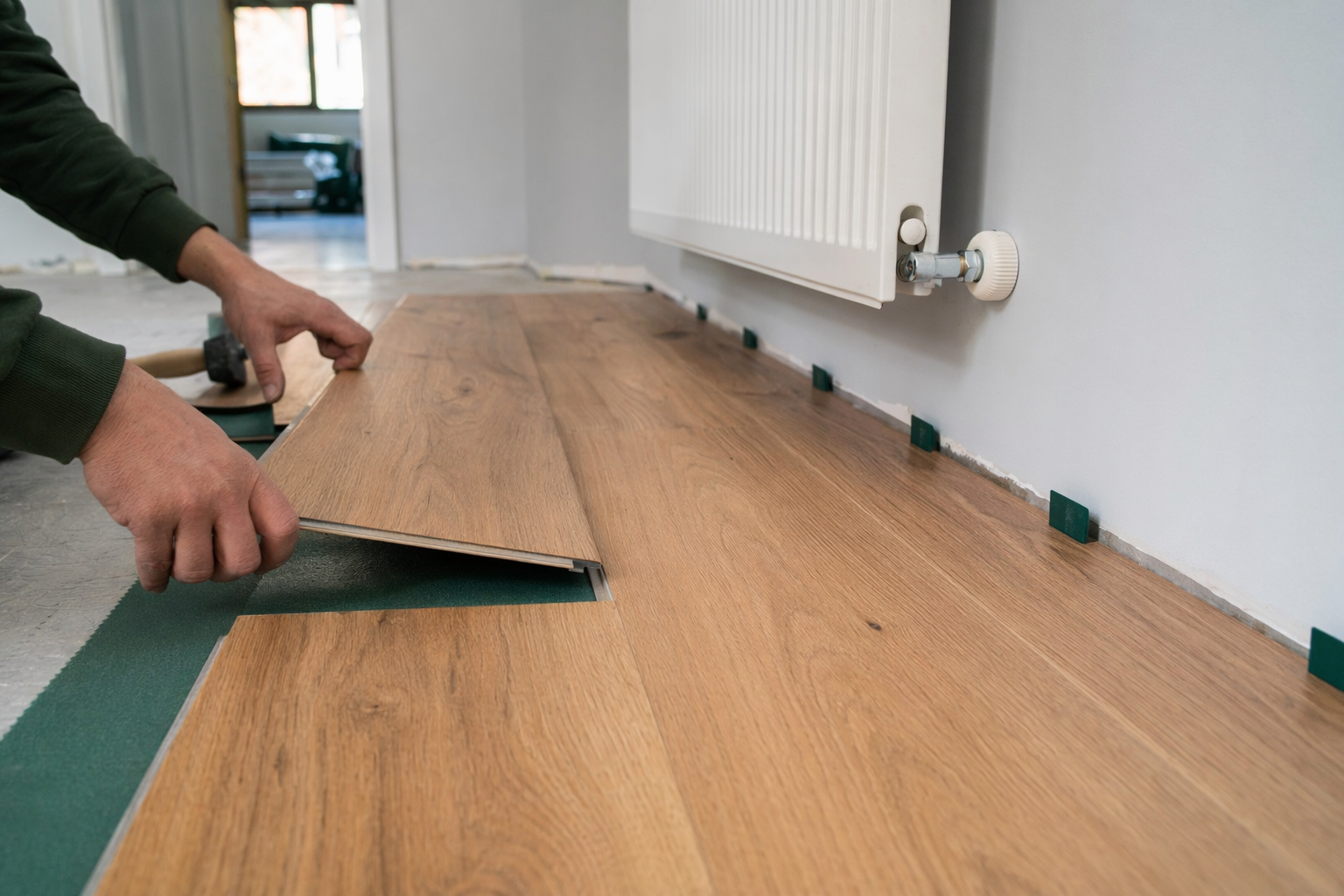
Laminate is a practical, lower-cost floor for many dry living areas, but it is not the best pick for rooms with regular water or hidden moisture problems.
What laminate flooring is
Laminate is a manufactured flooring product made in layers. Most laminate planks have a tough wear layer on top, a printed image layer that creates the wood or stone look, a dense core, and a backing layer for stability. Many products click together and "float" over the subfloor instead of being nailed down.
In real life, laminate is popular because it can look surprisingly good for the price. You can find styles that copy oak, maple, walnut, reclaimed wood, tile, and even wider-plank modern looks. The feel underfoot is usually firmer and a little louder than carpet, and often less natural-feeling than real hardwood or high-end engineered wood.
Quality varies a lot. Cheap laminate can look flat or repetitive, while better lines have more believable texture, better edge detail, and stronger locking systems. If you are comparing options, it helps to look at large samples in daylight and not just a tiny display piece.

How it looks, feels, and wears over time
Laminate's biggest strength is day-to-day wear resistance. A good wear layer can hold up well against foot traffic, pet nails, kid activity, and chair movement better than some softer wood floors. For busy homes, that scratch resistance is a big reason people choose it.
That said, laminate is not indestructible. Heavy impact can chip edges or damage corners. If water gets into the seams or core, boards can swell or lift, and damaged sections usually cannot be sanded and refinished the way solid hardwood can. When laminate wears out or is badly damaged, the usual fix is board replacement or full replacement, not refinishing.
Underfoot, laminate tends to feel harder than luxury vinyl plank and less warm than carpet. Sound also matters. Without a good underlayment or a well-prepared subfloor, it can sound hollow or "clicky" when walked on. A licensed flooring contractor can tell you whether the product you like needs attached pad, separate underlayment, or extra subfloor prep.
Water, moisture, and where laminate works best
Laminate is often described as water-resistant, but that is not the same as waterproof. Some newer products resist spills better than older laminate, especially for short periods, but standing water is still a risk. If moisture reaches the joints or the core, planks may swell, cup, or separate.
Because of that, laminate usually works best in living rooms, bedrooms, hallways, home offices, dining rooms, and other dry or mostly dry spaces. It can also work in some kitchens if spills are cleaned up fast and the product is rated for that use. The exact fit depends on the product, the subfloor, and the room conditions.
It is usually a weaker choice for full bathrooms, laundry rooms with leak risk, below-grade basements with ongoing moisture issues, or any area that gets frequent standing water. In those places, homeowners often compare laminate with materials like tile or luxury vinyl plank. Local climate matters too. In humid regions or homes with moisture problems, the subfloor and room conditions need extra attention.
Best rooms, worst rooms, and who laminate is good for
Laminate makes sense for homeowners who want a clean wood-look floor without paying hardwood prices. It is especially practical for rental properties, guest rooms, family rooms, kids' rooms, and whole-home updates where budget matters and you still want a finished, modern look.
It is also a reasonable option if your main concerns are scratches and everyday wear, not long-term refinishing. If you have large dogs, active kids, or lots of traffic, laminate may be easier to live with than some softer natural floors.
It is a less ideal choice if you want a floor that can be refinished, if you are remodeling a room with frequent water exposure, or if you are very sensitive to hollow sound underfoot. In those cases, compare laminate with hardwood, engineered wood, tile, or vinyl before deciding. Our how to choose flooring guide can help you think through those trade-offs.
Honest laminate flooring cost ranges
For many homeowners in the United States, laminate flooring usually lands around $4 to $10 per square foot installed for basic to mid-range jobs. Better-quality products, thicker planks, more realistic textures, stronger water resistance, trim work, furniture moving, stair work, or difficult layouts can push the total closer to $10 to $14+ per square foot installed.
Those are general ranges for material plus installation, not quotes. The real number depends on the product line, the subfloor condition, the room shape, the region, whether old flooring must be removed, and the size of the job. A small room often costs more per square foot than a larger straightforward job.
The biggest cost drivers are usually:
- laminate quality and thickness
- attached pad or separate underlayment
- tear-out and disposal of old flooring
- subfloor leveling or repair
- transitions, baseboards, and trim
- stairs, closets, and tight cuts
- local labor rates
If your subfloor is uneven, damaged, or damp, your price can rise quickly. That is one reason vague per-square-foot pricing can be misleading. Before hiring anyone, get the exact material, scope, prep work, and trim details in writing. You can also read more general costs before comparing estimates.
Care, installation, and how to find the right contractor
Laminate is fairly easy to live with if you care for it the right way. Sweep or vacuum regularly, wipe spills promptly, and use a cleaner approved for laminate when needed. Avoid soaking the floor with water, steam mops unless the manufacturer allows them, and harsh abrasives that can dull the surface. Felt pads under furniture help reduce scuffs and noise.
Installation matters more than many people expect. A laminate floor needs the right expansion gaps, a suitable underlayment when required, and a flat, dry subfloor. Skipping prep can lead to movement, noise, joint failure, or early wear. This page is general information only, not installation or code advice, so it is smart to have a licensed flooring contractor evaluate your specific room and local requirements.
When you compare installers, ask whether they are licensed and insured where required, whether they have installed laminate like the product you chose, and what subfloor prep is included. Watch for red flags: vague pricing, huge upfront cash deposits, cash-only deals, pressure to sign right away, no proof of license or insurance, or a plan that ignores the subfloor. Get more than one quote in writing and compare the material, labor, underlayment, trim, removal, and cleanup line by line.
PlankPath is a free matching service, not a flooring contractor, installer, or store. We do not perform flooring work or sell materials. If you want help finding local pros, you can get matched with licensed, insured flooring contractors near you at no cost. You stay in control: compare written quotes, choose who to hire, and confirm the work is done right before paying the final amount. We only collect basic contact and project details such as your name, phone, optional email, project type, ZIP code, approximate square footage, material interest, and preferred language.