Luxury vinyl plank (LVP) flooring
Luxury vinyl plank, or LVP, is popular for a reason: it looks like wood, handles daily life well, and usually costs less than real hardwood. It is not perfect, but for many homes it is a practical, low-stress choice.
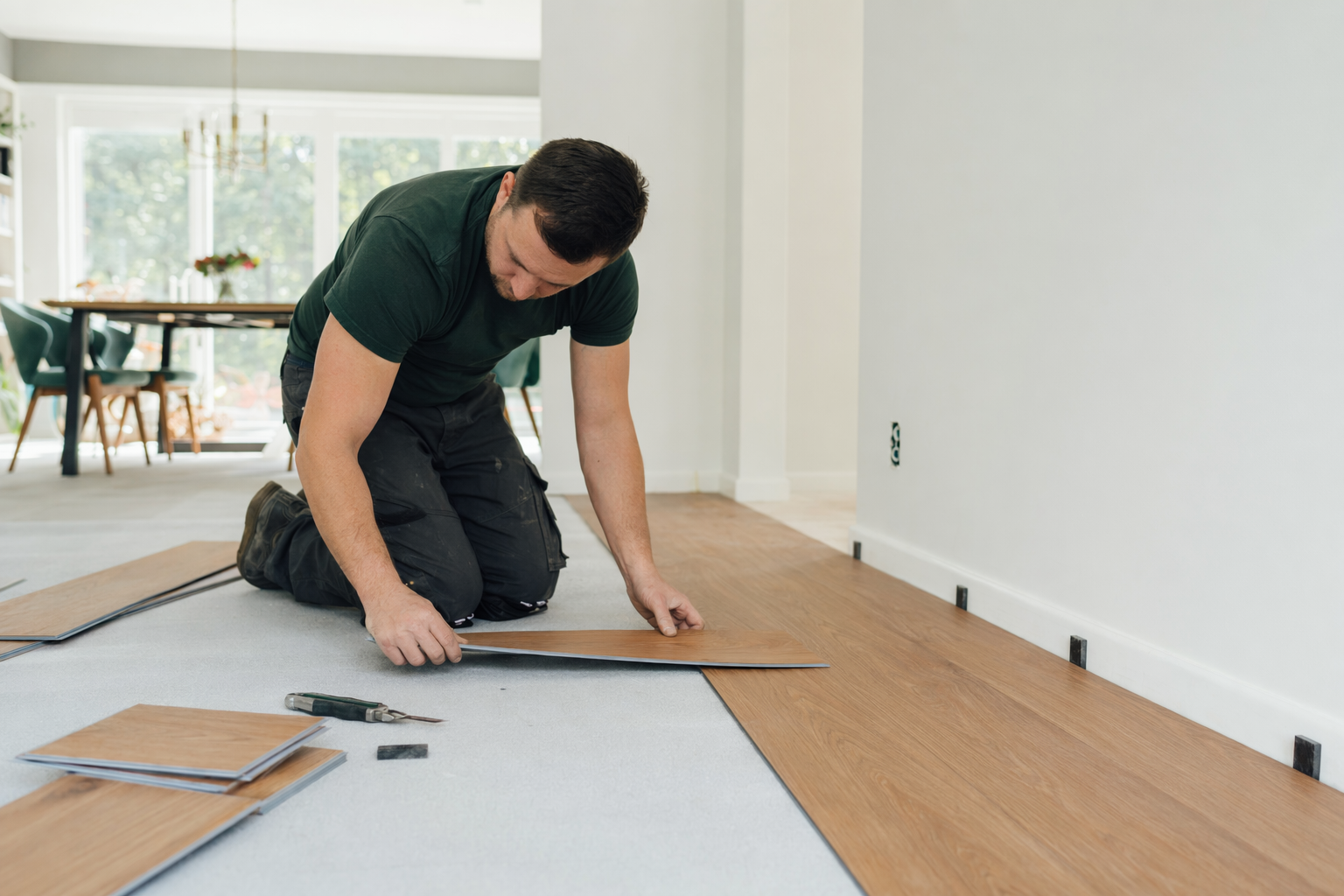
LVP is a practical, wood-look floor that handles everyday life and moisture well, but the product quality and the installer matter just as much as the material.
What LVP flooring is
Luxury vinyl plank is a manufactured flooring product made in layers. Most planks have a printed design layer that looks like wood, a wear layer on top for scratch and stain resistance, and a rigid or flexible core underneath. It is sold in plank shapes so it gives a wood-floor look without being actual wood.
Underfoot, LVP usually feels smoother and a little softer than tile, but not as solid or natural as hardwood. Better products often have more realistic texture, lower pattern repeat, and a thicker wear layer. Cheaper products can look flat or plastic-like, especially in bright light.
Many homeowners like LVP because it gives a clean wood-look floor in kitchens, living rooms, bedrooms, and finished basements without the higher price and maintenance of solid wood. If you are still comparing materials, our flooring materials hub and how to choose flooring guide can help.
How it looks, feels, and wears over time
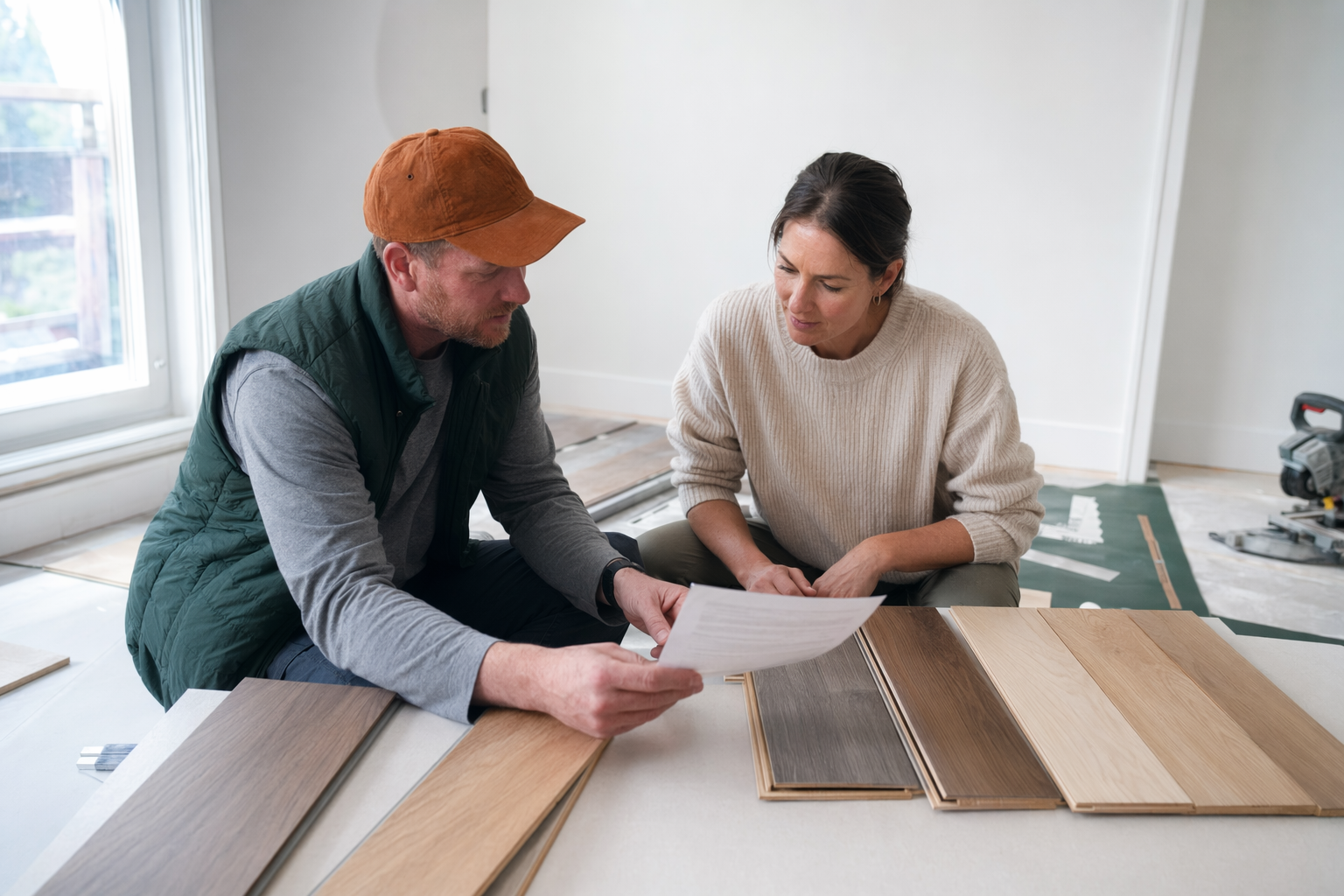
A good LVP floor can look surprisingly convincing from standing height. It comes in many colors and styles, from pale oak looks to darker rustic planks. Wider planks and embossed textures can make it feel more current, while narrow planks can fit older homes better.
In daily use, LVP is one of the easier floors to live with. It generally handles kids, pets, rolling chairs, and normal foot traffic better than many lower-cost floors. It is also quieter than tile and less likely to feel cold.
That said, durability depends heavily on product quality and installation. Thin planks, weak locking systems, and poor subfloor prep can lead to movement, gaps, or a hollow sound. LVP can also scratch, dent, or gouge from heavy furniture, sharp pet nails, grit, or dragging appliances. It is durable, but it is not indestructible.
Unlike real hardwood, LVP cannot usually be sanded and refinished when worn. When a floor is badly damaged, boards may need to be replaced, and matching older material is not always easy.
Water, moisture, and where LVP works best
One of LVP's biggest selling points is water resistance. Many products are marketed as waterproof, which is why people often choose them for kitchens, bathrooms, laundry rooms, mudrooms, and basements. Spills on the surface are usually not a big problem if they are cleaned up in a reasonable time.
But waterproof does not mean problem-proof. Water can still get around the edges, into seams, under the floor, or into the subfloor. If there is a plumbing leak, repeated standing water, or moisture coming up from below, you can still end up with odor, mold concerns, or floor failure. That is one reason experienced flooring contractors pay close attention to the subfloor and moisture conditions before installing anything.
Best rooms for LVP are usually high-traffic living areas, kitchens, entryways, finished basements, bedrooms, and homes with pets or children. It is often a practical choice when you want one continuous floor through several rooms.
Less ideal spots include areas with direct extreme heat, strong repeated sun exposure, or rooms where a more premium natural material matters to you for resale or feel. In some homes, a formal dining room or high-end primary suite may be where people prefer real hardwood instead.
Honest installed cost range
A common installed price for LVP is about $4 to $10 per square foot for material plus installation, with many projects landing somewhere in the middle. Better-quality planks, thicker wear layers, premium brands, complex layouts, stairs, furniture moving, old floor removal, and subfloor repair can push the price higher. In some markets or for more demanding jobs, the total can run above that range.
Lower prices are usually for simpler jobs, straightforward rooms, and more basic products. Small jobs often cost more per square foot because the crew still has setup time, travel, trim work, and other fixed labor costs.
The real number depends on the product you choose, the condition of the subfloor, the room, your region, and the size of the job. These ranges are not quotes. If you want a broader price comparison with other materials, see our flooring cost guides.
When you compare estimates, make sure each quote clearly says what is included: product line, wear layer, underlayment if needed, old flooring removal, subfloor prep, trim or transitions, stairs, and disposal. Vague pricing is one of the easiest ways to get overcharged.
Care, cleaning, and everyday downsides
LVP is fairly low-maintenance. For regular care, most homes do well with sweeping, dust mopping, or vacuuming with a hard-floor setting, plus damp mopping with a cleaner approved for vinyl floors. Grit is the enemy, so keeping dirt and sand off the floor matters more than using fancy products.
Avoid soaking the floor, using steam mops unless the manufacturer clearly allows it, or applying waxes and finishes meant for other materials. Felt pads under furniture, mats at entries, and lifting instead of dragging heavy items can help the floor last longer.
The biggest downsides are simple: it does not feel exactly like wood, deep damage is hard to hide, and cheap products can look cheap. Also, if the subfloor is uneven, you may feel imperfections underfoot or hear clicking and hollow spots. A lot of complaints people blame on LVP are really installation or subfloor problems.
How to find the right installer and compare quotes
LVP installation looks simple online, but good results depend on accurate measuring, careful layout, expansion details, transitions, and especially subfloor prep. A licensed, insured flooring contractor can tell you whether your subfloor is flat enough, whether moisture is a concern, and what product is a realistic fit for your home. Local codes and conditions vary, so treat this page as general information only.
If you are getting estimates, ask each contractor to put the scope in writing. You want the material name, thickness or wear layer, who handles moving furniture, whether old flooring is removed, how subfloor prep is billed, what trim pieces are included, and the payment schedule. Compare more than one written quote if you can.
Watch for red flags: huge upfront cash deposits, cash-only deals, pressure to sign on the spot, no license or insurance, very vague pricing, or anyone who wants to skip checking the subfloor. Those are common ways homeowners end up paying more later.
PlankPath is a free matching service, not a flooring contractor or flooring store. We do not install floors or sell materials. We simply help you get connected with licensed, insured flooring contractors near you based on your project type, ZIP code, approximate square footage, material interest, and preferred language. You stay in control, compare quotes in writing, choose who to hire, and confirm the work is done right before paying the final amount. If you are ready, you can get matched here.