Tile flooring — porcelain, ceramic & stone
Tile is one of the toughest, most water-friendly flooring options for busy homes. Here’s what porcelain, ceramic, and stone are really like to live with, what they usually cost installed, and how to compare contractors.
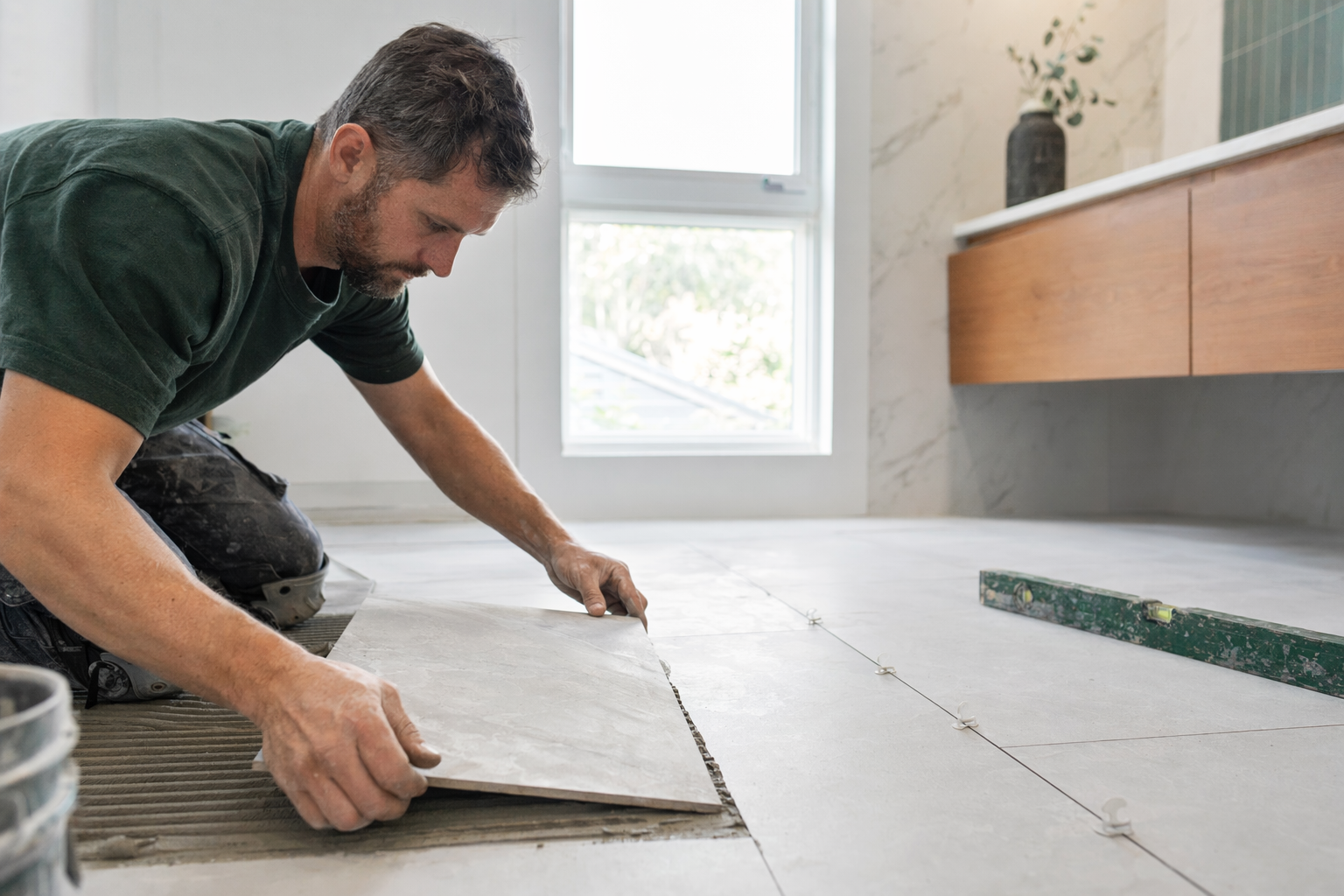
Tile is durable and great around water, but comfort, subfloor prep, and installation quality matter just as much as the tile you pick.
What tile flooring is
Tile flooring usually means one of three categories: porcelain, ceramic, or natural stone. Porcelain and ceramic are factory-made clay products fired at high heat. Stone tile is cut from natural materials such as slate, travertine, marble, or granite.
Porcelain is generally denser and less absorbent than standard ceramic, which is one reason people often choose it for bathrooms, kitchens, laundry rooms, and entryways. Ceramic can still work very well in many of those spaces, but it is often a little less tough under heavy wear. Natural stone has a beautiful, more organic look, but it usually needs more care and can cost more.
Tile can mimic many looks. You can find clean modern tiles, warm stone looks, and wood-look planks that give you the appearance of hardwood with much better water resistance. If you are still comparing options, the flooring materials hub is a good place to see how tile stacks up against other choices.

How tile looks and feels in daily life
Tile has a solid, firm feel underfoot. It does not have the softness of carpet or the slight give of luxury vinyl plank. Some homeowners love that clean, stable feel. Others find it hard and colder, especially in winter or in homes without radiant heat.
Visually, tile can go in almost any direction. Large-format porcelain can look sleek and modern. Small mosaic tile can add texture in bathrooms. Stone can feel rich and natural, with color variation that does not look factory-perfect. Grout color also matters more than many people expect. A matching grout can make the floor look calmer, while a contrasting grout makes the pattern stand out.
One honest trade-off: tile can sound a bit louder and feel less forgiving if you stand on it for long periods. In kitchens where someone cooks a lot, that comfort issue is worth thinking about before you commit.
Durability, scratches, cracks, and moisture
Tile is known for durability, and that reputation is mostly deserved. A good tile floor can last a very long time if it is installed over a properly prepared subfloor. Porcelain is especially hard-wearing and usually resists scratches better than many other flooring materials. Ceramic is also durable, though some products are better suited to lighter residential traffic than heavy-use areas.
Water is one of tile’s biggest strengths, but there is an important detail here: tile surfaces are water-resistant, and some are very water-friendly, but the full floor system still depends on proper installation, grout, and what is underneath. Bathrooms, showers, laundry rooms, and entries need the right prep and, in some cases, waterproofing methods based on the room and local code. That is one reason this is a job many homeowners prefer to hire out.
Tile can crack if something heavy drops on it or if the subfloor moves too much. Skipping subfloor prep is one of the biggest red flags in a tile quote. If a contractor seems vague about leveling, underlayment, expansion joints, or surface prep, slow down and get more details in writing. General information like this can help you ask better questions, but a licensed flooring contractor should evaluate your actual floor conditions.
Best rooms and rooms where tile may be less ideal
Tile is often a strong choice for kitchens, bathrooms, mudrooms, laundry rooms, and entryways. These are spaces where spills, wet shoes, pet traffic, and frequent cleaning are common. Porcelain is especially popular here because it handles moisture well and comes in many styles.
Tile also works well in warm climates, where the cool feel underfoot can be a plus. In some homes, people use tile throughout the whole house for durability and easier cleaning. That can make sense, but comfort and noise should be part of the decision.
Bedrooms, playrooms, and some living spaces are where tile may feel less comfortable. It can be cold, hard on the knees, and less cozy than wood, laminate, carpet, or vinyl. Natural stone can also be a higher-maintenance choice for busy households, depending on the type of stone.
If you are deciding room by room, how to choose flooring can help you think through comfort, moisture, traffic, and maintenance before you request quotes.
Honest tile cost ranges
Installed tile flooring often falls around $8 to $25+ per square foot for material and installation combined. That is a broad range on purpose. The real number depends on the tile type, tile size, pattern, grout choice, subfloor condition, room layout, region, and total job size. These are general ranges, not quotes.
Many basic ceramic tile jobs land around $8 to $15 per square foot installed. Porcelain often runs about $10 to $20+ per square foot installed, especially if you choose large-format tiles or more premium designs. Natural stone frequently starts around $15 per square foot installed and can rise to $30 or more depending on the stone, sealing needs, and labor complexity.
Costs usually go up when the installer has to remove old flooring, repair or flatten the subfloor, work around toilets, cabinets, stairs, or tight layouts, or install decorative patterns such as herringbone or detailed mosaics. Large-format tile can also require more prep because the floor needs to be flatter. For a broader look at pricing factors across materials, visit the flooring cost guides.
A low number on paper is not always a good deal. Vague pricing, big upfront cash demands, cash-only deals, pressure to sign immediately, no license, and no mention of subfloor prep are common warning signs. Get the material, prep work, layout, and total scope in writing, and compare more than one quote.
Care, maintenance, and how to find the right tile contractor
Day-to-day care is usually simple. Sweep or vacuum grit regularly, and mop with a cleaner the tile manufacturer recommends. Dirt and sand can wear on grout over time, especially near entries. Wipe spills when they happen, and pay attention to grout lines, which often need more cleaning than the tile itself.
Stone tile usually needs more care than porcelain or ceramic. Some stone products should be sealed on a regular schedule, and acidic cleaners can damage certain stones. Even among stone floors, maintenance varies a lot, so ask specifically what the product needs before you buy.
If you hire out the work, look for a licensed, insured flooring contractor with real tile experience. Ask what prep is included, who handles old floor removal, whether transitions and trim are included, and what happens if the subfloor needs repairs. Ask for the quote in writing and make sure it clearly lists the tile, pattern, grout, underlayment or setting materials, and cleanup.
PlankPath is a free matching service, not a flooring contractor, installer, or store. We do not perform tile work or sell materials. We can help you get matched with licensed, insured flooring contractors near you so you can compare written quotes and decide who to hire. To get started, use Get matched. We only ask for contact and project details such as your name, phone, optional email, project type, material interest, ZIP code, approximate square footage, and preferred language.