Best flooring for a basement
Basements are different from upstairs rooms: concrete, moisture, and temperature swings change what works well. The best basement floor is usually one that handles water, feels decent underfoot, and fits your budget.
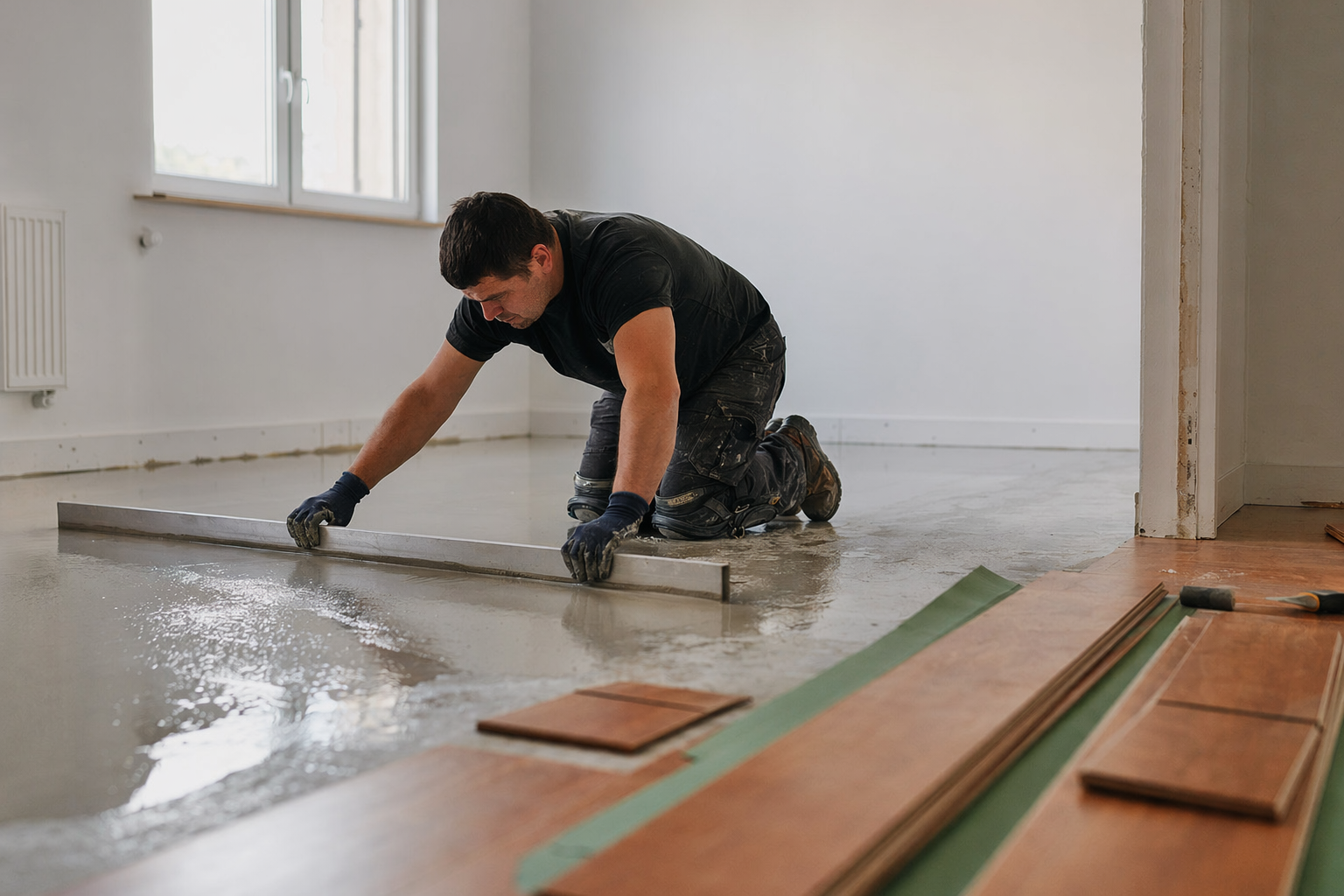
For most basements, luxury vinyl or tile is the safest bet, while hardwood is usually the biggest risk because basement moisture changes everything.
Why basement flooring is its own category
A basement can look dry most of the year and still have moisture coming through the slab or walls. That is why basement flooring is not just about color or style. It is about picking a material that can handle below-grade conditions without trapping moisture or getting ruined by a small leak.
Most basements also have concrete subfloors, and concrete is hard, cold, and not always perfectly level. Some flooring types need more prep than people expect. If the floor is uneven, damp, or cracked, that can change both the material choice and the total installed cost.
In plain terms, basement floors need to be more forgiving than living room floors upstairs. A floor that is beautiful in a bedroom may be a bad fit below grade. A licensed, insured flooring contractor can check the slab, moisture conditions, and subfloor prep needed before giving a real quote.
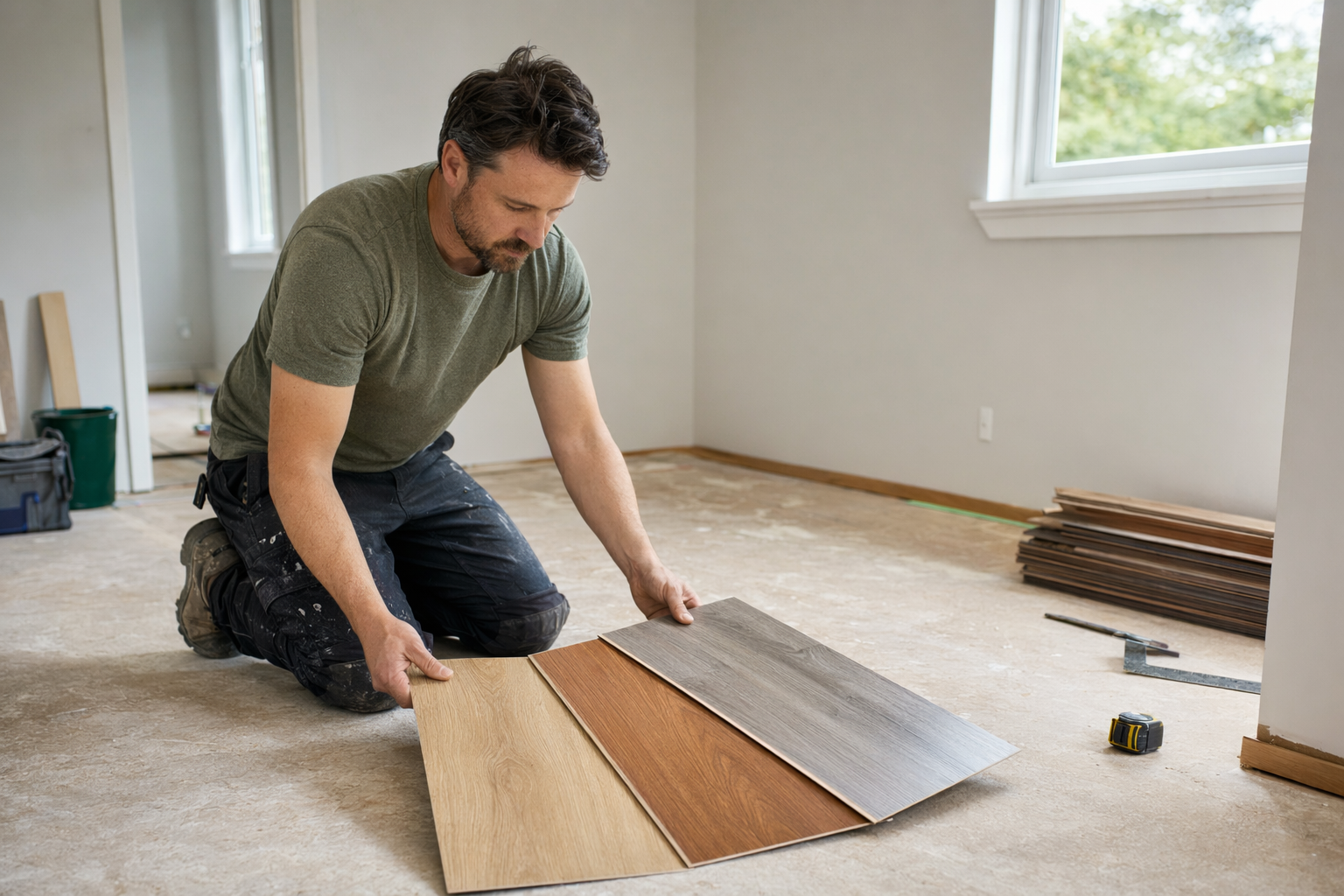
Best basement flooring picks
For many homes, luxury vinyl plank or tile is the safest all-around choice for a basement. It handles moisture better than wood-based products, comes in many looks, and is easier to live with if the basement gets damp once in a while. A typical installed range is about $4 to $9 per square foot, but that is not a quote. The real number depends on the product, the condition of the concrete, your region, and the size of the job.
Tile is another strong basement option, especially if water is a real concern. Porcelain tile is especially durable and does not mind moisture the way wood or carpet can. The trade-off is feel: tile can be cold and hard underfoot, and installation often costs more. Many basement tile jobs land around $8 to $18 per square foot installed, depending on tile type, layout, and prep.
Sheet vinyl can also make sense in a basement if your goal is practical, lower-cost coverage with decent moisture resistance. It is not as premium-looking as some other options, but it can be a good fit for utility areas or finished basements on a tighter budget. Installed cost often falls around $3 to $7 per square foot.
Carpet can work in a basement that is consistently dry and well-finished, especially if you want warmth and comfort in a family room or playroom. Still, it is a more cautious choice. If there is any history of dampness, odor, or minor water entry, carpet may hold moisture and become a problem. Installed carpet often runs about $4 to $10 per square foot, depending on fiber, pad, and prep.
Materials to be careful with in basements
Solid hardwood is usually the riskiest basement floor. Basements tend to have more moisture and humidity variation than upper floors, and solid wood can swell, cup, gap, or warp. Even if it looks great at first, it is often not the most forgiving choice below grade.
Engineered wood can be more stable than solid hardwood, but that does not make it waterproof. Some engineered products may be used in certain basements, but only when the moisture conditions, slab prep, and manufacturer requirements line up. Installed cost is often around $7 to $15 per square foot, and it can be an expensive mistake if the basement is not truly ready for it.
Laminate is another material to think through carefully. Some newer laminate products improve water resistance, but many still have a wood-based core that does not respond well to repeated moisture exposure. In a dry finished basement it may be fine, but if there is any doubt about water, many homeowners feel safer with luxury vinyl or tile.
If a contractor recommends a moisture-sensitive floor for your basement, ask why. Get the material name, the underlayment, the slab prep, and the moisture plan in writing first.
Best choices by how you use the basement
If your basement is a family room, TV room, or general finished living space, luxury vinyl plank is often the practical favorite. It gives a warmer, more home-like look than tile, usually costs less than wood, and handles moisture better than hardwood, laminate, or many carpet setups.
If the basement is a laundry area, utility space, or a room with higher water risk, porcelain tile or vinyl products usually make the most sense. They are easier to clean and less likely to be ruined by a minor leak or damp conditions.
If you are finishing a basement bedroom or playroom and comfort matters most, carpet may still be worth considering in a known-dry space. Some homeowners also use area rugs over vinyl or tile to get warmth without committing the whole floor to a moisture-sensitive material.
For home gyms, many people start with vinyl or tile and then add exercise mats where needed. For home offices, vinyl plank is popular because it looks finished, cleans easily, and usually handles rolling chairs better than softer carpet. If you want to compare options for other spaces too, see all room guides and flooring materials.
What basement flooring really costs
Installed basement flooring costs usually include both material and labor, but the total can move a lot based on subfloor prep. A simple basement with a clean, level slab is very different from one with cracks, moisture concerns, old adhesive, or uneven concrete. That is why ranges are useful for planning, but they are not quotes.
Honest rough installed ranges for many basement projects are:
- Sheet vinyl: about $3 to $7 per square foot
- Luxury vinyl plank or tile: about $4 to $9 per square foot
- Laminate: about $4 to $8 per square foot
- Carpet: about $4 to $10 per square foot
- Engineered wood: about $7 to $15 per square foot
- Porcelain or ceramic tile: about $8 to $18 per square foot
Costs usually go up when the slab needs leveling, moisture mitigation, crack repair, demolition, trim work, stairs, or furniture moving. Small jobs can also cost more per square foot than larger open basements. For more price background, you can browse flooring cost guides.
If one quote is much lower than the others, be careful. Basement overcharging and basement corner-cutting can both happen. Watch for vague pricing, huge upfront cash deposits, cash-only deals, no license, pressure to sign right away, or a contractor who barely looks at the slab and skips talking about moisture.
How to choose well and get matched
A good basement flooring decision usually starts with three questions: Has this basement ever had water? How comfortable do you want the floor to feel? And how much risk are you willing to take with a more moisture-sensitive material?
Before you hire anyone, compare more than one written quote. Make sure each quote clearly lists the flooring product, the prep work, underlayment if any, trim or transitions, demolition, and who is responsible for moisture-related recommendations. Confirm the contractor is licensed and insured where required locally.
PlankPath is a free matching service, not a flooring contractor, installer, or store. We do not perform flooring work. We help homeowners get matched with licensed, insured flooring contractors near them so they can compare options in writing and choose who to hire.
To get matched, you share basic contact and project details only: name, phone, optional email, project type, material interest, ZIP code, approximate square footage, and preferred language. You can start at get matched.