Best flooring for a bathroom
Bathrooms are hard on floors: water, steam, drips, and cleaning products all show up here. The best bathroom flooring is usually water-resistant, easy to clean, and not too slippery when wet.
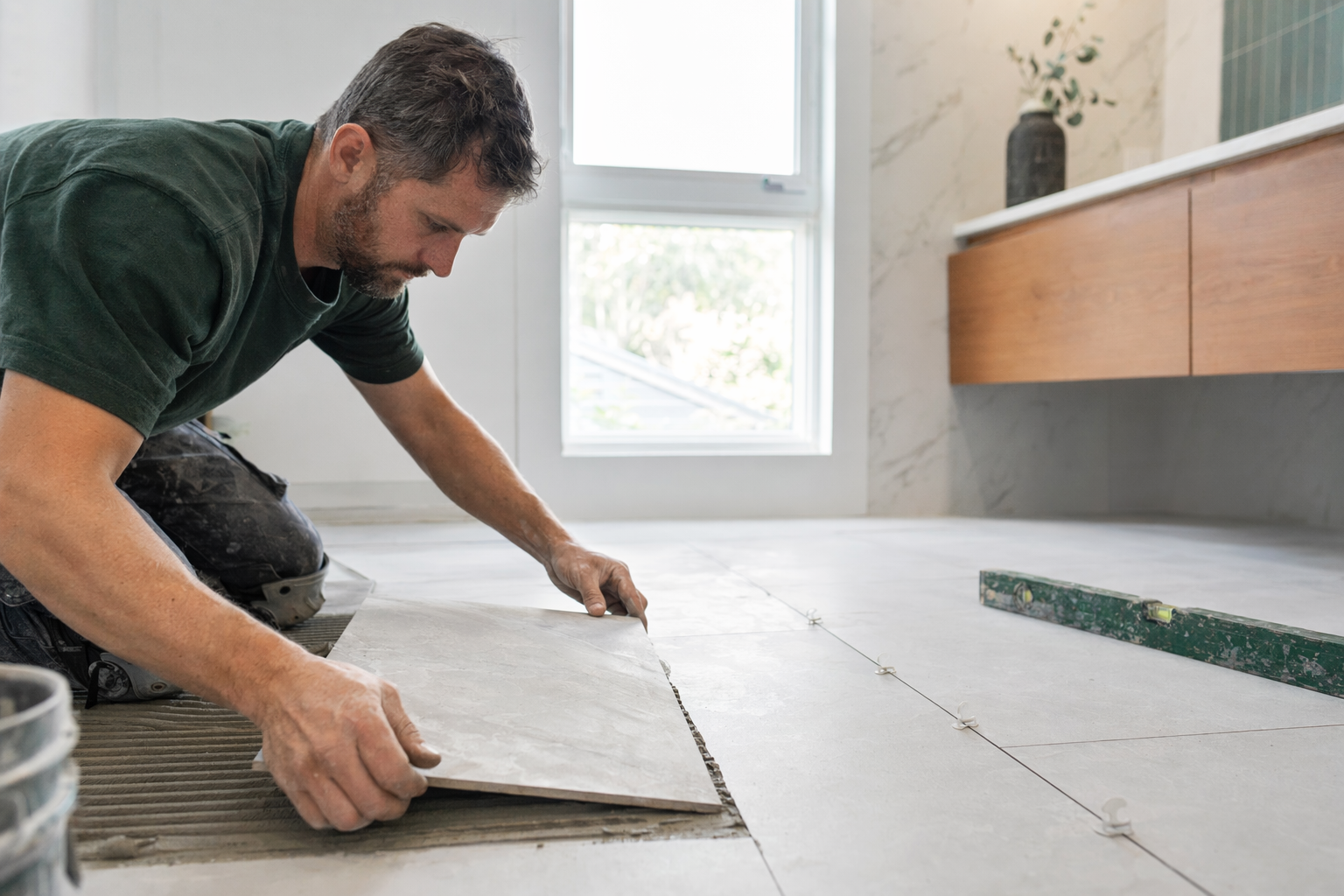
For most bathrooms, tile or luxury vinyl is the safest bet, hardwood is usually risky, and you should compare written quotes from licensed, insured contractors before deciding.
What matters most in a bathroom floor
A bathroom floor does not need to be indestructible, but it does need to handle real life: wet feet, splashes by the tub, steam after showers, and the occasional toilet or sink leak. In this room, water resistance matters more than a fancy look.
Comfort and safety matter too. Some floors feel cold underfoot, some are softer and quieter, and some can get slick when wet. The right choice depends on who uses the bathroom, how often it gets wet, and whether this is a busy family bathroom, a powder room, or a primary bath.
It also helps to think below the surface. A beautiful floor can still fail if the subfloor is uneven, soft, or damaged by moisture. That is one reason it is smart to have a licensed, insured flooring contractor look at the room before you commit. PlankPath is a free matching service, not a flooring contractor or store, and we can help you connect with local pros to compare options in writing.
Best bathroom flooring options
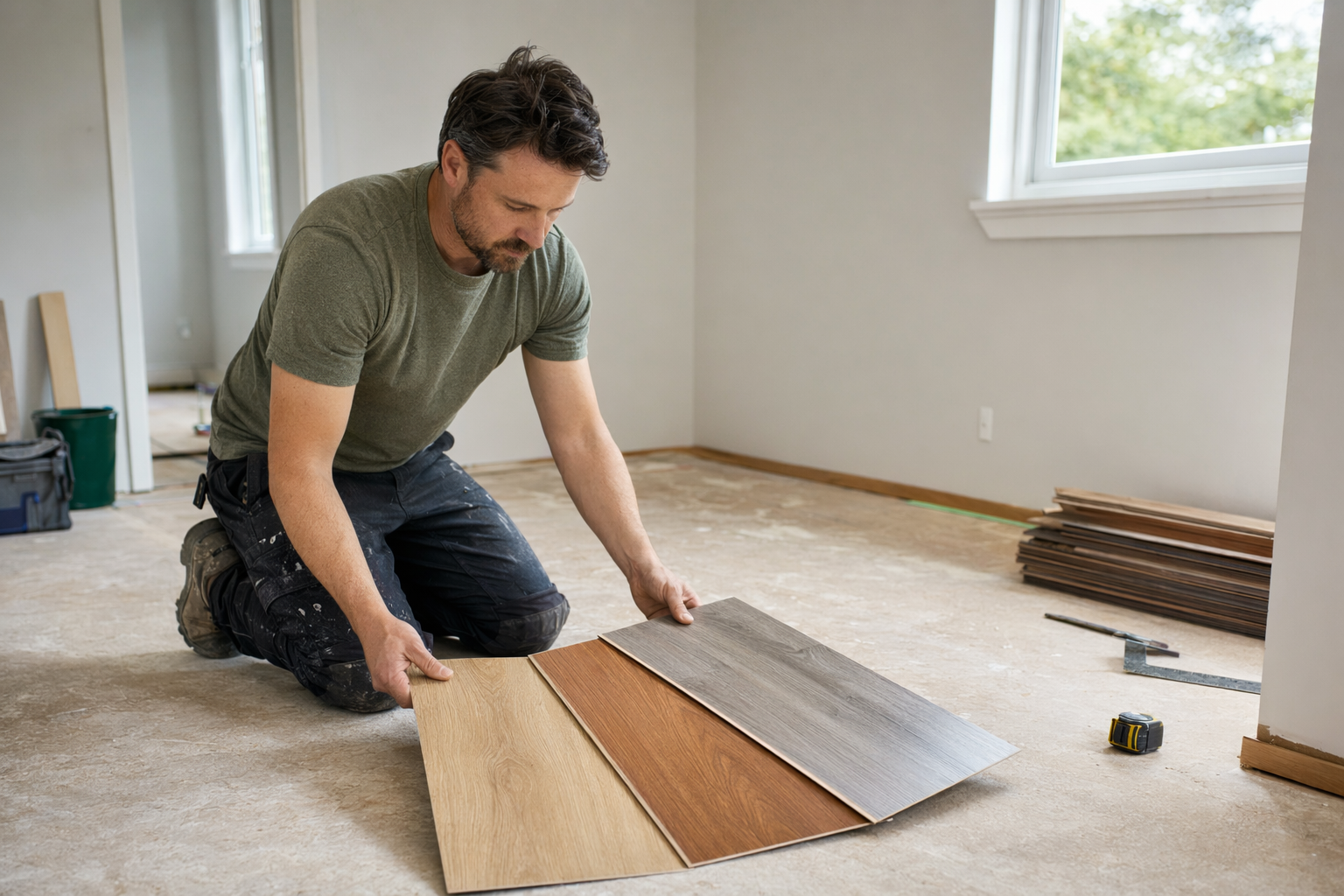
For most bathrooms, the safest short list is porcelain or ceramic tile, luxury vinyl plank or tile, and in some cases sheet vinyl. These materials are popular for a reason: they handle moisture better than many other floors, and they come in a wide range of looks.
Porcelain and ceramic tile are the classic bathroom choice. They are very water-resistant when properly installed and grouted, and they can last a long time. Tile works especially well in full bathrooms and primary baths where water on the floor is common. The trade-off is that tile can feel hard and cold, and some glossy finishes are slippery. If you choose tile, ask about a slip-aware finish and confirm the installer also addresses the surface underneath the tile.
Luxury vinyl plank (LVP) and luxury vinyl tile (LVT) are practical choices if you want a warmer, slightly softer feel underfoot. Good-quality vinyl can handle everyday bathroom moisture well, and many people like that it is easier on the feet than tile. It also often costs less installed than tile. The catch is that not every vinyl product performs the same, and poor installation around edges, tubs, or toilets can lead to trouble.
Sheet vinyl can still make sense in a bathroom, especially if you want a lower-cost, easy-clean floor with fewer seams. It is not the trendiest look, but it can be a sensible option for some homes. You can compare more room and material guides in our flooring materials hub and room guides.
- Best overall for many bathrooms: porcelain or ceramic tile
- Best softer, budget-friendlier option: luxury vinyl plank or tile
- Often overlooked but practical: sheet vinyl
What to avoid, or use carefully
Solid hardwood is usually a poor fit for a bathroom. It can swell, stain, cup, or gap with repeated moisture and humidity. Some people love the look of wood everywhere, but bathrooms are one of the rooms where that look often comes with more risk and maintenance.
Laminate has improved over the years, but bathrooms are still one of the trickiest places for it. Some products are marketed as water-resistant, but standing water and wet seams can still be a problem. Carpet is also usually a weak choice for full bathrooms because it can trap moisture, odors, and mildew.
Engineered wood may perform better than solid hardwood, but it is still generally not the first choice for a wet bathroom. A small powder room with no tub or shower is different from a busy full bath. In lighter-use spaces, you may have more flexibility, but it is still smart to ask a licensed flooring contractor what makes sense for your room, climate, and subfloor.
Honest bathroom flooring cost ranges
Installed cost usually depends on the material, the condition of the subfloor, the size of the bathroom, your region, and how much detail work is involved around toilets, vanities, tubs, and doorways. Small bathrooms can cost more per square foot than large open rooms because there is more cutting and edge work. These are general ranges, not quotes.
Porcelain or ceramic tile often runs about $8 to $20+ per square foot installed, with basic ceramic at the lower end and larger-format tile, premium tile, or more complex layouts at the higher end. If the subfloor needs repair or leveling, the real cost can rise.
Luxury vinyl plank or tile often lands around $5 to $12 per square foot installed for many bathroom projects. Better products, pattern work, demolition, or subfloor prep can push that up. Sheet vinyl often falls around $4 to $9 per square foot installed, depending on product quality and room complexity.
You can browse more general flooring cost guides, but the only way to know your real price is to compare written quotes for the same scope. Make sure each quote spells out the material, underlayment or prep, trim, demo, disposal, and who handles moving or resetting fixtures if needed.
How to choose the right floor for your bathroom
A simple way to narrow it down is to match the floor to the bathroom's moisture level and your comfort needs.
- For a full bathroom that gets heavy daily use, start with porcelain or ceramic tile, then compare LVP if you want a warmer or less expensive option.
- For a powder room, you may have more style flexibility because the floor usually sees less water.
- If anyone in the home is concerned about slipping, ask about texture and wet-floor traction, not just color and pattern.
- If the bathroom is over an older subfloor or has had leaks before, ask the contractor to inspect the floor condition before finalizing material.
Also think about maintenance. Tile is durable, but grout lines may need more attention than vinyl. Vinyl is easy to clean, but lower-quality products can show wear sooner. In a bathroom, the best floor is often the one that handles water sensibly and still fits your budget.
How to get matched with a bathroom flooring contractor
If you want help finding local pros, get matched through PlankPath. The service is free for homeowners. We are not a flooring contractor, installer, or retailer, and we do not perform flooring work. We simply help you connect with licensed, insured flooring contractors near you so you can compare your options.
We only collect basic contact and project-intent details: your name, phone, optional email, project type, material interest, ZIP code, approximate square footage, and preferred language. Then you can review written quotes and decide who, if anyone, you want to hire.
Before signing with any contractor, verify license and insurance, ask what subfloor prep is included, and get the scope in writing. Watch for common red flags: vague pricing, huge upfront cash deposits, cash-only requests, pressure to sign right away, no license, or a bid that skips subfloor prep entirely. The homeowner stays in control: compare more than one quote, choose who to hire, and confirm the work is done right before paying the final amount.