Best flooring for high-traffic areas
Busy entryways, hallways, kitchens, and homes with kids or pets need flooring that can take daily wear without becoming a constant chore. Here are the materials that usually hold up best, what they cost, and what to watch out for.
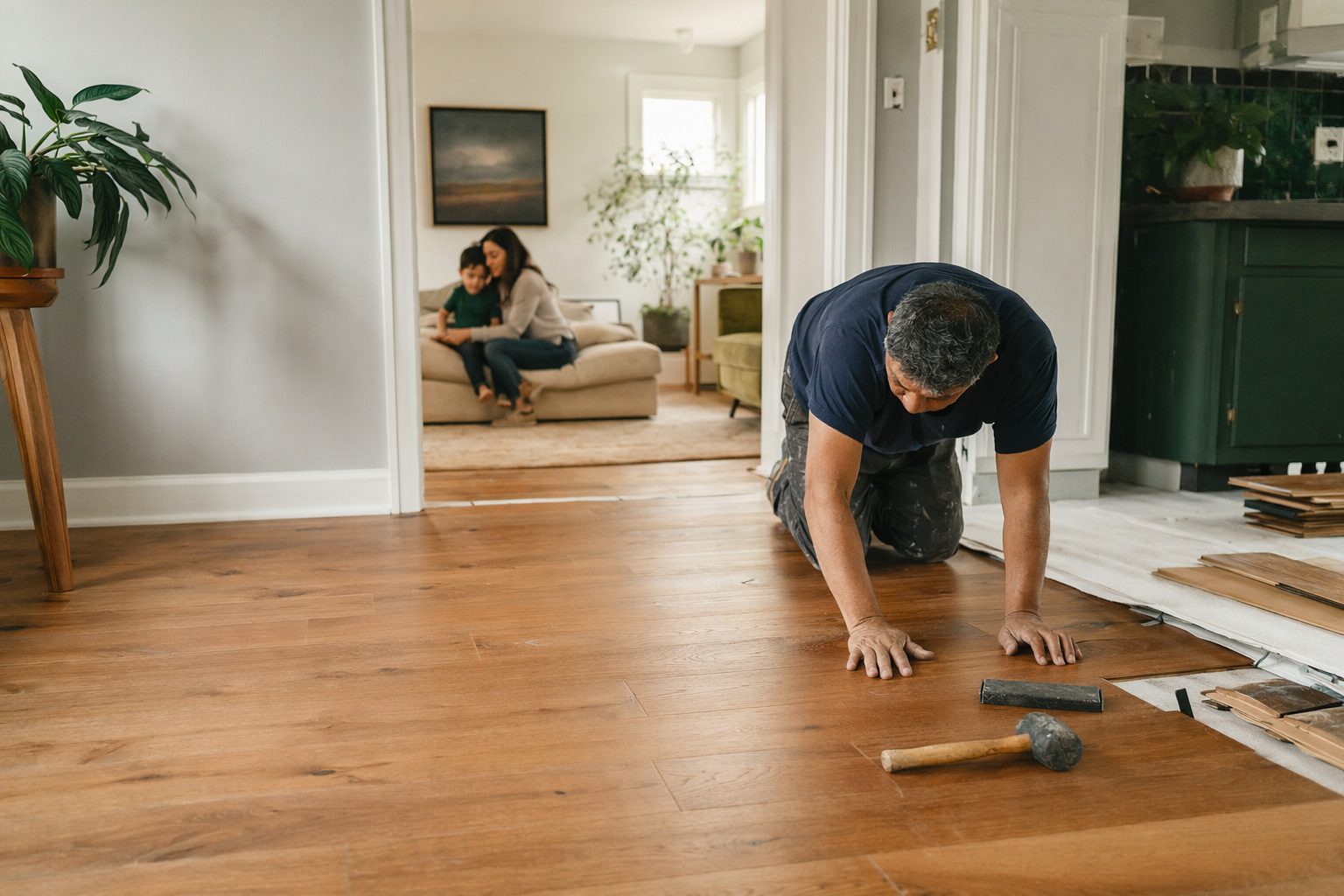
For most high-traffic areas, good luxury vinyl or tile is the easiest combination of durability and cleanup, but the best choice depends on water, wear, comfort, and your budget.
What high-traffic flooring needs to do well
In a high-traffic area, looks matter — but durability matters more. The best floor for a busy space should resist scratches, dents, stains, and everyday dirt. It should also be easy to clean, because muddy shoes, pet nails, dropped food, and chair movement add up fast.
The right choice depends on where the traffic is happening. A front entry needs good water and dirt resistance. A hallway needs wear resistance. A busy kitchen needs both durability and easier cleanup. What works best also depends on your subfloor, your climate, and whether the space is above, on, or below grade.
There is no single "best" floor for every home. Some materials are tougher but feel harder underfoot. Others look beautiful but show wear sooner. If you want a broader overview first, browse our flooring materials guide or see more by-room flooring help.
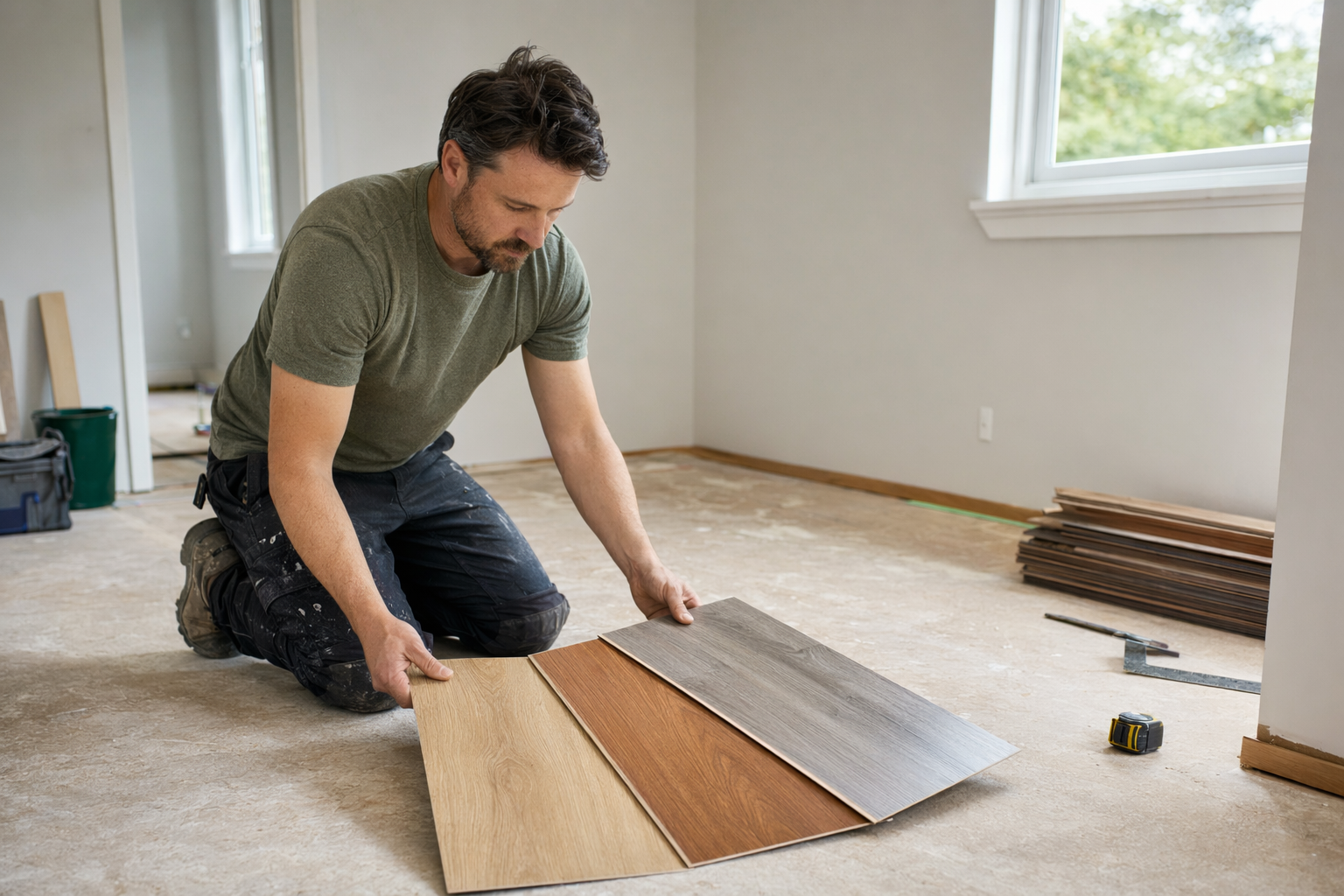
Best overall picks for busy homes
Luxury vinyl plank or tile is one of the most practical choices for high-traffic areas. It is popular because it handles daily wear well, cleans up easily, and usually resists water better than wood-based flooring. Many homeowners like it for entryways, kitchens, mudrooms, and family spaces. A typical installed range is about $4 to $10+ per square foot, but that is not a quote. Price depends on product quality, room size, subfloor prep, and local labor rates.
Porcelain or ceramic tile is another strong option, especially where tracked-in water and dirt are common. Tile is hard, durable, and easy to mop, which makes it a solid fit for entry areas and busy kitchens. Installed cost often runs about $6 to $15+ per square foot, with higher prices for larger format tile, patterns, and tougher prep work. The trade-off is comfort: tile can feel cold and hard, and grout needs maintenance.
Laminate can also work well in high-traffic spaces if you want a lower-cost option with decent scratch resistance. Many newer laminates wear better than older products, though water resistance varies a lot by brand and product line. Installed cost often lands around $3 to $8+ per square foot. It can be a good hallway or living-area choice, but it is usually less forgiving than vinyl if wet shoes or spills are common.
Engineered wood can work in busy areas if you want a real-wood look and are realistic about wear. Better products with strong finishes can hold up reasonably well, but wood can still scratch and show traffic patterns over time. Installed cost is often about $7 to $16+ per square foot. It is usually a style-first choice, not the toughest choice.
Materials that often make sense — and materials to think twice about
For many households, luxury vinyl plank gives the best balance of toughness, comfort, cleanup, and price. Tile is often the best choice if water, grit, and heavy traffic are the main problem. Laminate can be a smart budget pick in dry areas. Engineered wood works better when appearance matters most and you are comfortable with some wear over the years.
Solid hardwood is beautiful, but in truly hard-used areas it may need more care than some homeowners expect. It can scratch from sand, pets, and furniture movement, and moisture at exterior doors can be a problem. Installed cost often starts around $8 per square foot and can go much higher. Hardwood can still be a good choice if you accept patina and plan for maintenance, but it is rarely the lowest-stress option for rough daily traffic.
Carpet is usually not ideal for the busiest traffic lanes, especially near exterior doors. It can trap dirt, wear down in paths, and stain more easily. It may still make sense in some upstairs halls or family areas if softness matters more than easy cleanup, but for most heavy-use zones, hard-surface flooring is the simpler long-term choice.
Very cheap flooring can cost more later if the wear layer is thin, the locking system is weak, or the finish breaks down quickly. A slightly better product often performs much better in a busy home.
Best choices by type of high-traffic area
For entryways and mudroom-style spaces, the safest picks are usually tile or luxury vinyl. These spaces get wet shoes, grit, salt, and dirt, so water resistance matters as much as wear resistance. If your entry opens directly to the outdoors, ask the contractor whether the product and transition details make sense for your climate and subfloor.
For hallways, you want something that resists visible wear patterns. Luxury vinyl, laminate, tile, and some engineered wood products are common picks. Hallways are narrow, so layout and plank direction affect the look more than many people realize.
For busy kitchens, luxury vinyl and tile are often the most practical. They stand up well to constant foot traffic, food spills, and chair movement. Engineered wood can work if you strongly prefer a wood look, but it usually needs more care. In open floor plans, some homeowners choose one flooring material across the whole main level to avoid too many transitions.
If pets are part of the reason you are replacing the floor, focus on scratch resistance, water resistance, and ease of cleaning instead of just color or style. A floor that hides dust and paw marks can make everyday life much easier.
What drives the real cost up or down
Installed flooring prices are usually quoted per square foot, but the final number depends on more than just the material. The subfloor matters a lot. If the floor underneath is uneven, damaged, damp, or covered with old material that needs removal, your project cost can rise quickly. Room shape, stairs, trim work, furniture moving, and disposal also affect price.
As a rough general range, many high-traffic flooring projects land somewhere between $3 and $16+ per square foot installed, depending on the material and the amount of prep. Budget laminate may sit at the lower end. Mid-range vinyl often falls in the middle. Tile and better wood products usually cost more. These are not quotes, and costs vary by region, climate, job size, and product quality.
Be careful with prices that sound too low without much detail. Sometimes a low number leaves out subfloor prep, underlayment, trim, transitions, old-floor removal, or moving appliances. Get the material, scope of work, and cleanup details in writing before you agree to anything. You can also review more general flooring cost information before comparing bids.
How to choose a contractor without getting burned
A good flooring product can still fail if the installation is rushed or the subfloor is ignored. For high-traffic areas, proper prep matters. A licensed, insured flooring contractor should be willing to explain what condition the subfloor is in, what prep is needed, what material is being installed, and what is included in the written quote.
Watch for red flags: vague pricing, pressure to sign immediately, huge upfront cash deposits, cash-only demands, no license, no proof of insurance, or a plan to skip subfloor work just to keep the price low. Those shortcuts often show up later as gaps, movement, hollow spots, cracked tile, or premature wear.
PlankPath is a free matching service, not a flooring contractor, installer, or store. We do not perform flooring work or sell materials. We help homeowners get matched with licensed, insured flooring contractors near them so they can compare quotes in writing and choose who to hire.
To get matched, you share basic project details only: your name, phone, optional email, project type, material interest, ZIP code, approximate square footage, and preferred language. It is always free for the homeowner. You can start here: get matched.
- Compare more than one written quote
- Verify license and insurance before hiring
- Make sure subfloor prep is clearly listed
- Do not rely on verbal promises alone