Best flooring for a kitchen
A kitchen floor has to handle spills, chair movement, heavy traffic, and the occasional dropped pan. The best choice is usually the one that fits your budget, your subfloor, and how much water and wear your kitchen really gets.
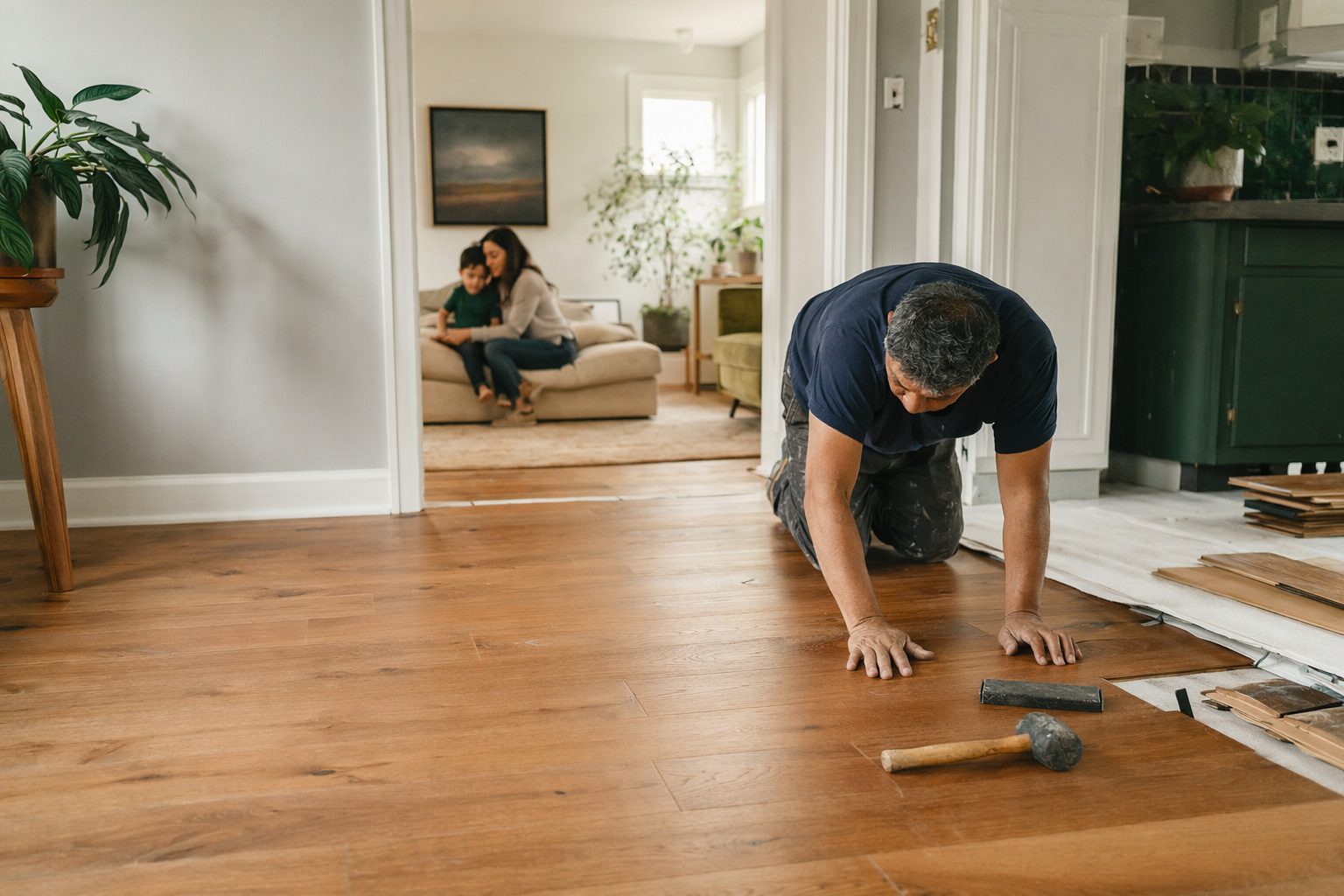
For most kitchens, luxury vinyl or tile are the safest practical bets, but the right choice depends on your budget, water exposure, comfort preferences, and subfloor condition.
What matters most in a kitchen floor
Kitchens are hard on floors in a very specific way. You get daily foot traffic, water near the sink and dishwasher, food spills, chair scraping, and heavy appliances that do not move often but put real stress on the floor.
That means the best kitchen flooring is usually not just the prettiest option. It needs to be reasonably water-resistant, easy to clean, and tough enough for normal family use. Comfort underfoot matters too, especially if you cook a lot.
There is no single perfect material for every kitchen. A busy household with kids, pets, and frequent spills may need something different from a small condo kitchen used lightly. Costs also vary by region, room size, material quality, and the condition of the subfloor, so price ranges are general information only, not quotes.
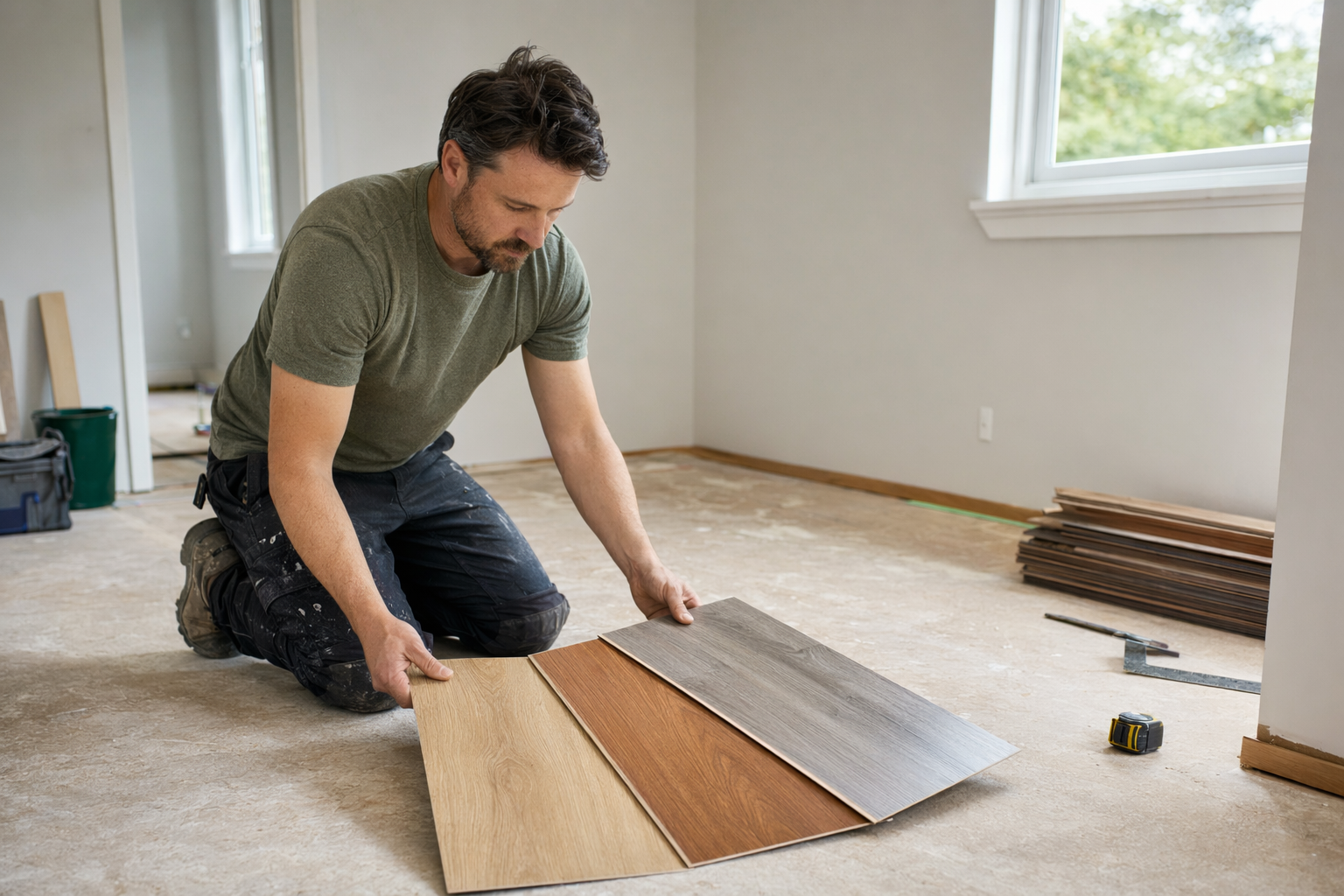
Best kitchen flooring options for most homes
Luxury vinyl plank or tile is one of the most practical kitchen choices for many homes. It is popular because it handles everyday spills well, is usually softer and quieter underfoot than tile, and comes in many wood-look and stone-look styles. Typical installed cost is often about $4 to $10+ per square foot, depending on product quality, layout, and prep work.
Porcelain or ceramic tile is another strong kitchen option, especially if you want very good water resistance and a long-lasting surface. Tile stands up well to spills and wear, but it can feel hard and cold underfoot, and dropped dishes usually do not survive. Typical installed cost is often around $8 to $20+ per square foot, with simple tile at the lower end and larger-format or more detailed layouts at the higher end.
Engineered wood can work in some kitchens if you want a real wood look and understand the trade-offs. It usually handles humidity changes better than solid hardwood, but it is still wood and can be damaged by standing water or repeated wetness. Installed cost often runs about $7 to $16+ per square foot.
Sheet vinyl is less talked about than plank flooring, but it can still be a practical budget choice for kitchens. It can offer good water resistance with fewer seams than plank products. Installed cost often lands around $3 to $8+ per square foot, depending on quality and floor prep.
Materials to think twice about
Solid hardwood in a kitchen is a look many people love, but it takes more care than some homeowners expect. Small spills are usually manageable if cleaned up quickly, but repeated water exposure, leaks, and wet mopping can lead to staining, cupping, or other moisture problems. If you choose hardwood for the kitchen, go in knowing that maintenance matters.
Laminate has improved over the years, and some products are marketed as more water-resistant than older versions. Still, kitchens are one of the rooms where edges, seams, and long-term moisture exposure can become an issue. It may work in some households, but it is usually not the first pick if your kitchen sees frequent spills or appliance leaks.
Carpet is rarely a good kitchen choice. It traps food, absorbs spills, and is difficult to keep sanitary in a room where grease, crumbs, and moisture are normal.
Natural stone can be beautiful, but it is often more expensive and may need more maintenance than homeowners expect. Some stones are porous and need sealing. It can also be hard underfoot and slippery when wet, depending on the finish.
How kitchen flooring really feels to live with
If comfort matters most, luxury vinyl usually feels easier on your feet than tile. That difference can be noticeable if you spend a lot of time standing at the stove or sink. Vinyl can also be quieter, which some families appreciate in open kitchens.
If durability and water resistance are your top priorities, tile is hard to beat. It is one of the most proven kitchen materials. The trade-off is comfort: it is firm, cool, and less forgiving when you drop cookware or glass.
If you care most about warmth and a natural look, engineered wood may feel more inviting than tile or vinyl. The trade-off is that you need to stay on top of spills and understand that wood and kitchens are never a zero-risk combination.
The subfloor matters too. Uneven areas, old adhesive, soft spots, or moisture issues can raise the cost and may limit what materials make sense. A licensed flooring contractor can tell you what your floor can realistically support and what prep is needed.
Honest kitchen flooring cost ranges
For kitchen flooring, many homeowners end up comparing a few common installed price ranges:
- Sheet vinyl: about $3 to $8+ per square foot
- Laminate: about $4 to $9+ per square foot
- Luxury vinyl plank or tile: about $4 to $10+ per square foot
- Engineered wood: about $7 to $16+ per square foot
- Porcelain or ceramic tile: about $8 to $20+ per square foot
- Solid hardwood: about $8 to $18+ per square foot
These are not quotes. The real number depends on the material, the quality level, your region, the size of the kitchen, transitions to other rooms, appliance moving, trim work, and especially subfloor prep. A small kitchen can cost more per square foot than a larger, simpler job.
Watch for vague pricing that leaves out removal, leveling, underlayment, trim, or moving appliances. Those extras can change the total fast. Get the material, scope of work, and cleanup details in writing before you sign anything, and compare more than one quote.
How to choose well and get matched with a contractor
A good starting point is to narrow your kitchen priorities first. Ask yourself whether you care most about water resistance, comfort, appearance, long-term durability, or keeping the budget down. That usually points you toward the right category faster than shopping by color alone.
- Decide what matters most: water resistance, softness underfoot, real wood look, or lowest cost.
- Compare a few materials on our materials and costs pages.
- Measure your kitchen as closely as you can, even if it is only an estimate.
- Get more than one written quote from licensed, insured flooring contractors.
- Verify license and insurance yourself before hiring.
- Do not pay a huge upfront cash deposit or agree to vague scope.
PlankPath is a free matching service, not a flooring contractor, installer, or flooring store. We help you get connected with licensed, insured flooring contractors near you based on your project and preferred language. It is always free for the homeowner.
When you use get matched, we collect contact and project details only: your name, phone, optional email, project type, material interest, ZIP code, approximate square footage, and preferred language. You compare quotes, choose who to hire, and confirm the work is done right before paying the final amount.
If you are still comparing rooms and priorities, you can also browse our room guides for other parts of the home.