Best flooring for stairs
Stairs are one of the trickiest places to install flooring well. The best choice usually balances safety, traction, noise, durability, and careful fitting — and stair work often costs more than a flat room.
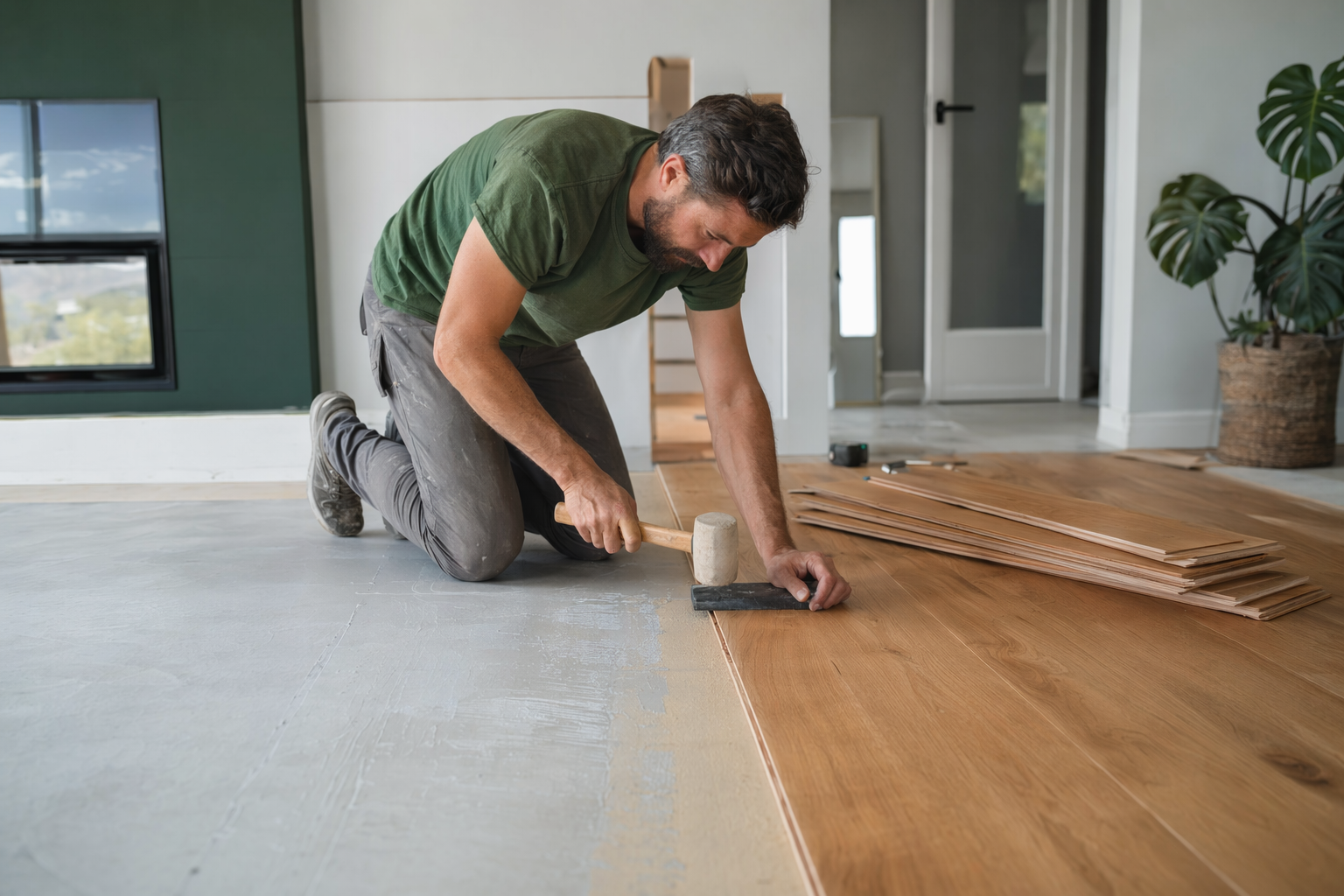
For most stairs, the best flooring is the one that balances safety, grip, noise, and clean edge work — and careful installation matters just as much as the material.
What makes stair flooring different
Stairs get heavy foot traffic in a small area, and every edge matters. A floor that looks good in a bedroom may be a bad choice on steps if it feels slippery, chips at the nose, or is hard to fit tightly around each tread and riser.
Safety matters here more than almost anywhere else in the home. In general, people want a stair surface with decent grip, a predictable feel underfoot, and a clean, secure installation. Local codes and stair details vary, so this page is general information only — a licensed flooring contractor should inspect your stairs and follow local requirements.
Another reason stairs cost more: they are labor-heavy. Instead of covering one big open space, the installer has to cut and fit many separate pieces, deal with stair noses and transitions, and make the finished edges look neat from every angle.
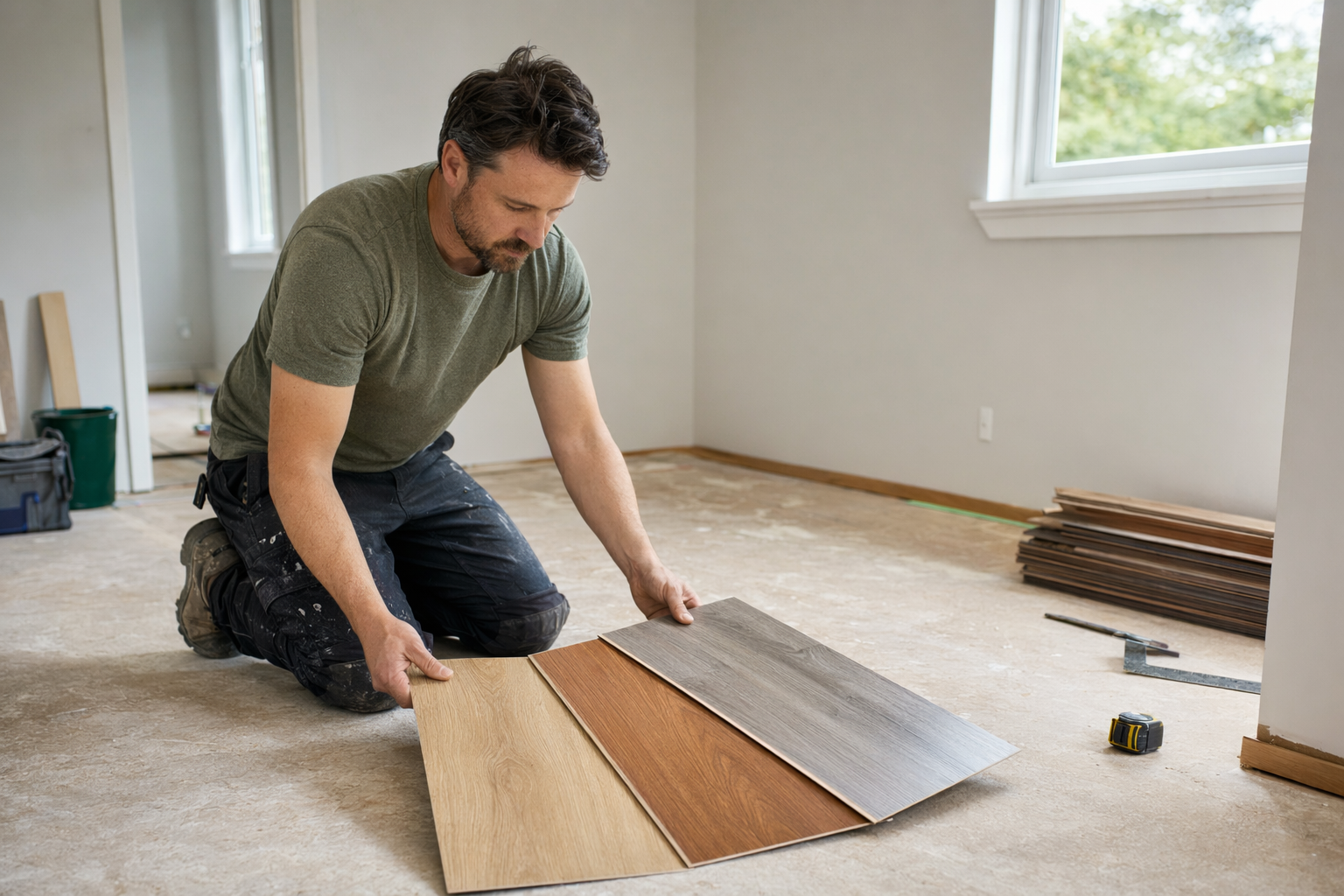
Best flooring options for stairs
For many homes, hardwood is one of the best-looking stair choices. It feels solid, can match existing wood floors, and holds up well when properly finished. It is especially popular when the main floor is hardwood and you want the stairs to feel continuous. The downside is cost, and some finishes can feel slicker than people expect.
Engineered wood can also work well on stairs when the product is made for that use and the right trim pieces are available. It gives you a real wood surface and often a more stable construction than solid hardwood in some climates. It can be a practical middle ground if you want the wood look without going fully custom.
Carpet is still a strong choice for stairs because it is quieter, softer underfoot, and usually less slippery than hard surfaces. It can be especially helpful in homes with young children, older adults, or anyone concerned about falls. The trade-off is faster wear in the center of the tread and more cleaning.
Luxury vinyl plank can work on stairs in some homes, but product choice matters a lot. Some lines have matching stair noses and are rated for stair use, while others are not a good fit. Laminate may be used on stairs too, but edge durability, noise, and slippery feel can be concerns. In many cases, tile is one of the least forgiving choices for interior stairs because it is hard, noisy, and can be slick if wet.
What to avoid or think twice about
Be careful with any material that becomes slippery, has weak edge pieces, or depends on a shortcut installation. Stairs are not the place for a "close enough" fit. If a contractor seems casual about stair noses, transitions, or the condition of the subfloor and existing steps, that is a warning sign.
Very smooth glossy finishes can look beautiful but may not feel great on stairs. Some low-cost laminate or vinyl products also have trim pieces that wear out sooner or do not fit securely. If you are comparing materials, ask specifically how the stair nose is handled and whether matching parts are available.
It is also smart to think twice before mixing too many materials on one staircase. For example, changing from one surface to another mid-run can feel awkward and may look patchy. A licensed, insured flooring contractor can tell you what makes sense for your stair shape, traffic level, and household needs.
Honest cost ranges for stair flooring
Stair pricing is usually higher per square foot than flooring in a standard room because of the extra cuts, trim work, edge details, and labor. As a very general installed range, carpet on stairs often runs about $4 to $10+ per square foot, laminate about $7 to $14+, luxury vinyl plank about $8 to $16+, engineered wood about $10 to $20+, and hardwood about $12 to $25+.
Those ranges are not quotes. The real number depends on the material, the subfloor or stair structure, whether old flooring must be removed, the condition of the treads and risers, the region, and the size of the job. Custom stain work, repairs, painted risers, premium trim pieces, and winding or open-sided stairs can all push the price up.
Many contractors also price stairs by step instead of by square foot, especially for carpet or custom wood work. That is normal. What matters most is getting the full scope in writing so you can compare bids fairly. You can read more general pricing context at costs and compare materials at materials.
- Ranges are general information only, not quotes
- Stairs often cost more because labor is much more detailed
- Written scope matters as much as the number
How to choose the right material for your stairs
Start with how the stairs are used. If you want the safest, quietest feel and do not mind regular vacuuming, carpet may be the simplest answer. If you want a cleaner wood look that matches nearby floors, hardwood or engineered wood is often the best fit. If your budget is tighter, some laminate and luxury vinyl products can work, but only if they are designed for stairs and installed carefully.
Then think about your household. Pets, kids, socks on smooth surfaces, and noise between floors all matter. A beautiful hard surface may not feel like the right choice if the stairs are steep and everyone runs up and down them all day.
When you compare bids, ask these questions:
- Is this product specifically suitable for stairs?
- Are matching stair noses and trim pieces included in the price?
- Does the quote include removal of old flooring and minor prep?
- What finish, texture, or traction does this material have?
- Are you licensed and insured for flooring work in my area?
Watch for vague pricing, huge upfront cash deposits, cash-only demands, pressure to sign right away, no proof of license or insurance, or anyone who wants to skip prep work. Get the material, price, and scope in writing first, and compare more than one quote.
How PlankPath can help
PlankPath is a free matching service — not a flooring contractor, installer, or store. We help homeowners and renters compare options and get matched with licensed, insured flooring contractors near them who may handle stair projects.
If you want help getting started, you can use get matched. We only collect basic contact and project details: your name, phone, optional email, project type, material interest, ZIP code, approximate square footage, and preferred language. Then you can compare written quotes, ask questions, and choose who to hire.
You stay in control the whole time. Review the scope carefully, verify license and insurance, and confirm the work is done right before paying the final amount. If you are still deciding room by room, you can also browse more advice in rooms.