New floor installation
New floor installation is more than putting planks or tile on the ground. The best results usually come from careful measuring, subfloor prep, and a licensed, insured flooring contractor who installs the right material for your room.
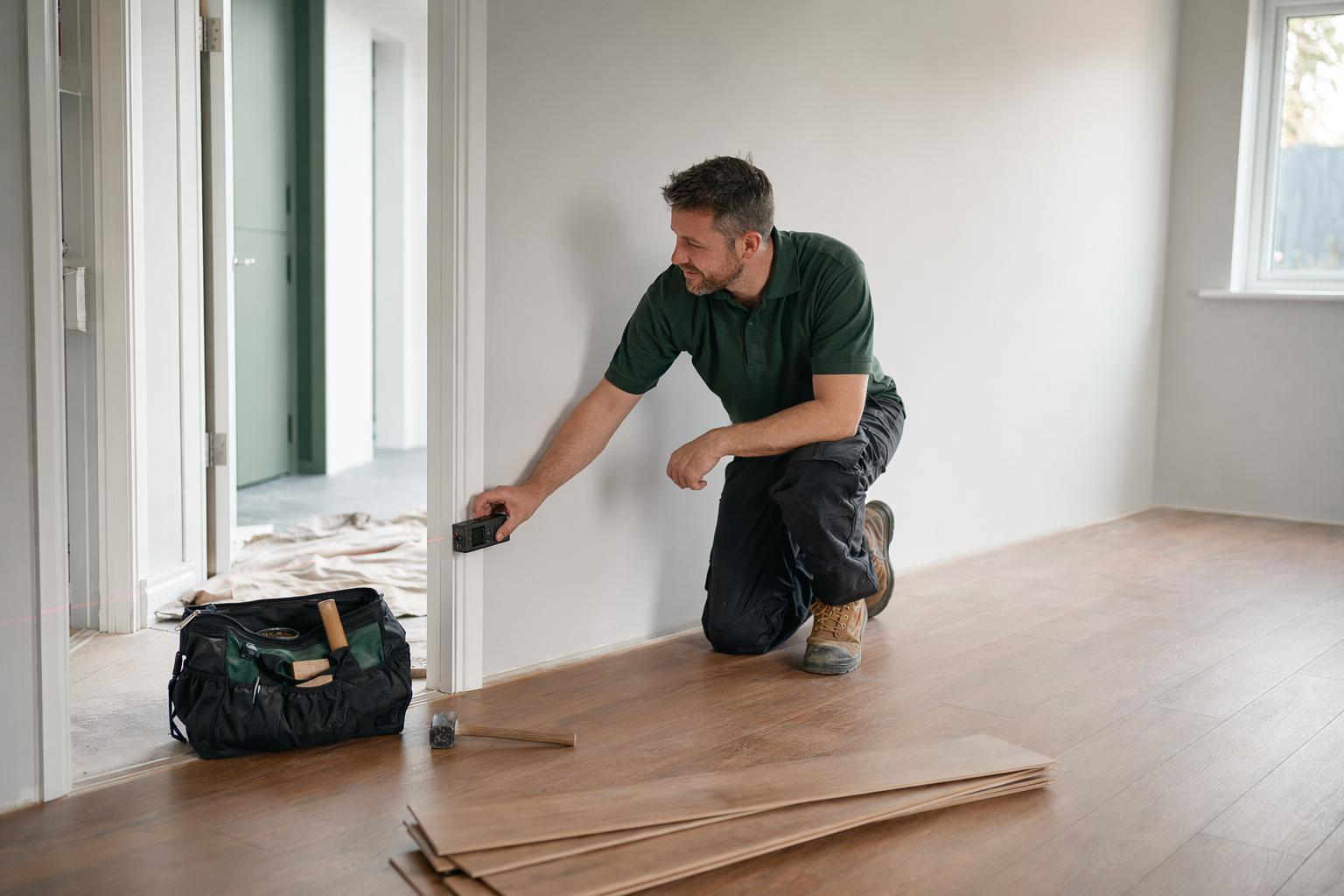
A good floor install is really a prep-and-detail job, and the safest way to shop is to compare written quotes from licensed, insured contractors instead of choosing the lowest number fast.
What new floor installation actually includes
A full flooring installation usually starts with measuring the space, checking doors and trim, and looking at the subfloor underneath the old floor. Then the old material may need to be removed, the subfloor may need leveling or repair, and the new flooring is installed, trimmed, and finished at transitions and edges.
The exact work depends on the material. Hardwood and engineered wood often need careful layout and moisture checks. Laminate and luxury vinyl plank usually need a smooth, clean surface and proper expansion gaps. Tile needs a very stable base, correct underlayment, and well-done grout work. Carpet installation includes pad selection, stretching, and seam work.
Good installation is not just about speed. It is about prep, layout, clean cuts, and following the manufacturer's instructions so the floor looks right and holds up. This page is general information only, not construction advice. A licensed flooring contractor should evaluate your home, your subfloor, and local code requirements.

How a good contractor installs flooring
A careful flooring contractor does not start by unloading boxes and nailing things down. First, they check the room conditions, measure moisture where needed, inspect the subfloor, and explain what prep is required before the new floor goes in. They should tell you if the existing floor can stay, if it must come out, and whether doors, baseboards, appliances, or toilets may need to be moved.
Subfloor prep matters more than many homeowners expect. If the floor underneath is uneven, soft, damp, dirty, or squeaky, the new floor can fail early. You may see hollow spots, cracked tile, separating seams, bounce, squeaks, or planks that unlock. Skipping subfloor work is one of the most common ways a job is underbid and done badly.
A good installation also includes the small details: straight starting lines, staggered plank seams, proper expansion space around the room, neat transition strips, and clean cuts around vents, cabinets, and door jambs. Before you hire anyone, ask what prep they expect, what underlayment they plan to use, and what is included in writing.
If you want help finding companies to compare, PlankPath is a free matching service, not a flooring contractor or store. You can use get matched to hear from licensed, insured flooring contractors near you.
Installed cost per square foot: honest ranges
Installed flooring cost usually includes material plus labor, but the real number depends on the material, the subfloor, the room, your region, and the size of the job. These are general ranges, not quotes.
Many basic laminate and some luxury vinyl plank jobs land around $4 to $9 per square foot installed. Better LVP, engineered wood, and some solid hardwood jobs often fall around $6 to $15 per square foot installed. Tile is commonly higher, often around $10 to $25 or more per square foot installed because the prep and labor are heavier. Carpet often runs around $3 to $10 per square foot installed, depending on the carpet and pad.
Removal of old flooring, furniture moving, stair work, trim replacement, moisture mitigation, and subfloor leveling can raise the total. Small jobs can also cost more per square foot because setup time and minimum charges get spread over fewer feet. If you are comparing options, our cost guides and material guides can help you understand the trade-offs before you request quotes.
What can drive the price up or down
The biggest cost drivers are usually the material itself, labor difficulty, and subfloor condition. A simple rectangular bedroom with a sound subfloor is usually easier and cheaper than a kitchen with many cuts, appliances, transitions, and moisture concerns. Tile, patterned layouts, stairs, and work around cabinets usually cost more than a straightforward floating-floor install.
Region matters too. Labor rates, disposal fees, and material availability vary across the United States. Climate matters as well. In humid or wet areas, moisture control can be more important, especially for wood floors. In basements or slab-on-grade homes, the contractor may recommend a material and installation method based on local conditions.
Ask each contractor to separate the quote into clear parts if possible: materials, underlayment, labor, old-floor removal, trim or transitions, subfloor prep, and any optional work. That makes it easier to compare bids fairly instead of choosing the lowest number and finding out later that important items were left out.
Red flags to watch for before you hire
Flooring scams and overcharging are usually not complicated. The warning signs are vague pricing, a very large upfront cash deposit, cash-only demands, no proof of license or insurance, pressure to sign right away, or a promise to "take care of" the subfloor without putting the scope in writing. Another big red flag is a bid that seems far lower than the others because it may leave out removal, prep, trim, or moisture work.
You should also be cautious if someone says the floor can go over anything without inspection, or if they dismiss unevenness, squeaks, or soft spots as unimportant. On many jobs, the subfloor is the difference between a floor that lasts and a floor that starts failing early.
Use this simple checklist when comparing installers:
- Confirm the contractor is licensed and insured if your state or local area requires it.
- Ask what prep is included and what conditions could change the price.
- Get the material, brand or grade, scope, and total price in writing.
- Ask who handles old-floor removal, disposal, transitions, and trim.
- Compare more than one quote before you decide.
- Do not pay the final amount until you have inspected the completed work.
The homeowner stays in control. You compare written quotes, choose who to hire, and confirm the job is done right before making the final payment.
How to find the right flooring installer
Start by deciding what kind of floor you want, or at least what the room needs. A bathroom and a basement do not have the same moisture risk as a living room or bedroom. If you are still choosing, visit our flooring services hub and materials to narrow down what fits your home and budget.
Then talk to more than one licensed, insured flooring contractor. Tell them the room type, approximate square footage, the material you are considering, and any known issues like pet damage, water damage, squeaks, or uneven spots. Ask each one what prep they expect, how they handle transitions and trim, and what their written estimate includes.
If you want help connecting with local installers, PlankPath can help you compare options. We are a free matching service for homeowners, not a contractor and not a store. We collect contact and project details only: name, phone, optional email, project type, material of interest, ZIP code, approximate square footage, and preferred language. You can get matched and compare contractors near you at no cost.