Refinishing hardwood floors
If your hardwood floors are worn but the wood is still in decent shape, refinishing can cost much less than full replacement. This guide explains how the work usually goes, what it may cost, and how to compare contractors carefully.
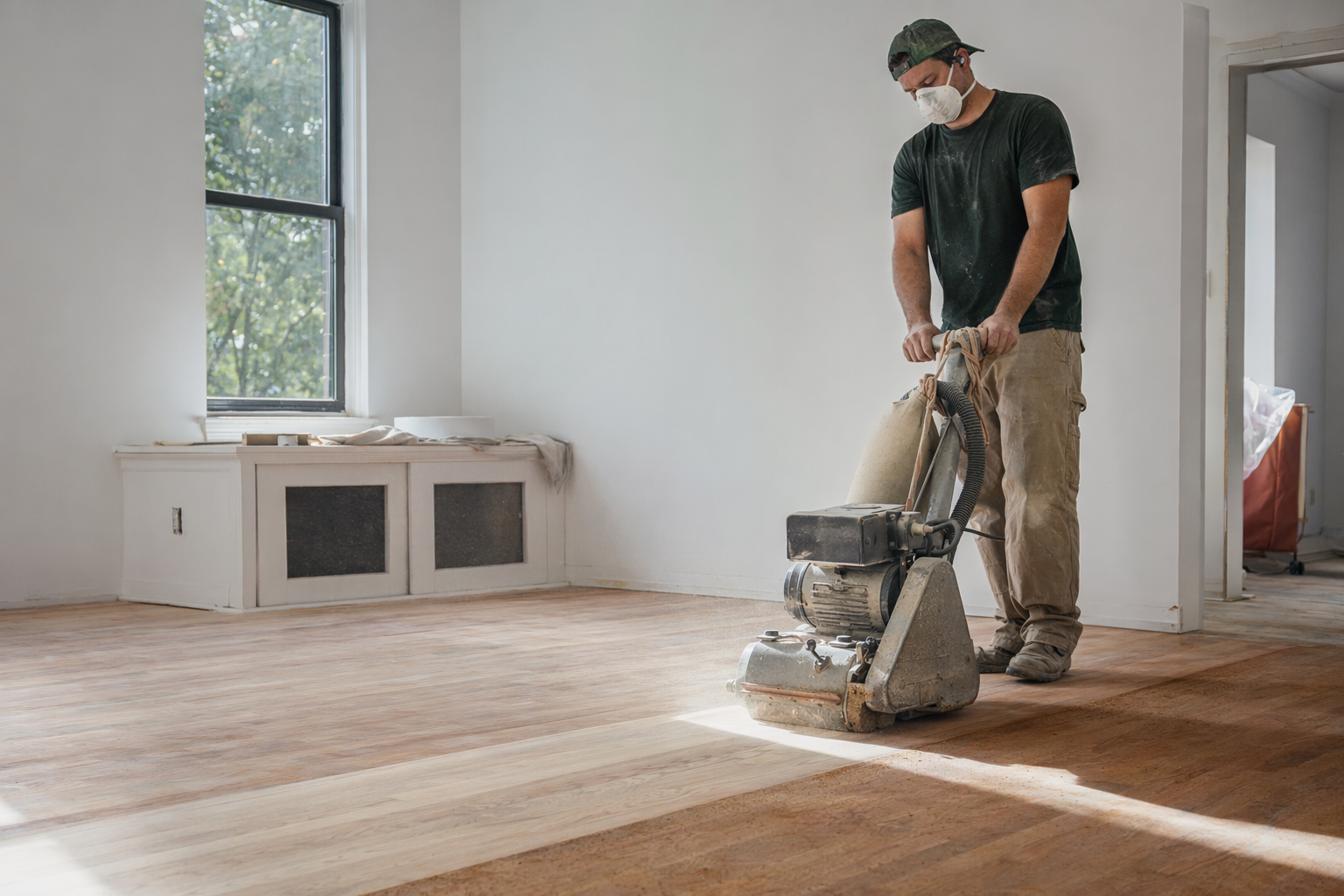
If your hardwood is worn but still solid, refinishing may save money, but get the scope, repairs, and finish details in writing and compare licensed contractors carefully.
What hardwood refinishing is
Hardwood refinishing means keeping the existing wood floor, sanding off the old finish and surface wear, then applying new stain if you want a different color and sealing the floor again. It can bring back floors that look dull, scratched, faded, or lightly stained from normal use.
Refinishing is different from repair or replacement. If boards are badly warped, water-damaged, loose, rotted, or too thin from being sanded many times before, some areas may need repair first or the floor may not be a good refinishing candidate. A licensed, insured flooring contractor can inspect the floor and tell you what is realistic.
In many homes, refinishing makes sense when you like real wood and want to keep it. It usually costs less than tearing everything out and installing new hardwood, but the real price depends on the species, current condition, layout, region, and size of the job. These ranges are general information only, not quotes.

How good refinishing work is usually done
A good contractor starts by checking the floor carefully, not just quoting a number fast. They look at the wood species, thickness of the wear layer, old finish type, deep stains, pet damage, loose boards, squeaks, gaps, transitions, and whether there is moisture trouble coming from below. If the subfloor or moisture problem is ignored, a beautiful new finish may fail early.
The basic process is usually prep, sanding, detail sanding along edges, cleanup, stain if chosen, then several coats of finish with proper drying time between steps. Some contractors use low-dust or dust-containment sanding systems, which can reduce airborne dust but do not mean literally zero dust. If dust matters to your household, ask exactly what equipment they use and what protection they provide for nearby rooms.
A careful contractor also sets expectations about the room being out of use for a while. Drying and cure times vary by finish type, temperature, humidity, and ventilation. The fastest schedule is not always the best one. Local climate matters, and your contractor should explain what finish they recommend for your home and how long before you can walk on it, move furniture back, or place rugs.
- Ask whether the contractor checks for moisture issues before sanding.
- Ask what dust-control system they use and what "dustless" really means.
When refinishing works well — and when it may not
Refinishing is often a good fit for solid hardwood with surface scratches, worn finish near doors, dull traffic paths, minor discoloration, and older floors that still have enough thickness left. It can also be a smart way to update the color without replacing the wood, though very dark stains and dramatic color changes can show imperfections more clearly.
It is usually a worse fit for floors with major cupping, severe pet urine staining deep into the wood, repeated flooding, termite damage, large soft spots, or boards that are too thin for another sanding. Some engineered wood floors can be refinished, but not all. It depends on the thickness of the real wood top layer, so the contractor needs to verify that before promising anything.
Best rooms are dry living spaces like bedrooms, hallways, living rooms, and dining rooms where you want the look and feel of real wood. Bathrooms, laundry rooms, and other wet areas are usually riskier because ongoing moisture can damage wood and shorten the life of the finish.
Honest hardwood refinishing cost ranges
A common range for hardwood floor refinishing is about $3 to $8 per square foot for sanding and refinishing, with higher-end projects sometimes running around $8 to $12+ per square foot when repairs, detailed layout, premium finishes, stairs, furniture moving, heavy stain work, or difficult access are involved. In some markets, small jobs can cost more per square foot because the contractor still has setup, travel, and labor minimums.
If the floor needs board replacement, subfloor attention, deep stain treatment, old adhesive removal, or major leveling work, the price can rise. The room count matters too. Several small rooms, closets, and hallways usually take more labor than one open rectangle of the same square footage. Regional labor rates and finish choices also matter.
These are not quotes. The real number depends on the wood, the condition of the floor, the subfloor, the room layout, your region, and the size of the job. A written estimate should spell out prep, sanding, repairs, stain if any, number of finish coats, cleanup, and what is excluded. You can explore more general price guidance at costs.
Red flags and common overcharging problems
One common problem is a contractor giving a vague price like "around a few thousand" without stating square footage, repairs, finish type, stain, number of coats, or whether cleanup is included. Another is rushing past moisture or subfloor concerns and sanding immediately. If the floor has movement, moisture, or damaged boards underneath, refinishing alone may not hold up.
Be cautious with huge upfront cash deposits, cash-only demands, pressure to sign on the spot, no proof of license or insurance, or a promise that every floor can be sanded no matter what. Also be careful if a bid is much lower than others but leaves out repairs, edge sanding, trim handling, furniture moving, or the exact finish product.
Before you hire anyone, get the material, scope, and price in writing and compare more than one quote. Verify that the contractor is licensed and insured if required in your area. Ask who will actually do the work, what happens if hidden damage is found, and how final payment is handled. You stay in control by comparing written quotes and confirming the work looks right before paying the final amount.
- Vague pricing is a warning sign.
- Skipping moisture or subfloor checks can lead to early failure.
- Compare more than one written quote before choosing.
How to find a contractor through PlankPath
PlankPath is a free matching service, not a flooring contractor, installer, or store. We do not perform refinishing work or sell flooring. We help homeowners and renters get matched with licensed, insured flooring contractors near them so they can compare options.
To get matched, you share basic contact and project details only: your name, phone, optional email, project type, material of interest, ZIP code, approximate square footage, and preferred language. We do not ask for financial account numbers, Social Security numbers, income details, or sensitive personal records.
If you want to compare refinishing with other flooring work, you can browse services and materials. When you are ready, use get matched to connect with local contractors, review written quotes, and choose the one that makes the most sense for your home.