Subfloor repair and leveling
If a new floor looks uneven, squeaks, or fails early, the subfloor is often the real problem. This guide explains what subfloor repair and leveling usually involve, what it can cost, and how to avoid contractors who try to skip it.
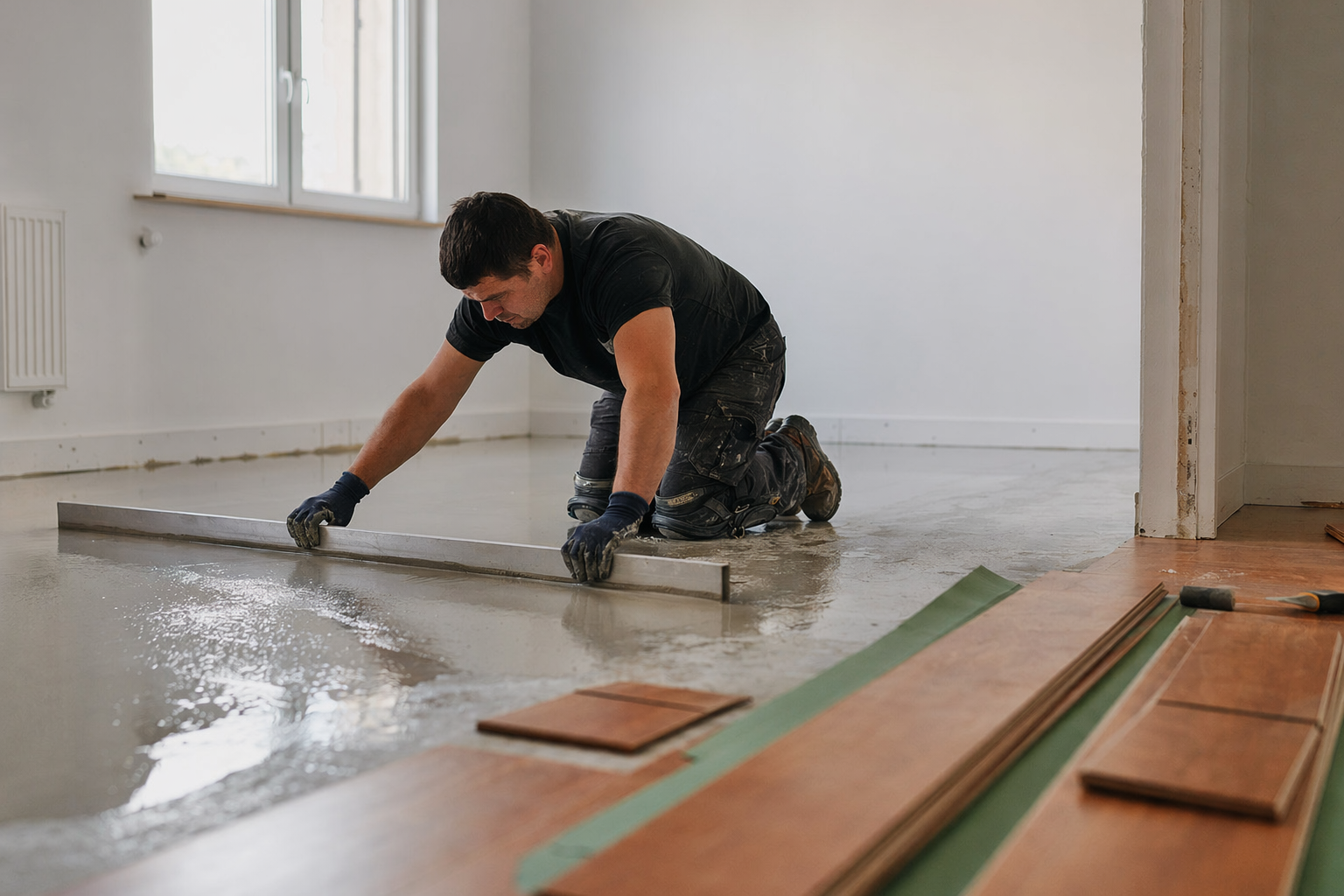
If the base under your floor is weak, wet, or uneven, fixing that first usually matters more than the new floor itself.
Why the subfloor matters so much
The subfloor is the layer under the finished floor you walk on. You usually do not see it, but it affects almost everything: how solid the floor feels, whether planks click together properly, whether tile cracks, and whether carpet feels smooth instead of lumpy.
A good-looking floor can still fail if the base under it is weak, wet, uneven, or damaged. Common signs of subfloor trouble include soft spots, squeaks, dips, bouncing, cracked tile, gaps in plank flooring, and musty smells after a leak.
Different flooring materials are more or less forgiving. Tile usually needs a very flat, stable base. Hardwood and laminate can show movement or gaps if the subfloor is uneven. Luxury vinyl plank can sometimes hide small imperfections, but not major dips, moisture problems, or loose areas. If you are comparing options, our materials guide can help.
This is general information only. The right repair depends on the floor system, the type of damage, moisture conditions, and local code requirements, so a licensed flooring contractor should inspect the job in person.

What subfloor repair and leveling usually involve
Subfloor work can be simple or extensive. In a small area, a contractor may tighten loose panels, replace a few damaged sections, sand high spots, or fill low areas with a floor patch or self-leveling product. In a larger project, they may remove the old flooring, inspect the whole surface, replace water-damaged or rotten sections, add underlayment, and flatten the floor before the new material goes in.
Done well, the work starts with diagnosis, not guesswork. A careful contractor checks what the subfloor is made of, where the movement or slope is coming from, whether there has been water damage, and whether the floor covering you want has flatness or moisture limits from the manufacturer. They should explain the problem in plain language and show you what they found.
Moisture matters too. In some homes, especially on concrete slabs, in basements, or in humid climates, the contractor may recommend moisture testing and a moisture barrier or underlayment system before installation. That does not mean every floor needs the same treatment. It means the base needs to be suitable for the material going over it.
One of the most common bad shortcuts is installing the new floor over an uneven, wet, or damaged subfloor because the visible flooring is what the homeowner notices first. That shortcut can lead to noise, movement, cracked grout, cupping, or early failure.
What a good contractor should do before the new floor goes in
You do not need to be an expert, but you should expect a clear process. A licensed, insured flooring contractor should inspect the room, explain the likely cause of the problem, and spell out what preparation is included before any new material is installed.
A solid written scope often includes the condition of the existing subfloor, what will be removed, what areas will be repaired or leveled, what products will be used, whether moisture testing is included, and whether the price covers disposal, trim removal, furniture moving, and reinstalling the finished floor. If the contractor says they will "handle it" but will not put the prep work in writing, slow down.
Ask direct questions:
- What is causing the unevenness or damage?
- Are you repairing, leveling, or both?
- What products or materials are you using?
- Is moisture testing needed for this floor type?
- What prep is included in the written price?
- What problems could increase the cost after demolition?
It is smart to compare more than one written quote. You can also review related flooring costs and other flooring services before you decide.
Honest cost ranges for subfloor repair and leveling
Subfloor work is one of the hardest parts of a flooring project to price from a distance because the real condition is often not fully visible until the old floor comes up. That is why online numbers are only rough ranges, not quotes.
As a broad U.S. starting point, minor leveling or patching may add about $1 to $3 per square foot. More involved leveling with self-leveling products or wider prep work may run about $2 to $6 per square foot. Subfloor repair or replacement in damaged areas often falls around $3 to $8+ per square foot for the affected area. If there is significant water damage, rot, mold concerns, multiple layers to remove, or difficult access, the total can go much higher.
Those ranges usually depend on the material under the floor, the extent of damage, the room, the region, the size of the job, and whether the finished flooring is tile, hardwood, vinyl, laminate, or carpet. A small bathroom repair can cost more per square foot than an open living room because there is less area but the same setup time and labor.
Important: these are not quotes, and PlankPath does not set prices. We are a free matching service, not a flooring contractor or installer. Contractors set their own prices after inspecting the job.
Red flags: how people get overcharged or end up with a bad repair
Subfloor work is easy for a dishonest contractor to hide behind new flooring. Many homeowners do not know what is under the surface, so this is an area where vague pricing and shortcuts happen.
Watch for these warning signs:
- A very low bid that says little or nothing about subfloor prep
- Pressure to sign immediately before you can compare quotes
- Cash-only demands or a huge upfront cash deposit
- No license or no proof of insurance when asked
- Refusal to describe materials, leveling products, or scope in writing
- Promises that every floor can go over any surface without inspection
- A contractor who wants to skip moisture checks where moisture may be an issue
A fair contractor may still find hidden damage after demolition. That can happen honestly. The key difference is whether they explain it clearly, show you the issue, price the change in writing, and get your approval before doing extra work.
The homeowner stays in control. Get the material, prep, and scope in writing first. Compare more than one quote. Confirm the work looks right and the floor feels solid before paying the final amount.
How to find a licensed contractor through PlankPath
If you are planning a flooring project and think the subfloor may need repair or leveling, PlankPath can help you get connected with licensed, insured flooring contractors near you. Our service is free for homeowners. We do not perform flooring work, sell flooring, or guarantee a specific contractor or outcome.
To get matched, you share basic project details only: your name, phone number, optional email, project type, material you are considering, ZIP code, approximate square footage, and preferred language. We do not ask for financial account numbers, Social Security numbers, income, or sensitive personal records.
A simple way to start is:
1. Tell us about the room, the floor problem, and the material you are considering.
2. Get matched with local flooring contractors who handle this kind of work.
3. Ask for written quotes that include subfloor prep, not just the finish floor.
4. Compare pricing, scope, license and insurance status, and communication.
5. Choose who to hire only when you are comfortable with the written details.
You can start at get matched whenever you are ready.