Tile floor installation
Tile can last a very long time and handle daily wear well, but a good result depends heavily on prep and installation. Here’s what tile floor installation involves, what it usually costs, and how to avoid common mistakes.
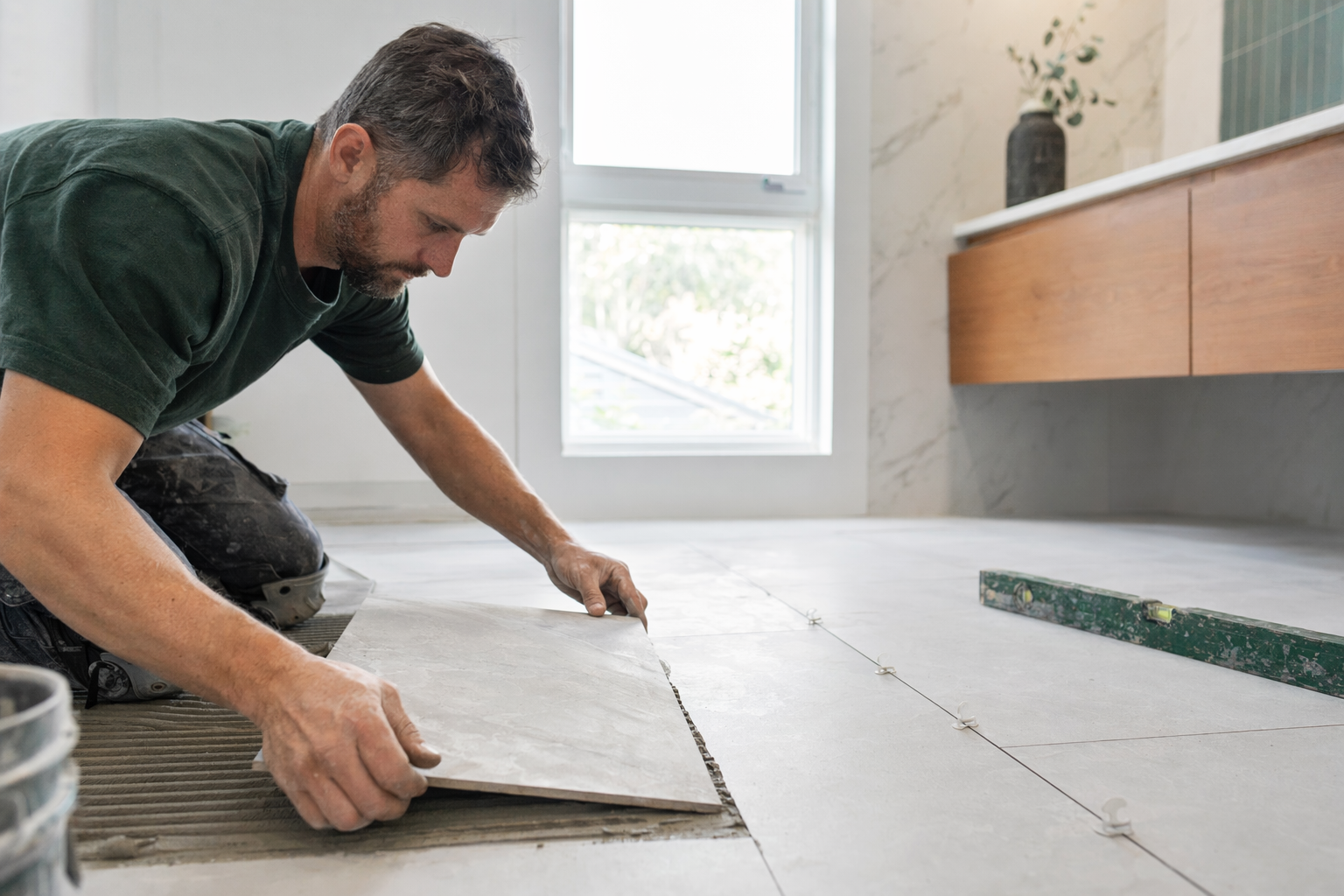
A tile floor can last for years, but the real key is careful prep, a solid subfloor, and a written quote from a licensed, insured installer you trust.
What tile floor installation includes
Tile floor installation is more than laying tile on the floor. A good job usually includes measuring the space, checking the subfloor, planning the layout, preparing the surface, setting the tile, grouting, and finishing edges and transitions.
The installer may work with ceramic, porcelain, or natural stone tile. Porcelain is dense and popular for kitchens, bathrooms, laundry rooms, and entryways. Ceramic can be a good value in many dry or lightly wet areas. Natural stone can look beautiful, but it often costs more, needs sealing in many cases, and may need a stronger, flatter base.
What matters most is not just the tile itself. Tile is rigid, so it shows problems fast if the floor underneath is uneven, weak, damp, or moving. That is why experienced tile contractors spend time on the subfloor and underlayment instead of rushing to the visible part.

How a good contractor installs tile
A careful tile installer starts with the base. The subfloor should be clean, solid, and flat enough for the tile being used. Depending on the situation, the contractor may recommend cement backer board, an uncoupling membrane, patching low spots, or other prep work. General information only: the right method depends on the home, the room, the subfloor type, and local code requirements.
After prep, the contractor usually dry-plans the layout so cuts are balanced and awkward small slivers at walls or doorways are avoided when possible. Then the tile is set with the right mortar, spacing is kept consistent, and the surface is checked as work moves along. Once the tile cures, grout is installed, haze is cleaned off, and sealers may be applied if the tile or grout calls for it.
Transitions, trim pieces, and movement joints matter too. These details help the floor look finished and can reduce cracking problems later. A rushed installer may ignore them because they take time, but they are often the difference between a floor that looks professional and one that starts showing trouble early.
If you are comparing options, our materials guide and cost guides can help you understand the trade-offs before you talk with installers.
What tile floor installation usually costs
Installed tile floor cost is usually given per square foot, including material and labor. In many US markets, ceramic tile flooring often lands around $8 to $15 per square foot installed, porcelain often falls around $10 to $20 per square foot installed, and natural stone often starts around $15 and can run $30+ per square foot installed.
Those are broad ranges, not quotes. The real number depends on the tile itself, room size, tile size, pattern, demolition needs, subfloor condition, underlayment, trim work, stairs or tight spaces, and your region. Small bathrooms and complex layouts often cost more per square foot than open rooms because labor is less efficient.
Costs also rise when the floor needs extra prep. Leveling, replacing damaged subfloor sections, removing old flooring, waterproofing in certain areas, or installing large-format tile can all add labor and material cost. That is one reason very low bids deserve a closer look: the contractor may be leaving out important prep.
For a broader look at flooring pricing, visit costs. Always get the material, prep work, and installation scope in writing first, then compare more than one quote.
Best rooms, trade-offs, and common problems
Tile is popular where people want durability and easy cleanup. Kitchens, bathrooms, mudrooms, laundry rooms, and entryways are common choices. Porcelain in particular handles moisture well, while stone and some grout lines may need more maintenance. Tile can also work in living areas, especially in warm climates, but some people find it hard or cold underfoot.
The trade-off is that tile is unforgiving. If a heavy object drops, a tile can crack. Grout needs care, and some surfaces can be slippery when wet. In colder parts of the US, people sometimes like radiant heat under tile, but whether that is practical depends on the home and local requirements.
The biggest installation-related problems are usually not the tile itself. They are poor prep, an uneven floor, weak subfloor areas, bad layout, hollow spots, lippage between tiles, cracked grout, and moisture problems that were ignored. Skipping the subfloor check is one of the most common ways a cheap job turns into an expensive repair.
What to watch for when hiring a tile contractor
A good tile contractor should be willing to inspect the room, talk clearly about prep, explain what underlayment or membrane they plan to use, and put the scope in writing. They should also be licensed and insured if your state or local area requires it. Verify that yourself instead of just taking a verbal yes.
Be careful with vague pricing, huge upfront cash deposits, cash-only deals, pressure to sign on the spot, or a contractor who barely looks at the floor before quoting. Another red flag is someone who promises to install over a questionable surface without discussing flatness, movement, or moisture at all. Tile failures are often expensive to fix because the floor usually has to come back up.
Use this simple checklist when you compare quotes:
- Exact tile product or allowance
- Who removes old flooring and hauls debris away
- Subfloor prep and underlayment details
- Grout type and sealer if needed
- Trim, transitions, and edge details
- Estimated schedule
- Payment terms in writing
- License and insurance information
The homeowner stays in control. Compare written quotes, ask questions, choose who to hire, and confirm the work is done right before paying the final amount.
How PlankPath helps you find a tile installer
PlankPath is a free matching service, not a flooring contractor, installer, or store. We do not perform tile work or sell tile. We help homeowners and renters connect with licensed, insured flooring contractors near them so they can compare options.
If you want help getting started, you can use get matched. The service is free for the homeowner. We only collect basic contact and project-intent details such as your name, phone, optional email, project type, material interest, ZIP code, approximate square footage, and preferred language.
That lets you speak with local contractors about your tile project, ask about ceramic, porcelain, or stone, and compare written quotes. If you are still deciding between types of flooring, you can also browse services and materials first.