New to the US, got a fair flooring quote
This is an illustrative story, not a real named client. It shows how a recent arrival in the U.S. used a written estimate, compared options, and found a licensed, insured flooring contractor without overpaying.

Get the price, material, and scope in writing, compare a few quotes, and choose a licensed, insured contractor you trust.
A simple start, in a language that felt easier
A homeowner who had recently moved to the U.S. wanted to replace worn flooring in the main living room and hallway. They were comfortable reading in another language, so they asked for help in that language first and kept the project simple: room size, floor type, ZIP code, and contact details.
PlankPath is a free matching service, not a flooring contractor or store. We do not sell materials or do the work ourselves. For this project, the goal was only to connect the homeowner with a licensed, insured contractor who could give a clear estimate and explain the options in plain words.
Before agreeing to anything, they asked for the basics in writing: the product name, what was included in installation, and what extra charges could come up if the subfloor needed work. That one step made the rest of the process much easier.
- Contact + project details only: name, phone, optional email, project type, material interest, ZIP, square footage, preferred language.
- No money was paid to PlankPath by the homeowner; the service is free for homeowners.
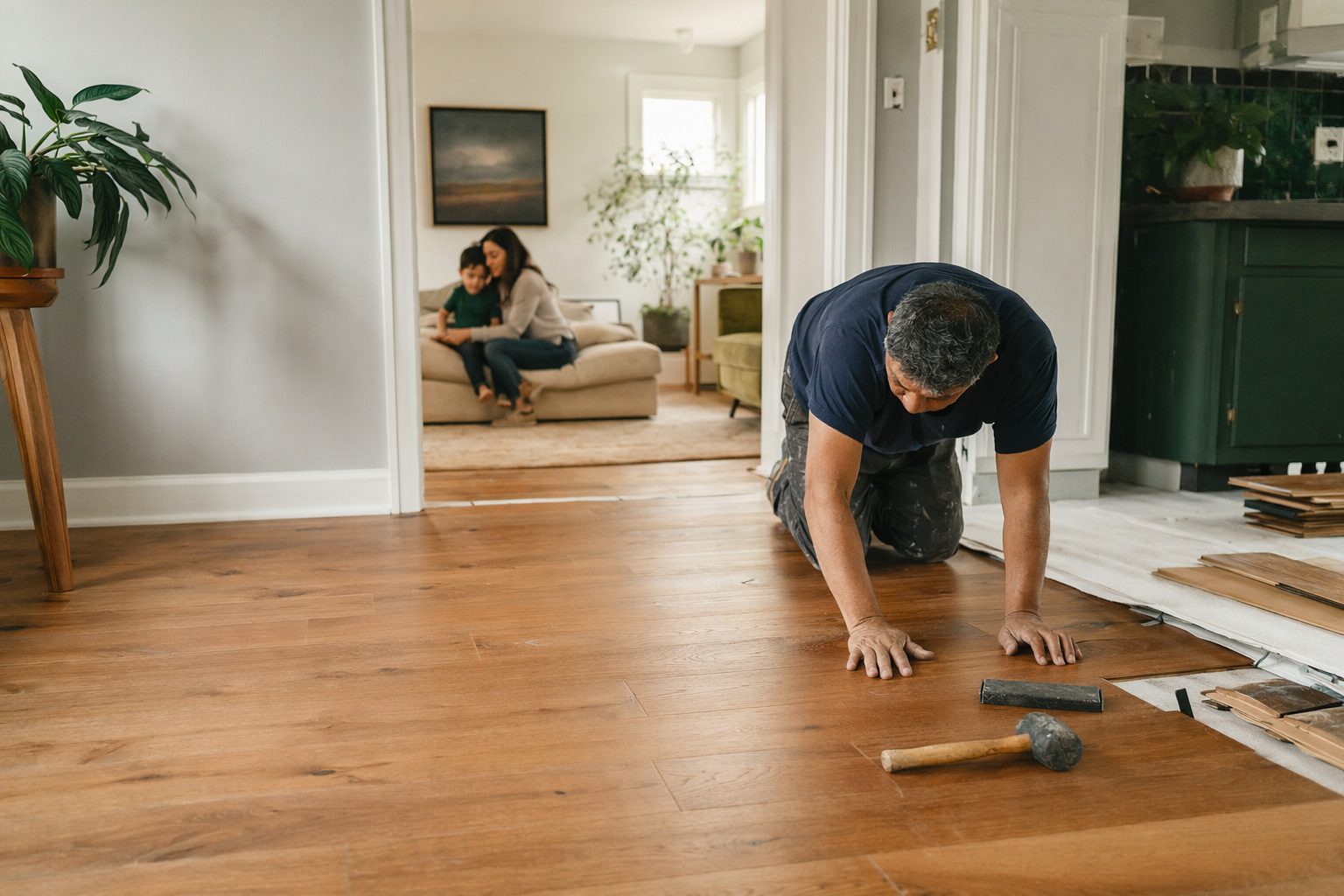
They compared more than one written quote
The first estimate sounded cheap at first, but it was vague. It did not clearly say whether underlayment, removal of old flooring, or cleanup were included. It also pushed for a fast decision and a cash deposit. That is a warning sign.
The homeowner asked for a second and third quote in writing. The better bids spelled out the material, installation labor, transition pieces, disposal, and the conditions that could change the price. The numbers were more realistic, but they were easier to trust because the scope was clear.
For many common jobs, installed flooring can vary a lot by material and region: laminate and some luxury vinyl plank jobs may fall around the lower end, while engineered wood, solid hardwood, or tile can cost more, especially if prep work is needed. As a rough general range, many projects land somewhere around $4 to $15+ per square foot installed, but that is only a broad estimate, not a quote. The real cost depends on the room, the subfloor, the material, and local labor rates.
- Vague pricing is risky; line-by-line pricing is safer.
- Huge upfront cash deposits, cash-only pressure, or “sign today” tactics are red flags.
- Compare at least 2-3 written quotes before choosing.
How they avoided overpaying
The homeowner did not choose the lowest number. They chose the quote that clearly listed what was included and came from a licensed, insured contractor who could explain the job without pressure. That matters because a low price can become expensive if the contractor later adds surprise charges.
They also asked what would happen if the old floor or subfloor had damage. A good contractor explained that hidden issues sometimes show up after the old flooring is removed, and any extra work should be approved before it begins. That kind of explanation builds trust.
The homeowner stayed in control the whole time. They compared quotes in writing, asked questions, and did not pay the final amount until the work looked complete and matched the agreement. That is a practical way to lower the chance of overpaying.
- Ask for the price, material, and scope in writing.
- Verify the contractor is licensed and insured for your area.
- Do not pay the final amount until you check the finished work.
Why the room and material choice mattered
In this story, the homeowner was focused on a busy living area, so they wanted a floor that looked good, handled daily foot traffic, and was easier to maintain. In many homes, that pushes people toward engineered wood, laminate, or luxury vinyl plank rather than more delicate options.
Water and wear matter too. For kitchens, entries, and other areas that can get wet, many homeowners prefer materials that handle moisture better than solid hardwood. For bedrooms, carpet or wood-like options may both make sense depending on comfort and budget.
The important part is not choosing the “best” floor in general. It is choosing the best floor for the room, the budget, and the way the home is actually used.
- Different rooms have different needs.
- Moisture, pets, kids, and foot traffic all affect the best choice.
- A contractor can help explain trade-offs, but you decide what matters most.
How PlankPath helped them get matched
PlankPath helped by matching the homeowner with local flooring contractors based on the project details they shared: what room needed work, what material they were interested in, the ZIP code, and the preferred language. The homeowner did not have to search blindly or guess who might serve their area.
That kind of matching can save time, especially if English is not the language you use most comfortably. It also helps you start with contractors who are more likely to be a fit for the project type.
If you are planning a flooring project, you can start here: How it works, then ask for a match here: Get matched. You can also read more examples in Stories.
- PlankPath collects only contact and project intent details.
- You choose who to hire after comparing quotes.
- The homeowner’s job is to ask questions and verify the agreement in writing.