A busy family picked the right floor the first time
This is an anonymized, illustrative story about how one busy household chose flooring, got a clear written quote, and compared options—then used PlankPath to match with a licensed, insured contractor near them.
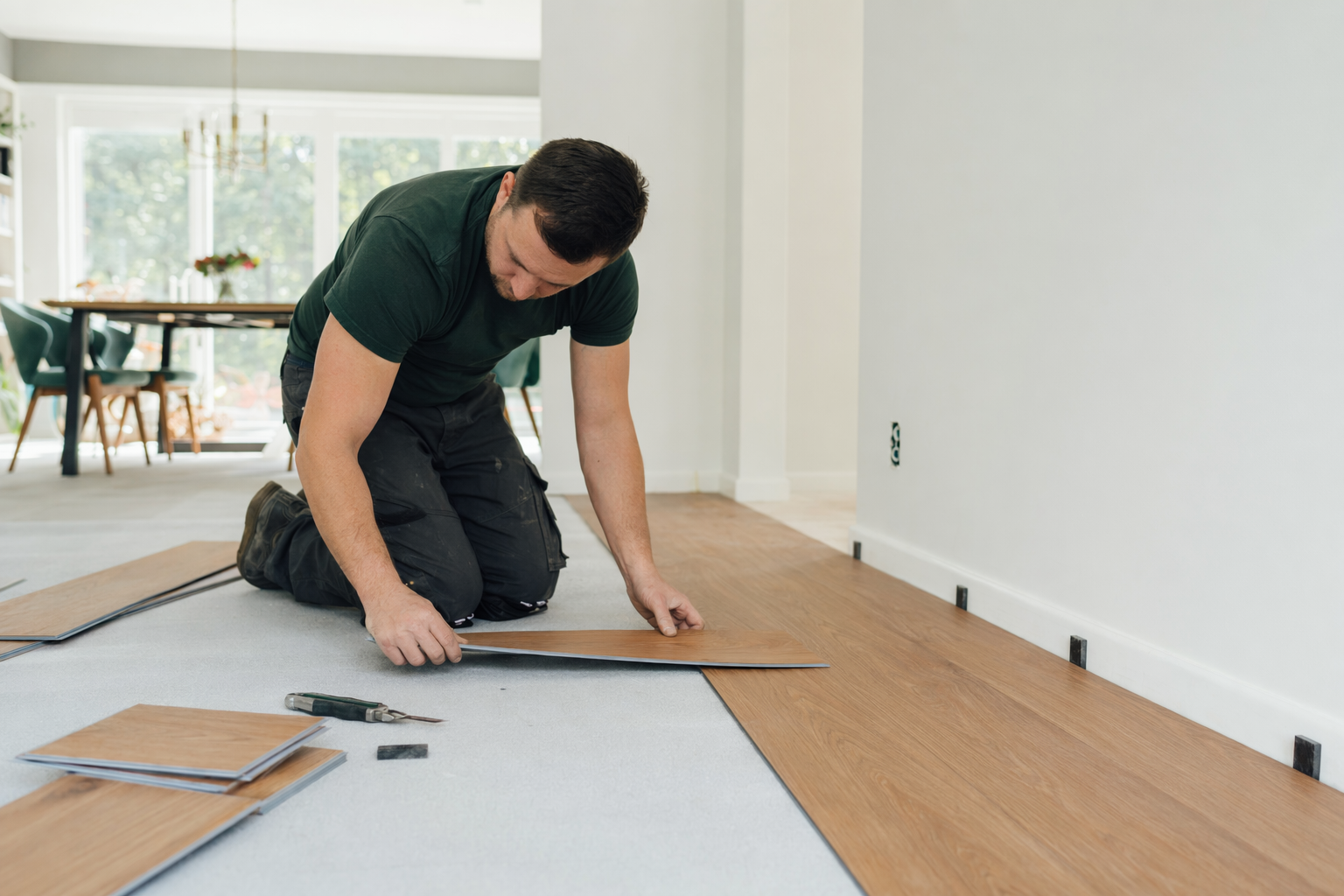
This illustrated example shows how a busy family chose a durable, waterproof-friendly floor, got a detailed written quote, compared options, and used PlankPath’s free matching to find a licensed, insured contractor—without overpaying.
Illustrative story: what they needed (and what they didn’t want)
This is a made-up, anonymized example to show a realistic process. It’s not a real named client, and your project will be different.
A busy family with kids and a dog wanted one floor that could handle daily spills, muddy shoes, and frequent vacuuming. They also wanted something comfortable to stand on—because “a hard floor” can make mornings feel longer.
They had a few rooms in mind (living room + hallway, and they planned to include the adjacent space if the price made sense). Their biggest goal was avoiding the common problems: unclear pricing, vague scopes, and “surprise” change orders.
They used PlankPath, a FREE matching service—not a contractor or store—to be matched with licensed, insured flooring contractors near their ZIP code. The homeowner stayed in control and compared written quotes before choosing anyone.
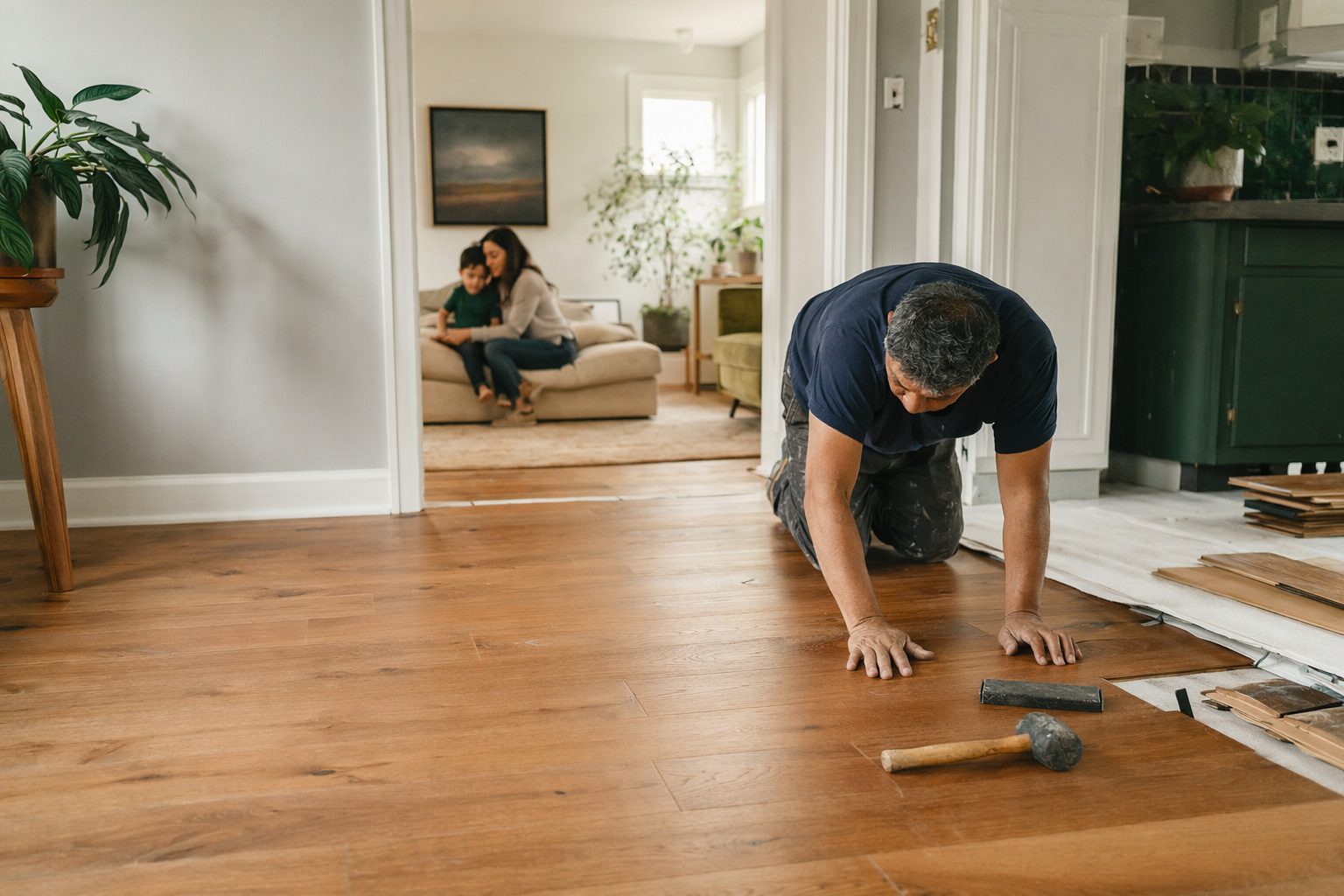
How they picked the material without getting stuck
They narrowed down by thinking about how the floor would actually live with their family. For a home with pets and water risk, they focused on moisture behavior and daily durability first—then looked at appearance.
In an illustrative example like this, luxury vinyl plank (LVP) often fits the “dog + spills + busy household” checklist. It’s generally water-resistant (not the same as “flood-proof”), and many wear layers are designed for everyday scuffs.
They compared options the practical way:
- Look and feel: how it looks in daylight, and whether the texture feels good underfoot
- Wear layer / construction: what the surface is designed to handle
- Moisture plan: how the product and underlayment should be installed in their rooms (contractor guidance matters)
Because flooring has trade-offs, they chose the “best fit” rather than the “most expensive” look. That’s how they avoided overpaying for features they wouldn’t use.
What they asked for in a written quote (so pricing stayed understandable)
They didn’t pick a contractor from a phone call or a quick number. Instead, they asked for a written quote with a clear scope. This helped them compare bids on the same work, not just on a bottom-line total.
A strong written quote typically includes:
- The flooring type and brand/model they’re installing (or equivalent, clearly stated)
- The square footage being covered
- Underlayment/installation materials included (if applicable)
- Subfloor conditions and any prep steps described
- Removal and disposal (how much, and whether it includes hauling)
- Transitions (between rooms, stairs, or other flooring types)
- Delivery timeline and what “start date” depends on
They also asked for the total labor + materials price, not a vague estimate. In flooring, the final installed cost depends on the room size, floor layout, subfloor condition, and region—so any single number is not a guarantee. But a detailed quote reduces surprises.
How PlankPath matching helped (and what the homeowner still controlled)
In this illustrative story, the homeowner used how it works to share basic project intent (ZIP code, approximate square footage, preferred language, and the type of flooring they were considering). PlankPath collects contact + project intent only, and the service is FREE for the homeowner.
PlankPath is not a flooring contractor or installer. The homeowner still:
- Confirmed each contractor was licensed and insured
- Compared written quotes side-by-side
- Chose who to hire
Matching can be helpful because it saves time—especially when you’re busy and not sure which local pros handle your flooring type. But matching doesn’t replace due diligence. Verifying license/insurance and reviewing the quote in writing is still on you.
The cost reality they planned for (a range, not a promise)
They planned their budget using honest cost ranges, not one “too-good” number. Installed flooring prices vary a lot by product quality, thickness/wear layer, underlayment needs, room complexity, and how much subfloor prep is required.
For many common flooring types, homeowners often see installed price ranges like these (not quotes):
- Luxury vinyl plank (LVP): roughly $3–$8+ per sq. ft. installed
- Laminate: roughly $2.50–$6+ per sq. ft. installed
- Carpet (installed): roughly $3–$7+ per sq. ft. installed
- Tile (installed): roughly $7–$18+ per sq. ft. installed
- Hardwood (installed): roughly $8–$20+ per sq. ft. installed
They treated these as planning ranges. The contractor’s written quote was what mattered for their actual project, and they understood that the subfloor and room details can shift the final total.
How they avoided overpaying and “got it right”
They chose the contractor who explained the scope clearly and matched the quote to their needs—not the one who pressured them or offered a vague discount.
In the illustrative story, red flags they avoided included:
- Huge upfront cash deposits
- Cash-only requests
- “No problem” promises without talking about subfloor prep
- A quote that didn’t list the product model, underlayment, or removal/disposal
- Pressure to sign immediately
Before any payment beyond normal deposits (based on local practice), they confirmed everything in writing: material, square footage, prep work, transitions, and what counts as included labor. When the work wrapped, they reviewed what was installed against the quote before paying the final amount.
That’s the core lesson: when you keep control of the scope and compare written bids, it’s much harder to overpay.