Refinished instead of replaced — and saved
This is an anonymized, illustrative story about a homeowner who didn’t have to replace their floors. They learned hardwood could be refinished, asked the right questions, compared written options, and hired a licensed contractor through PlankPath.
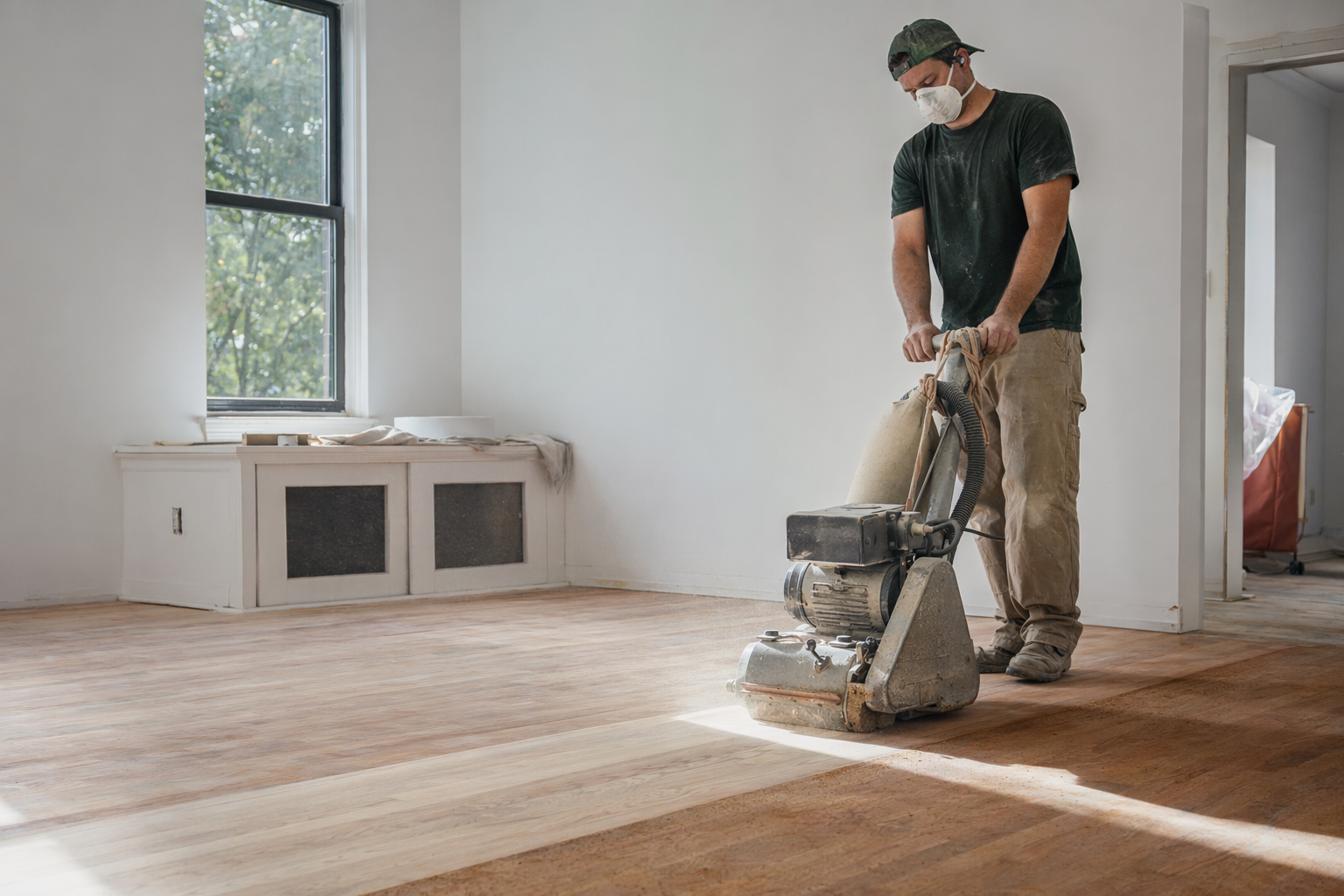
In this illustrated (not real) example, a homeowner confirmed refinishing was possible, compared written scope and costs, matched with a licensed contractor through PlankPath, and avoided overpaying by checking details before signing and paying.
An illustrative story: refinishing instead of replacing (saved money)
Note: This is a made-up example to show how a project can go. It’s not a real named client story, and your results may differ based on your floors, subfloor, and local conditions.
In this example, a homeowner had worn, dull hardwood in the living room and hallway. They assumed the only “fix” was tearing everything out and installing new flooring. But when they looked closer (and asked for help from a contractor who does refinishing), they realized the wood might still be solid enough to refinish.
That decision changed the whole budget. Refinishing can cost less than replacement when the boards are in good shape—no major cupping, rot, or loose planks—and when the job plan includes the right prep work before finishing.
- Key idea: refinishing isn’t always possible—ask for an honest evaluation in person.
- Key idea: the right prep work often matters more than the finish itself.
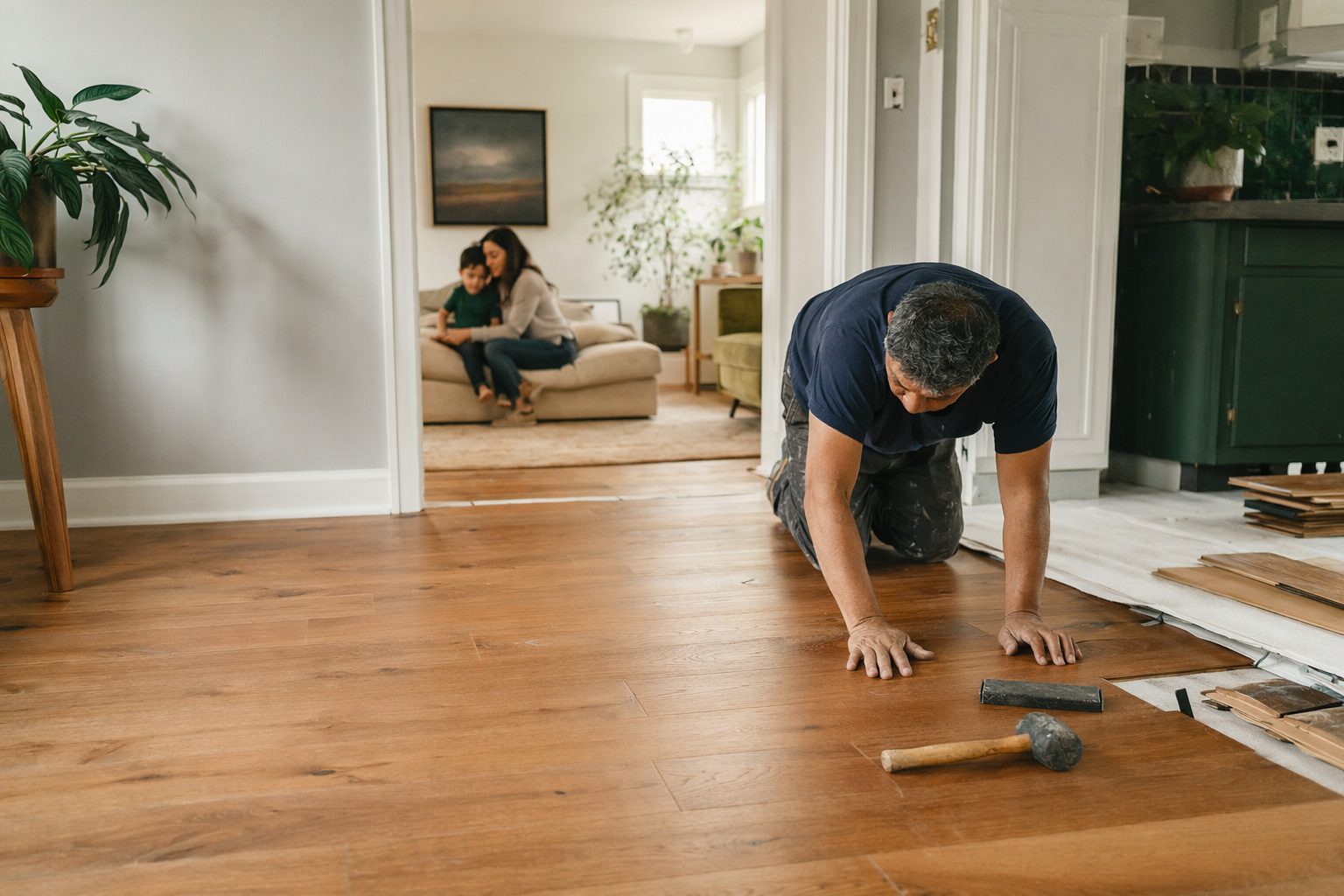
Step 1: Get clear on what you actually have
The homeowner started by gathering basic details: the wood type (hardwood vs. laminate), whether the floor was one continuous surface or had transitions, and what kind of damage they had (scratches, dullness, water stains, worn high-traffic areas).
Instead of guessing, they asked a contractor to explain what they saw and why. They specifically asked whether refinishing would be a fit, and what would happen if the floor needed extra repair beyond normal sanding and finishing.
General tip: refinishing usually works best when the wood is structurally sound and the existing finish can be sanded down. If boards are loose, badly warped, or the floor has moisture issues, replacement may be the more practical path—depending on local conditions and what a licensed contractor recommends.
- Ask: “Can you confirm it’s hardwood, and is refinishing realistic?”
- Ask: “What repairs might be needed once you start sanding?”
Step 2: Use a written quote that matches the same scope
When they received estimates, they made sure the quotes were not just numbers. They compared scope in writing: what prep steps were included, whether any damaged boards would be repaired or replaced, what sanding approach was planned (at a general level), and what finish product type was being used.
They also compared how the quote treated edges, transitions, and cleanup—because small “extras” can quietly add up. Even for refinishing, labor and prep time can vary a lot depending on the floor’s condition and how careful the crew needs to be.
Important: price ranges are not quotes. The homeowner didn’t expect one exact cost before seeing the floor. Instead, they compared multiple written options to understand what was included and whether each quote was realistic for their situation.
- Compare the same things: prep, repairs, finish type, and what’s included.
- Avoid “verbal only” pricing—get line items in writing before work starts.
Step 3: Match with a licensed, insured flooring contractor through PlankPath
After doing a little research, the homeowner used PlankPath to describe their project: hardwood refinishing interest, an approximate square footage, and their ZIP code. They also noted their preferred language so communication would be easier.
PlankPath is a FREE matching service. We don’t do the flooring work and we don’t sell materials. We simply help homeowners get matched with licensed, insured flooring contractors near them so you can request quotes directly.
In this example, the match helped them quickly find a contractor who regularly handles refinishing. That mattered because refinishing is a process—prep, sanding, repairs, and finishing all affect the final look and durability.
- PlankPath is free for you—no fees to the homeowner.
- You still choose the contractor and confirm the scope in writing.
Step 4: Avoid overpaying by checking the details
The homeowner paid attention to common warning signs. They avoided any quote that was vague (“we’ll handle it”), required a huge upfront cash deposit, or refused to put the work scope in writing. They also avoided contractors who asked them to skip important prep steps.
They treated the final agreement like a checklist: flooring surface areas, what repairs were included (or excluded), the type of finish, and what the contractor would do to protect nearby areas. They also confirmed the crew would be licensed and insured as required for the work in their area.
Finally, they made sure the contractor followed through before paying the final amount. If anything didn’t match the written scope, they discussed it before closing out the invoice. This simple habit helps prevent “surprise” charges.
- Red flags: cash-only, no license, pressure to sign on the spot, unclear pricing.
- Green flags: clear written scope, licensed/insured verification, professional communication.
What it might cost (realistic ranges, not promises)
Costs vary by region, floor condition, room size, and how much repair is needed. Refinishing typically costs less than replacement when the wood is still in good shape, but the final total depends on prep and repairs.
As a general rule of thumb for the U.S., hardwood refinishing often falls around $3 to $8 per square foot for basic refinishing, with higher numbers possible if the floor needs extra repairs, extensive prep, or more labor-intensive sanding. These are broad ranges—not quotes—and your exact price can be higher or lower.
If the floor turns out to have more serious issues (like warped boards, widespread damage, or moisture problems), replacement may be the better long-term solution. A good contractor will explain why, based on what they find when they start the work.
- Refinishing can be a “best value” when the floor is solid and damage is mostly surface-level.
- Get clarity on repairs and prep—those drive the cost.