Flooring Material Comparison Chart
Our Flooring Material Comparison Chart is a free, downloadable worksheet to help you compare common flooring types side-by-side—so you can talk to contractors with more confidence. It’s free to use and you stay in control.
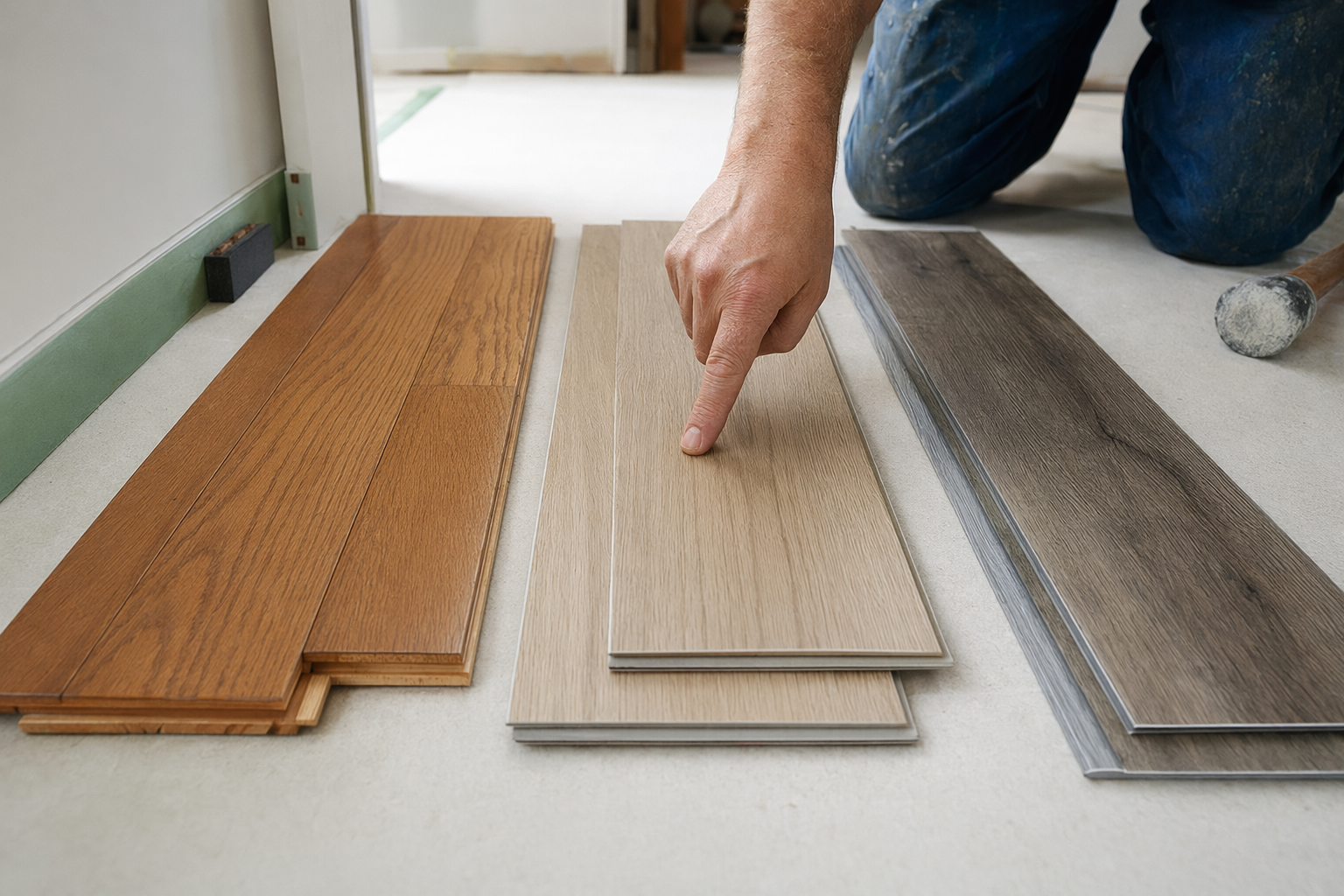
Download the free chart to compare hardwood, laminate, LVP, tile, and carpet on cost ranges and real-life trade-offs—then use it to ask better questions before you get written flooring quotes.
What’s in the chart (and what it’s for)
The Flooring Material Comparison Chart is designed to make the “trade-offs” clear. It helps you compare hardwood, laminate, luxury vinyl plank (LVP), tile, and carpet on the basics that usually matter most in real homes.
You’ll find side-by-side summaries you can use before you request quotes. It’s not a contract or a recommendation—just a practical checklist to guide your decisions and questions.
Use it to sort your priorities (look, comfort, pets/kids, cleaning, and how water-prone the room is). Then you can ask contractors the right questions and compare proposals more fairly.
If you want to explore more materials, visit materials overview next.

Who this helps
This resource is especially helpful if you’re:
- New to flooring terms and want a simple way to compare options
- A homeowner or renter replacing old floors, fixing a damaged area, or choosing a new material for a specific room
- Budget-conscious and want realistic cost ranges before you talk to anyone
- A non-native English speaker who prefers a clear, structured comparison
When contractors quote different materials, it can be confusing to tell what’s actually included (underlayment, subfloor prep, installation details). The chart helps you keep your comparisons grounded.
It also supports people who want to get matched with licensed, insured flooring contractors—without feeling rushed or pressured.
How to use it before you get flooring quotes
Plan for about 15–25 minutes. The goal is to pick 1–3 options you truly want to discuss, not to decide on the spot.
- Circle the room(s) you’re flooring (living room, bedroom, kitchen, bathroom, basement, stairs, and so on).
- Choose your top 2–3 priorities (example: “water resistance,” “easy cleaning,” “quiet underfoot,” “best value,” “natural look”).
- Use the chart to flag which materials generally fit those priorities—and which ones may be a rough match for your room.
- Note what you already know you need (example: pets, allergies, lots of foot traffic, direct sunlight).
- Write down questions you want answered (underlayment, subfloor prep, warranty basics, and whether they recommend moisture protection for your situation).
Then, when you’re ready to compare contractor proposals, bring your chart with you and use it as a checklist. You can also review our tips on selecting a contractor in how to vet a flooring contractor.
What “cost” means on the chart (honest ranges, not quotes)
On the chart, costs are shown as typical ranges per square foot—generally including material and installation together. These are not bids, and they are not guarantees.
Your real total depends on details that vary by home and region, like the condition of the subfloor, room size and layout, waste/extra cuts, transitions to other flooring, and whether prep work is needed.
As a starting point, you may see broad ranges such as:
- Carpet: often lower material cost, with installation bringing the total up
- Laminate: typically mid-range, but quality and underlayment matter
- LVP: often mid-range, and thickness/wear layer affect durability
- Tile: can be higher because of installation labor and prep needs
- Hardwood: can be higher, especially depending on refinishing vs. new installation
Because these categories vary a lot, always compare proposals in writing. Ask contractors to break down material type, thickness, underlayment, subfloor prep, and what’s included.
How to interpret durability and water behavior (practical expectations)
Durability isn’t only “will it scratch.” It’s also about how the flooring handles everyday life: scuffs, dents, high heels, pet claws, and how it reacts to moisture over time.
On the chart, you’ll see general guidance about water and moisture. For example, some materials do well with humidity and occasional spills, while others can be damaged if water sits or if moisture moves up from the subfloor.
Important: moisture issues can happen for different reasons (leaks, humidity, or subfloor conditions). This chart is general information—your local conditions and contractor recommendations matter.
If you’re choosing for a room with frequent water exposure, focus your questions on what the contractor will do to manage moisture for that specific space (and confirm what materials they recommend).
Before you download: quick contractor safety reminders
Even with a great comparison tool, the contractor you choose strongly affects the result. The chart helps you ask better questions, but you still need clear, written estimates.
Watch out for common red flags:
- Vague pricing (“we’ll figure it out later”) instead of a written breakdown
- Large cash-only upfront deposits
- No license/insurance (or refusal to provide it)
- Pressure to sign right away without letting you compare
- Skipping or minimizing subfloor prep when the floor needs it
For general guidance, use the contractor vetting checklist and questions in how to vet a flooring contractor. Then, once you have bids, compare apples-to-apples—material type, thickness, underlayment, and the scope of work.