How to measure a room for flooring
Measuring your room is the fastest way to get a fair flooring estimate. Below is a simple method to calculate square footage, plan for waste, and compare contractor quotes apples-to-apples.
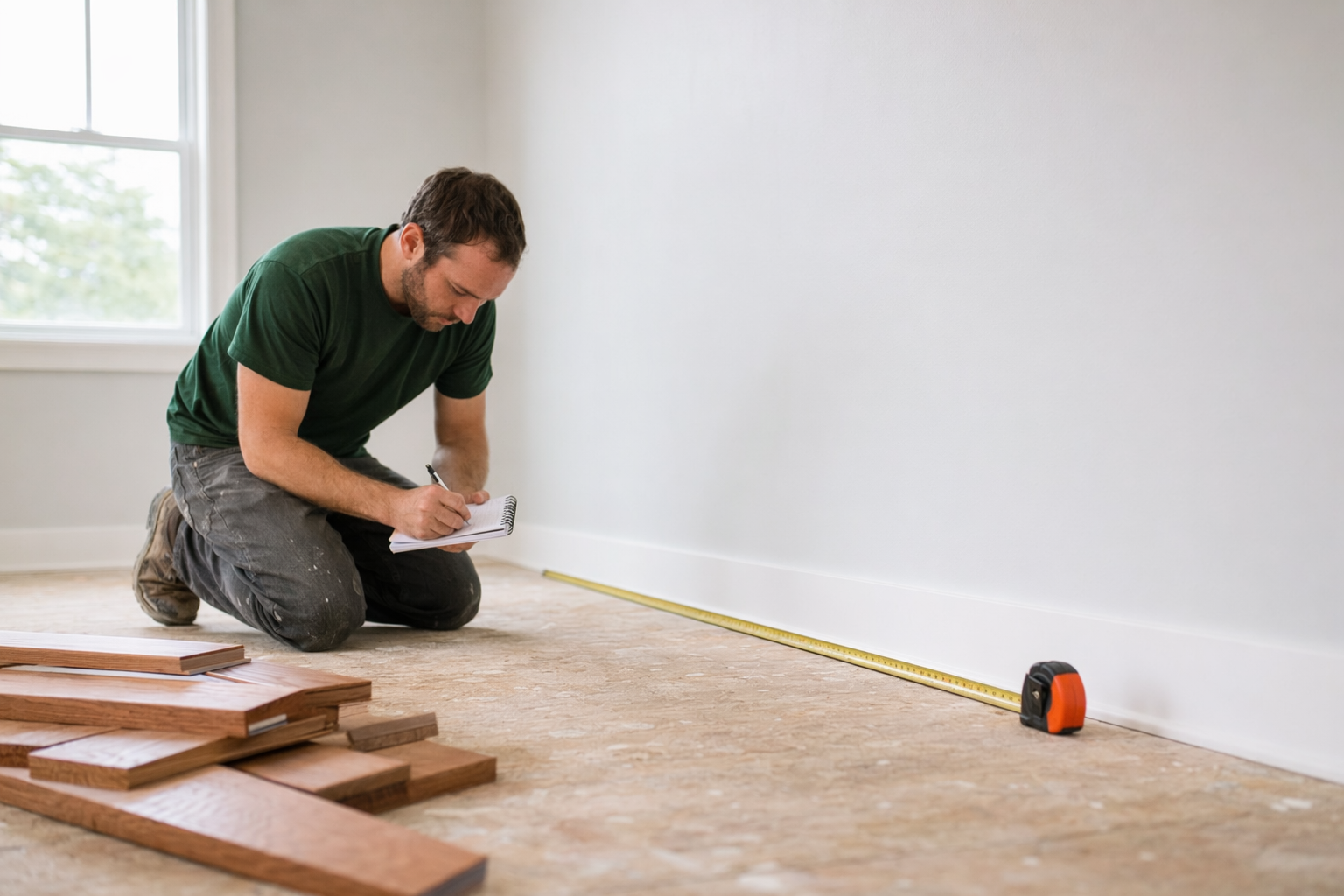
Measure your floor by calculating clean square footage (split odd shapes into rectangles), then compare contractors using the same waste and scope assumptions in writing.
Start here: what you’re trying to measure
Most flooring quotes start with your room’s floor area (square feet). For “apples-to-apples” comparisons, you’ll also want to understand how each contractor plans for waste (extra material for cuts and odd shapes).
You usually measure the usable floor space you’ll be replacing, not everything in the house. If you’re also moving appliances, removing built-ins, or changing stair treads/landings, say so—those details can change the price a lot.
Step-by-step: measure the room square footage
1. Draw a simple sketch of the room. Write down each wall length you can measure.
2. Measure the longest and shortest distance across the room (in feet). Multiply length × width to estimate the area.
3. For rooms with bumps, closets, or L-shapes: split the room into smaller rectangles. Measure each rectangle and add the square feet together.
4. For areas you’re not flooring (built-in cabinets, a permanently fixed island, etc.), subtract those areas if you know they’ll be staying exactly as-is. If you’re unsure, ask the contractor how they handle it.
Don’t forget the “waste factor” (it’s normal)
Even with careful measuring, flooring has seams and cuts. Waste covers those losses and can be higher for complex rooms, diagonal layouts, plank patterns, or lots of trim/obstacles.
A good contractor will explain their waste allowance and what it covers. To compare estimates fairly, ask: “How did you calculate waste, and what percent are you using?”
If two contractors use different waste assumptions, the “installed cost per square foot” can look different even if the real work is similar.
How to measure tricky areas (closets, hallways, stairs, thresholds)
Closets and hallways: Measure them too if the flooring will run through. A lot of projects include transitions, so it’s common to total multiple spaces.
Stairs (if included): Stair measuring is different from floor measuring. Stair treads, risers, and landings may be quoted separately. Don’t rely on your room square footage alone.
Doorways and thresholds: If you’ll be changing the floor height or material across rooms, confirm whether the quote includes transitions/molding. These small parts can add up.
Get cleaner quotes by using the same measurements every time
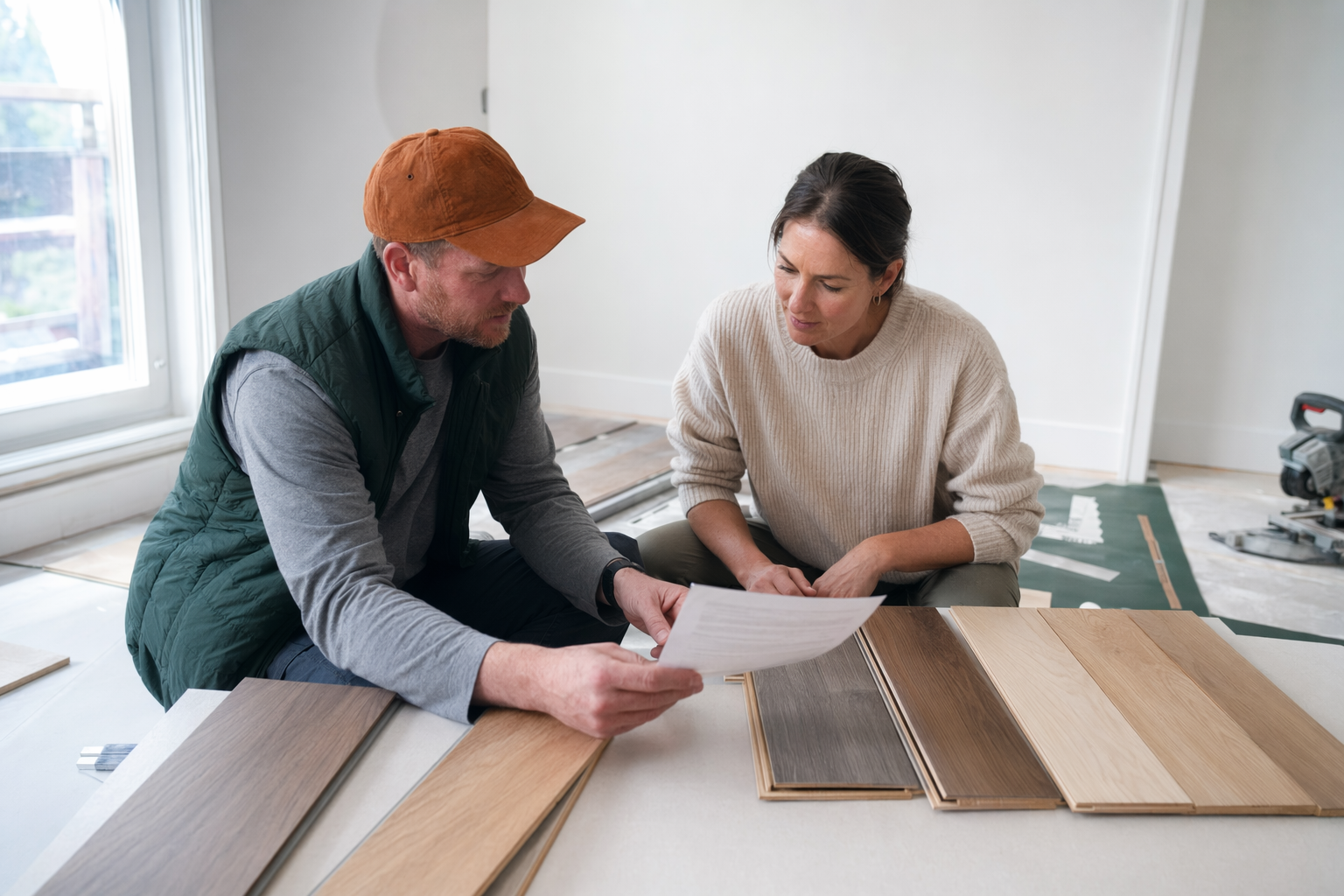
To get an apples-to-apples estimate, send each contractor the same info: your total square footage, a sketch, and whether you’re including closets/hallways, removing old flooring, and adding underlayment (if applicable).
Ask each contractor to list what’s included in the installed price. For example: removal and disposal, subfloor prep, underlayment (for some floors), trim/transition pieces, and any leveling. Flooring materials alone can look cheaper, but installation may differ.
If you’re still shopping, start with general guidance like How flooring costs work and How to get matched so you know what questions to ask.
Red flags when quotes don’t make sense
Be cautious if a quote is vague or hard to compare. Red flags include: huge upfront cash deposits, cash-only deals, no proof of licensing/insurance, pressure to sign on the spot, or a contractor who skips discussing subfloor prep when it’s needed.
Also watch for unrealistic pricing that ignores basic scope—like “we’ll install over anything” without checking the condition and flatness of the existing surface (for the chosen flooring type).
Before you pay the final amount, confirm the work matches the written scope. Always get prices, material, and scope in writing, and compare more than one quote. Don’t rely on a verbal promise.