Solid vs engineered hardwood — what's the difference?
Solid hardwood is one piece of wood. Engineered hardwood has a real wood top over layered backing. Both can look beautiful, but they behave differently with moisture, subfloors, and budget.
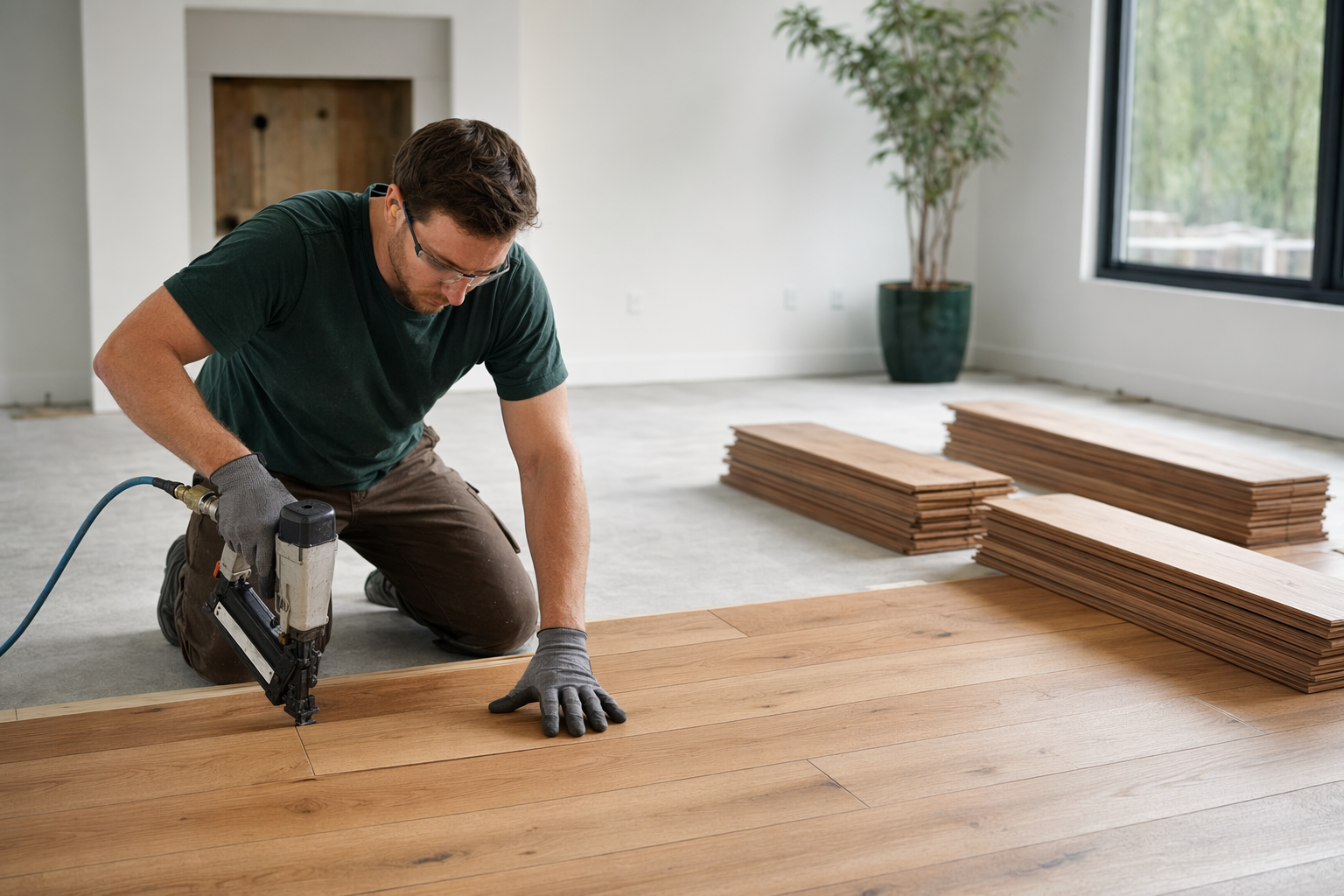
Solid hardwood is one piece of wood and can often be refinished more, while engineered hardwood is usually more stable around humidity and concrete — the right pick depends on the room, subfloor, and budget.
The short answer
Solid hardwood is made from a single piece of wood, usually 3/4 inch thick. Engineered hardwood has a real hardwood wear layer on top, with plywood or similar layers underneath for stability.
In daily life, the biggest difference is movement. Solid wood tends to expand and shrink more as humidity changes. Engineered wood is usually more stable, so it often works better over concrete, in basements that stay dry, and in places with bigger seasonal swings.
Both can give you a real-wood look and feel. The better choice depends on your room, subfloor, climate, budget, and whether you want the option to sand and refinish the floor multiple times later.
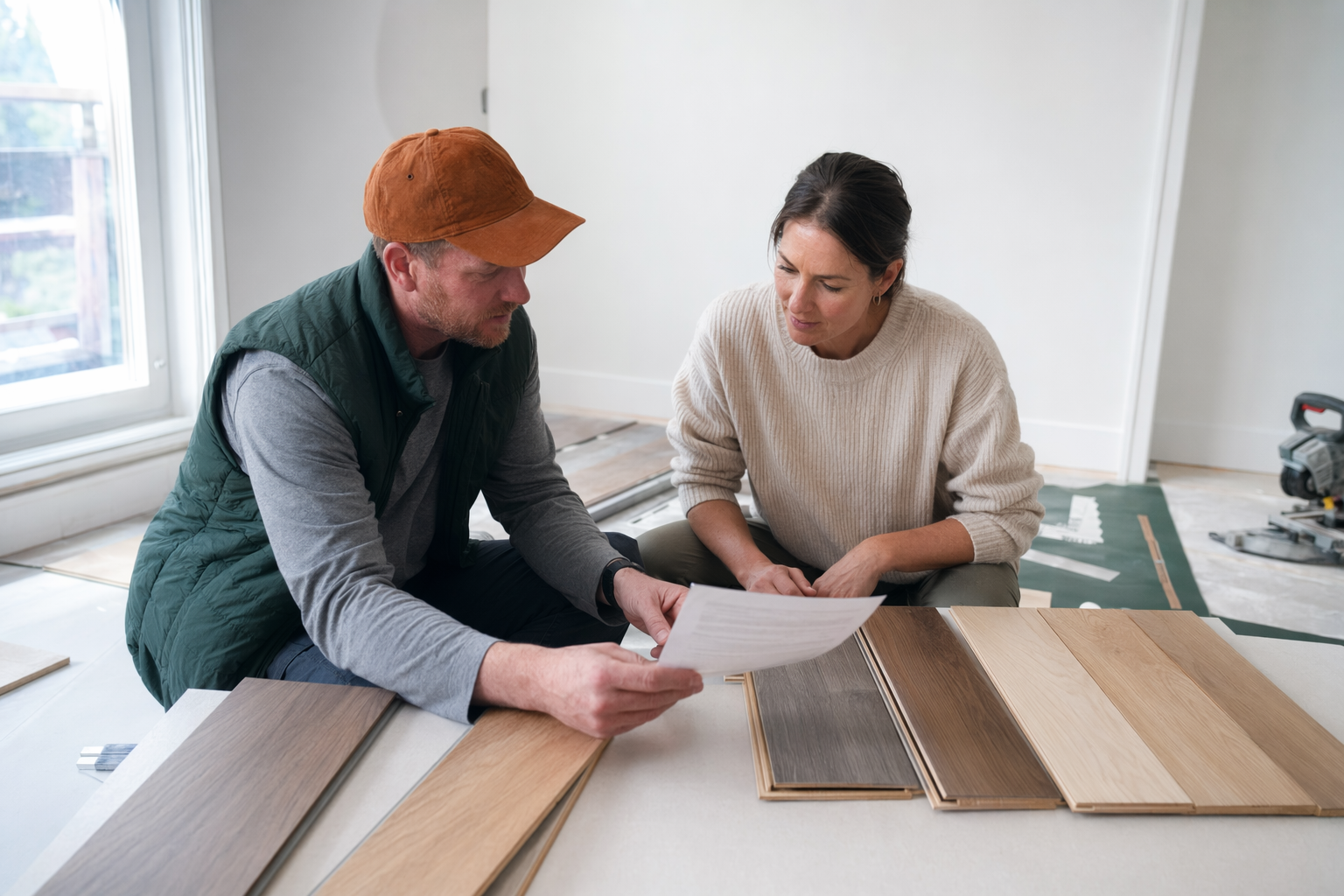
How they look and feel at home
To most homeowners, both solid and engineered hardwood can look very similar once installed. You can find both in oak, maple, hickory, walnut, and many stains, plank widths, and finishes. If you want real wood underfoot, either one can deliver that.
Solid hardwood has a traditional reputation and can feel very "classic" in older homes. Engineered hardwood can also look high-end, especially when it has a thicker top layer and good-quality finish. Cheap engineered products can look less natural, so product quality matters.
Underfoot, both are usually firmer and warmer-looking than tile, but not as soft as carpet. Noise, hollow spots, and comfort depend a lot on the installation method, underlayment, and subfloor condition — not just the product itself.
Moisture, durability, and refinishing
This is where the real trade-off shows up. Solid hardwood does not like moisture. It can cup, gap, or warp if humidity swings too much or if water sits on it. That does not mean solid is bad — it just means the room has to be right for it.
Engineered hardwood is generally better at handling normal humidity changes because of its layered construction. It is still real wood on top, so it is not waterproof. Spills should still be cleaned up quickly, and flood-prone or very wet areas are still poor choices for hardwood.
For long-term repair, solid hardwood usually wins. It can often be sanded and refinished more times because the wood goes deeper. Engineered hardwood can sometimes be refinished too, but that depends on how thick the top wear layer is. Some thinner products may not be good candidates for multiple refinishes.
Surface wear also depends on species and finish. A softer wood or lower-grade finish may scratch and dent more easily whether the floor is solid or engineered.
Best rooms, worst rooms, and subfloors
Solid hardwood is often a strong fit for living rooms, dining rooms, bedrooms, and hallways on or above grade, especially over a wood subfloor. It is usually less ideal in basements, over concrete, or in homes with big humidity swings unless a licensed flooring contractor says conditions are suitable.
Engineered hardwood is often the more flexible option. It can work well on main floors, upstairs rooms, condos, and some below-grade spaces that stay dry. It is commonly chosen when the subfloor is concrete or when the homeowner wants a lower-profile floor height.
Neither product is usually the first choice for full bathrooms, laundry rooms with leak risk, or rooms that stay damp. Kitchens can go either way, but they need realistic expectations about spills, pet bowls, ice maker leaks, and dropped objects.
Subfloor condition matters more than many people realize. A beautiful product can still fail if the subfloor is uneven, wet, damaged, or skipped over. General information only here — a licensed, insured flooring contractor should evaluate the subfloor and local conditions before installation.
What they usually cost
Installed cost for solid hardwood often falls around $8 to $18+ per square foot. Engineered hardwood often lands around $7 to $16+ per square foot installed. These are broad US ranges for material plus installation, not quotes.
The real number depends on the wood species, plank width, finish, wear layer quality, subfloor prep, trim work, room layout, region, and job size. Stairs, furniture moving, tear-out, moisture mitigation, leveling, and pattern installs can all raise the cost.
Sometimes engineered costs less than solid, but not always. Premium engineered products can cost as much as or more than some solid wood lines. If you want a more detailed breakdown, see flooring costs and other guides.
When you compare quotes, make sure each one says the same thing in writing: product line, plank size, scope of prep, underlayment or adhesive, trim, transitions, cleanup, haul-away, and warranty details. That is the only fair way to compare prices.
How to choose well — and avoid bad surprises
A simple way to decide: choose solid if you want a traditional nail-down wood floor in the right room, with the best chance to refinish it multiple times later. Choose engineered if you need more stability, are installing over concrete, or want more flexibility with room conditions.
Be careful with sales pressure and vague promises. Red flags include huge upfront cash deposits, cash-only deals, no license or insurance proof, pressure to sign immediately, and bids that ignore subfloor prep. Another common problem is a low quote that leaves out trim, tear-out, leveling, or moisture work until later.
Get the material, price, and full scope in writing before you agree to anything. Compare more than one quote. Verify that the contractor is licensed and insured if your area requires it, and ask who is actually doing the installation.
PlankPath is a free matching service, not a flooring contractor, installer, or store. We do not perform flooring work or sell materials. If you want, you can get matched with licensed, insured flooring contractors near you. It is free for homeowners, and we only collect basic contact and project details such as your name, phone, optional email, ZIP code, approximate square footage, preferred language, and what kind of flooring help you want. You stay in control and choose who to hire.
If you are still unsure, start with help or browse more guides before talking to contractors.