Old floor removal and disposal
Taking out old flooring is often a full job by itself. It affects labor, dust, disposal fees, and the condition of the subfloor under everything else.
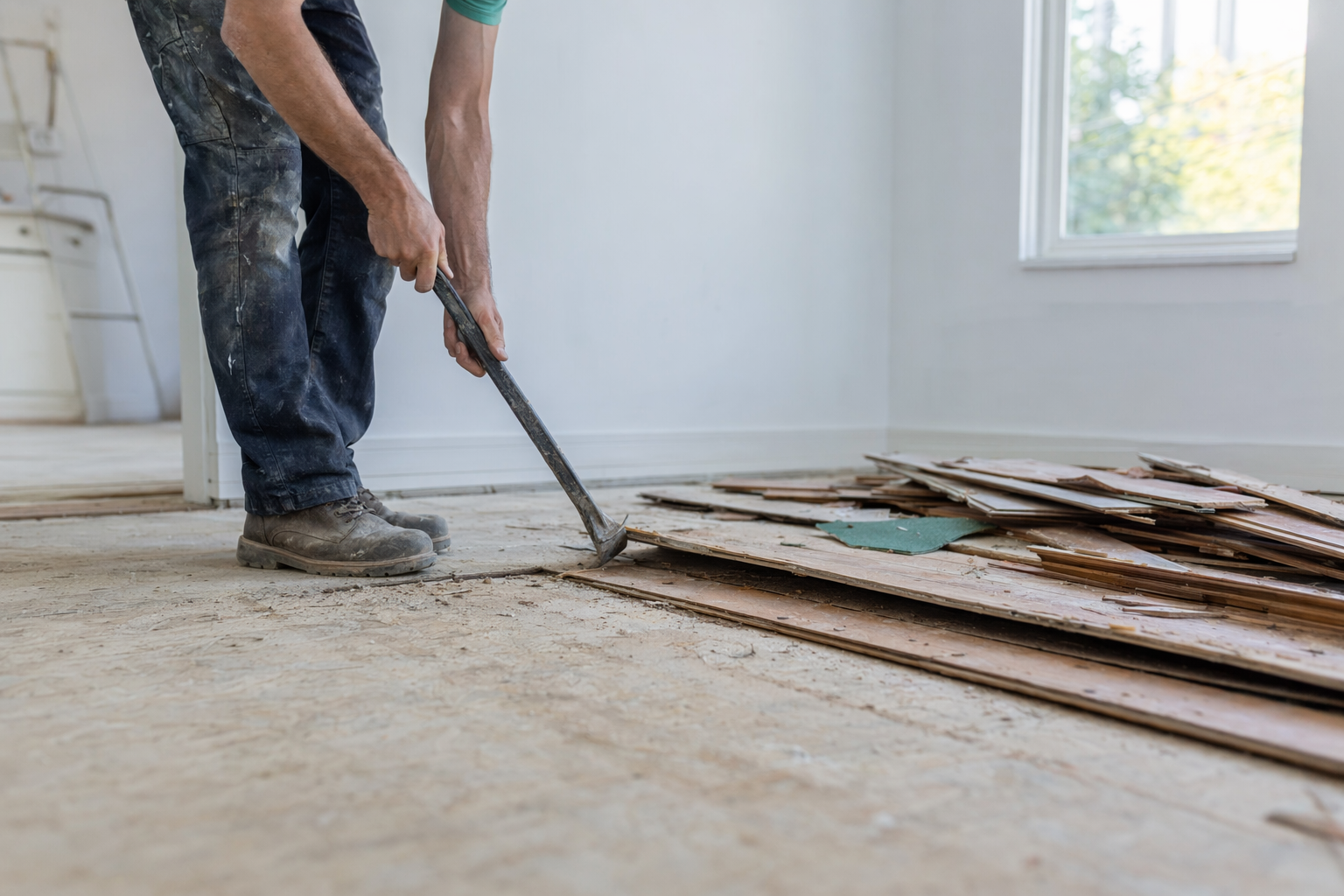
Old floor removal can be cheap or surprisingly expensive, so get the exact demolition, disposal, and subfloor prep scope in writing before you hire anyone.
What floor removal and disposal actually includes
Old floor removal means more than just pulling up the visible surface. Depending on what is there now, the work may include taking out carpet and pad, hardwood, laminate, vinyl plank, sheet vinyl, tile, thinset, staples, tack strips, glue, baseboards or shoe molding, and then hauling the debris away.
A good contractor also checks what is left underneath. The subfloor may need scraping, patching, leveling, moisture checks, or small repairs before the new floor can go in. This is one reason removal can change the total project price so much.
Some floors come up quickly. Others are slow, loud, dusty, and hard on tools. Tile removal, glued-down flooring, and old adhesive are usually the most labor-heavy. If you are comparing quotes, make sure the scope clearly says what is being removed, what is being hauled away, and what subfloor prep is included afterward.

Why removal matters so much to your flooring quote
Homeowners sometimes focus on the new material and forget that demolition can be a meaningful part of the budget. Removal affects labor time, dumpster or haul-away costs, dust control, and how much prep is needed before installation. In some homes, removal is simple. In others, it uncovers the real problem.
Typical removal and disposal ranges often fall around $1 to $5 per square foot, but that is not a quote. Light carpet removal may be at the lower end, while tile, glued sheet vinyl, multiple old layers, or stubborn adhesive can cost more. In many markets, tile removal and heavy adhesive scraping can push costs above that range.
The real number depends on the existing material, the age of the floor, the subfloor condition, the room layout, stairs, furniture moving, local dump fees, your region, and the size of the job. Small jobs often cost more per square foot because the crew still has setup, protection, and haul-away time.
If you are also choosing a new floor, it helps to look at both the removal side and the replacement side together. Our costs and materials guides can help you compare the full picture.
How a contractor does the job well
A careful flooring contractor does not just tear everything out fast and leave a mess. They protect nearby walls and surfaces, plan where debris will go, control dust as much as practical, and remove the old floor without damaging areas that should stay in place. They also explain what might be uncovered once the top layer is gone.
For many projects, a solid process looks like this:
1. Confirm exactly which layers are being removed.
2. Protect adjacent rooms, cabinets, trim, and entry paths.
3. Remove the flooring, fasteners, adhesive, and debris.
4. Inspect the subfloor for damage, flatness, moisture issues, soft spots, or rot.
5. Explain any added prep needed before the new floor is installed.
6. Haul away and dispose of the waste as agreed in writing.
One common problem is rushing past the subfloor. If the crew leaves glue ridges, broken tile thinset, loose panels, or low spots, the new floor may not sit right. That can lead to squeaks, movement, hollow areas, cracked tile, visible unevenness, or flooring that wears out early.
PlankPath is not a flooring contractor and does not perform removal work. We are a free matching service that helps you connect with licensed, insured flooring contractors near you so you can compare written quotes and choose who to hire.
Old adhesive, asbestos, and other cautions
Older floors can come with extra concerns. Black mastic, old vinyl tiles, sheet goods, and some older adhesives may need special caution. In some homes, especially older ones, disturbing certain materials can create health and cleanup issues. This is one reason a contractor may pause before removing everything immediately.
General rule: if the floor is older and there is any question about hazardous material, ask about testing and safe handling before demolition starts. Do not assume every old floor is dangerous, but do not assume it is harmless either. Requirements can vary by state and local rules.
Moisture is another issue people miss. If the old floor came loose, curled, or smelled musty, the problem may not be the flooring itself. There may be moisture coming through the slab, leaks, pet damage, or subfloor rot. A good contractor will flag this instead of covering it up.
This page gives general information only, not legal, environmental, or construction advice. For specific concerns, rely on qualified local professionals and local rules.
Red flags when you get estimates
Removal work is one area where vague pricing causes real trouble. A low estimate can look good until the crew starts pulling things up and says disposal, adhesive scraping, trim removal, or subfloor prep were never included.
Watch for these warning signs:
- Vague wording like "demo if needed" without details
- No line for haul-away or dump fees
- No mention of adhesive removal or subfloor prep
- Pressure to sign on the spot
- Huge upfront cash deposits or cash-only demands
- No license or insurance information
- A promise that "we'll figure it out later"
Ask for the full scope in writing first. It should say what material is being removed, whether furniture moving is included, who removes baseboards or appliances if relevant, whether disposal is included, and how hidden subfloor damage will be handled if found.
It is smart to compare more than one quote. The homeowner stays in control: compare written pricing, ask questions, choose who to hire, and confirm the work is done right before paying the final amount.
How to find the right contractor for floor removal
Not every flooring crew handles heavy demolition the same way. Some mainly install new floors and subcontract removal. Others do both regularly. It helps to ask direct questions about the type of floor you have now, especially if it is tile, glued-down material, or something older with mystery layers underneath.
When you talk with contractors, ask:
- Have you removed this type of flooring before?
- Is haul-away included in the price?
- What subfloor prep is included after removal?
- How do you handle old adhesive or suspected hazardous material concerns?
- Are you licensed and insured for this work in my area?
PlankPath can help you get started. We are a free matching service, not an installer or store. You share basic contact and project details only — name, phone, optional email, project type, material of interest, ZIP, approximate square footage, and preferred language — and we help connect you with local flooring contractors so you can compare options. You can learn more about our services or get matched when you are ready.